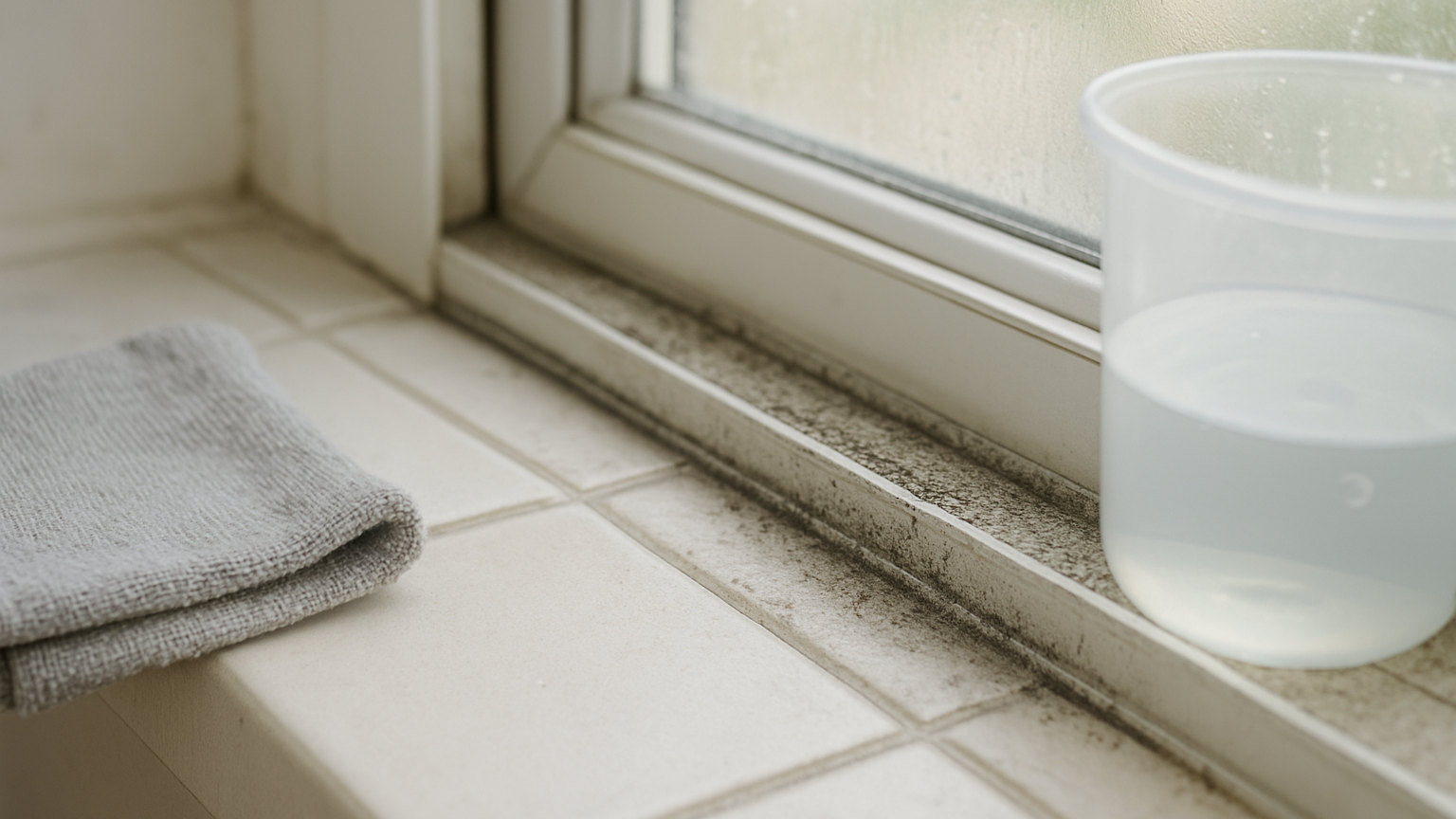
The bottom track of a sliding window or patio door is a trap for everything: grit, leaves, insects, pet hair and rainwater. That mixture matters more than it appears, because the rollers run through it. Grit in a track acts as a grinding paste, wearing the rollers flat and eventually damaging the track itself, which turns a cleaning job into a repair.
What is the method?
- Vacuum the track first with a crevice tool, taking out the loose debris before any water is introduced.
- Loosen what remains with a stiff brush or an old toothbrush, working along the channel.
- Vacuum again.
- Wipe with a cloth wrapped around a thin blunt tool, such as a lolly stick or a plastic knife, so it reaches the square corners of the channel.
- For a heavily soiled track, apply warm soapy water or a little white vinegar, leave it a few minutes, then scrub and wipe dry.
- Clear the drainage holes at the outer edge with a cocktail stick.
The order matters. Wetting a track full of grit produces a paste that is harder to remove than the dry debris was.
Why do the drainage holes matter?
Because a sliding door track is designed to collect rainwater and let it out through small weep holes at the outer edge. Blocked holes mean water sits in the track, which then finds its way inside at the threshold and gets blamed on the door seal.
Pour a cup of water into the track after cleaning and watch where it goes. It should drain away within a few seconds.
What should you lubricate them with?
A dry silicone spray or a PTFE based lubricant, applied sparingly to the track and the roller wheels once they are clean and dry. Do not use oil or grease. Oil attracts dust and grit and turns into a black paste within weeks, which is worse than no lubricant at all and is a common reason a door that was serviced runs badly a month later.
Wipe away any excess, and test the door before deciding it needs more.
What if the door is still hard to slide?
Check the rollers. On most patio doors there is an adjustment screw at each end of the bottom rail, usually behind a small cap, which raises or lowers the rollers. Small adjustments make a large difference to how the door runs and how it seats against the frame.
If adjustment does not help, the rollers are probably worn flat or seized. Replacement rollers are inexpensive and available for most common door systems, and fitting them is within reach of anyone comfortable removing the door, which usually requires two people.
What about sash window tracks?
Traditional sash windows have a different problem. The runs need to be free of paint build up rather than grit, since generations of decorating gradually narrow the channel until the sash binds. Cleaning means removing paint from the parting bead and the staff bead with care, then lubricating with candle wax or a dry silicone rather than oil.
Modern uPVC sash windows have spiral balances rather than cords, and those benefit from the tracks being kept clean and dry.
How often should tracks be done?
Every three to six months for a patio door in regular use, and twice a year for windows. More often in a house with pets, near a building site, or with a gravel path outside, all of which put far more grit into the channel.
What else should be checked at the same time?
The bottom seal or brush strip along the door, which wears down over time and lets draughts through. The lock keep and the anti-lift blocks, which should be secure. The threshold, where water can pool if the drainage is poor. And the outer frame just below the track, which on older installations is where rot or corrosion tends to begin out of sight.