Blood on carpet brings together the two rules that matter most: it must be cold, because heat sets the protein, and the liquid used has to be drawn back out, because carpet cannot be rinsed. Get both right and most fresh blood comes out completely.
What is the immediate response?
- Blot with a clean white cloth, pressing straight down and lifting.
- Keep moving to a dry section so you are absorbing rather than spreading.
- Work from the outside of the mark inwards.
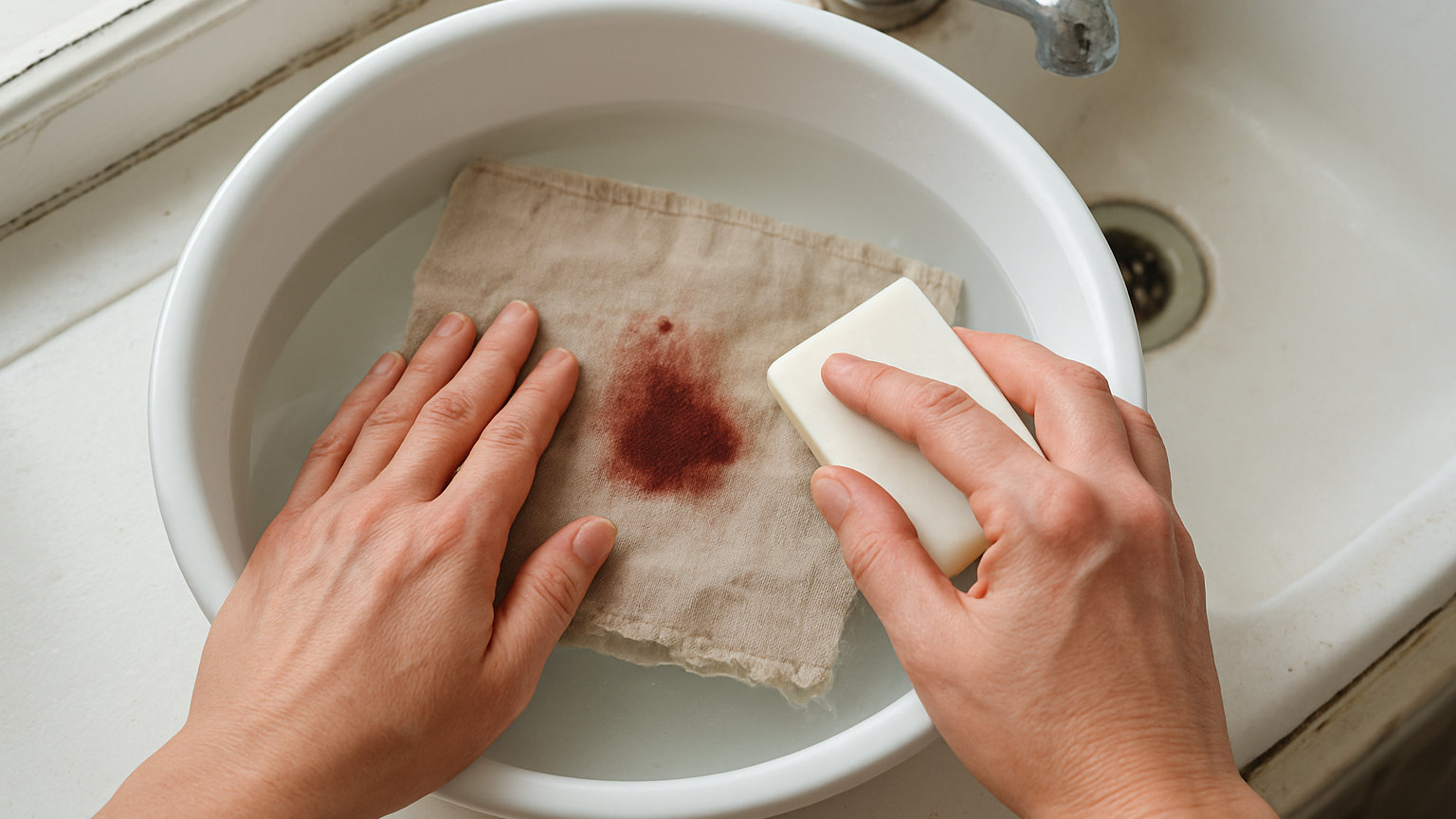
- Apply cold water to a cloth, not to the carpet, and dab the area.
- Blot again with a dry cloth.
- Repeat the damp and dry cycle until little further transfers.
- Press a dry towel down under weight for a few hours to extract the moisture.
Cold water and patient blotting deal with a surprising proportion of a fresh stain before any product is needed.
What should you use if a mark remains?
A solution of cold water with a small amount of washing up liquid, applied to a cloth and dabbed on. For anything remaining after that, an enzyme cleaner designed for protein stains, which breaks the blood down rather than trying to lift it.
Apply it sparingly, leave it for the time stated on the label, then blot. Enzymes need time rather than quantity.
What about hydrogen peroxide?
Very effective on blood and risky on carpet colour. A solution of one part three per cent hydrogen peroxide to two parts cold water, dabbed on with a cloth, will lift most of a dried mark.
Test in a wardrobe or under a sofa first and leave the test area to dry fully before judging. It will lighten some carpet dyes, and a bleached patch is considerably more visible than a blood mark.
Never use it on wool carpet.
Why does the stain sometimes come back?
Wicking. Blood that soaked into the backing travels back up the fibres as the carpet dries and reappears as a faint outline a day or two later. It means the extraction was not thorough enough rather than that the treatment failed.
Press a dry towel down with a heavy weight on top for several hours, then dry the area quickly with a fan. If it does wick back, treat again and extract more aggressively.
What about dried blood?
Soften it first. Lay a cloth dampened in cold water over the mark for fifteen minutes, then blot. Repeat two or three times, since dried blood releases gradually.
Then use an enzyme cleaner, left for the full contact time, followed by blotting and extraction. Expect two or three rounds for an established mark.
What about wool carpet?
Wool is a protein fibre, so both enzyme cleaners and hydrogen peroxide can damage it. Use cold water, a wool safe carpet cleaner and thorough blotting, and accept a slower result.
For a significant blood stain on a wool carpet, a professional is the sensible choice, since the risk of damaging the fibre exceeds the cost of the visit.
What should never be used?
Hot water, a steam cleaner, or chlorine bleach. Steam cleaning a blood stain sets it permanently into the fibre and the backing, and it is a common and irreversible mistake.
Avoid coloured cloths as well, since a damp cloth can transfer its own dye into wet carpet.
What about safety?
Wear disposable gloves when cleaning up anyone else blood, bag the used cloths rather than washing them with other laundry, and wash your hands thoroughly afterwards. For a large spill, or where there is any concern about infection, it is reasonable to use a disinfectant on the area once the stain itself has been removed.
What about the underlay beneath?
Check it after a significant spill. Blood that has gone through the carpet into the underlay will continue to smell and will wick back for weeks, and no amount of surface treatment will reach it. Lifting a corner of the carpet to look is worth doing, and where the underlay is soaked, replacing that section is the only reliable fix.