Blood is largely water, plasma proteins and haemoglobin. While those proteins remain dissolved, blood rinses out of fabric readily. Heat changes them permanently: the long protein molecules unravel and then link together into a solid network, exactly as an egg white does in a pan. Inside a fibre, that network is locked in place and cannot be dissolved out.
What temperature is enough?
Lower than most people assume. Coagulation begins gradually from around 40 degrees and proceeds rapidly above 50. That means a rinse under a hot tap, a normal 40 degree wash, a tumble dryer cycle or an iron will all do it to some degree.
There is no safe warm option with blood. Cold, throughout, until the protein has been broken down by enzymes.
Why does the colour change?
Because haemoglobin also oxidises. Fresh blood is red; dried blood turns brown as the iron in haemoglobin reacts with oxygen. Heat accelerates this considerably, which is why a heat set stain is a flat brown rather than a reddish one.
The brown colour is a useful diagnostic. A stain that has stayed reddish has probably not been heated.
How do enzymes get round the problem?
Protease enzymes in biological detergent cut protein chains into smaller fragments that dissolve in water. They attack the protein chemically rather than trying to wash it away intact, which is why they work on stains that rinsing cannot touch.
Enzymes are themselves proteins and are destroyed by high temperatures, so they work best in the cool to warm range. That is another reason a hot wash is counterproductive here: it sets the stain and disables the thing that would have removed it.
Which other stains behave this way?
- Egg, in any form, and the clearest example.
- Milk, cream and cheese, and anything containing them.
- Gravy and meat juices.
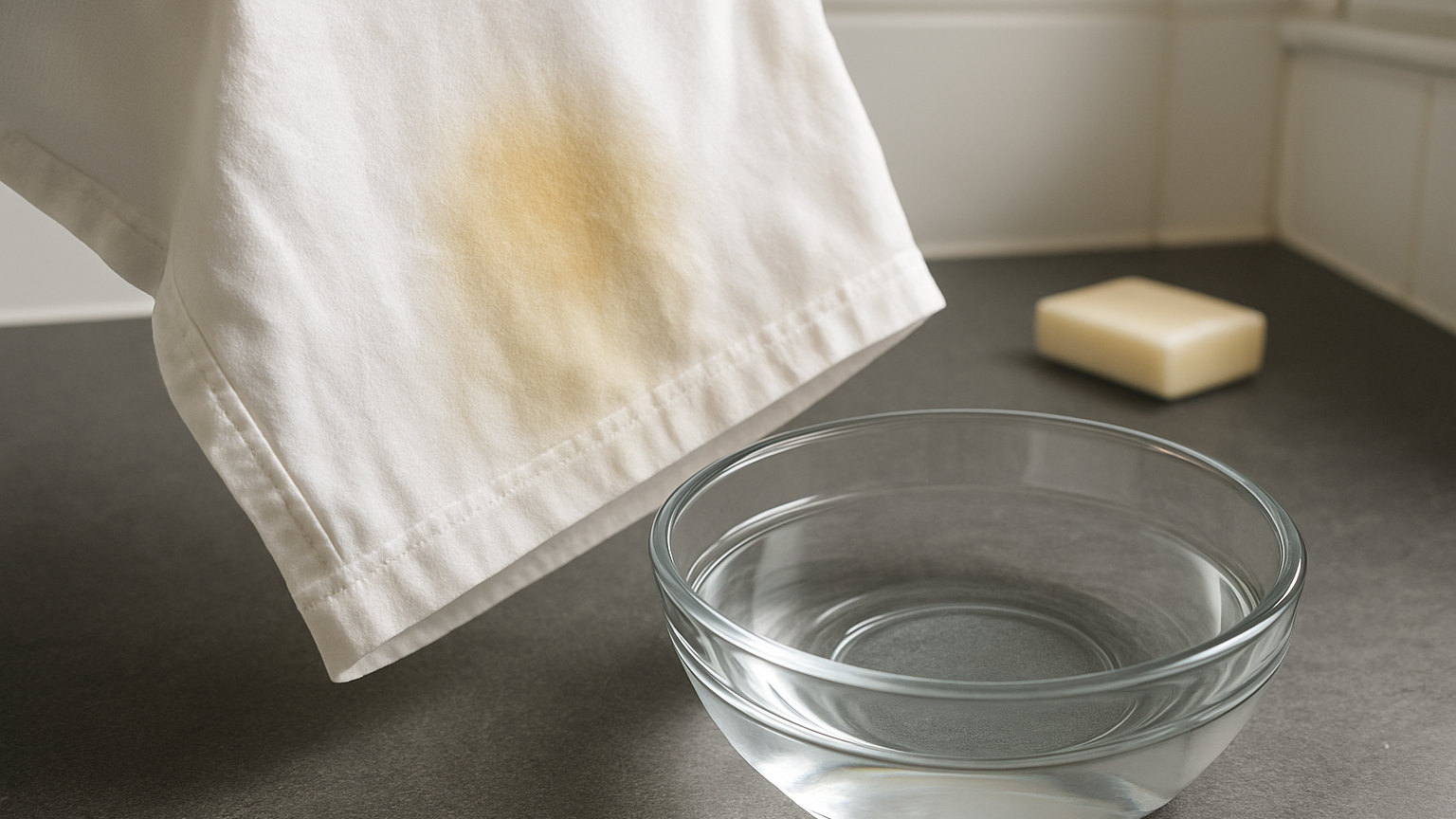
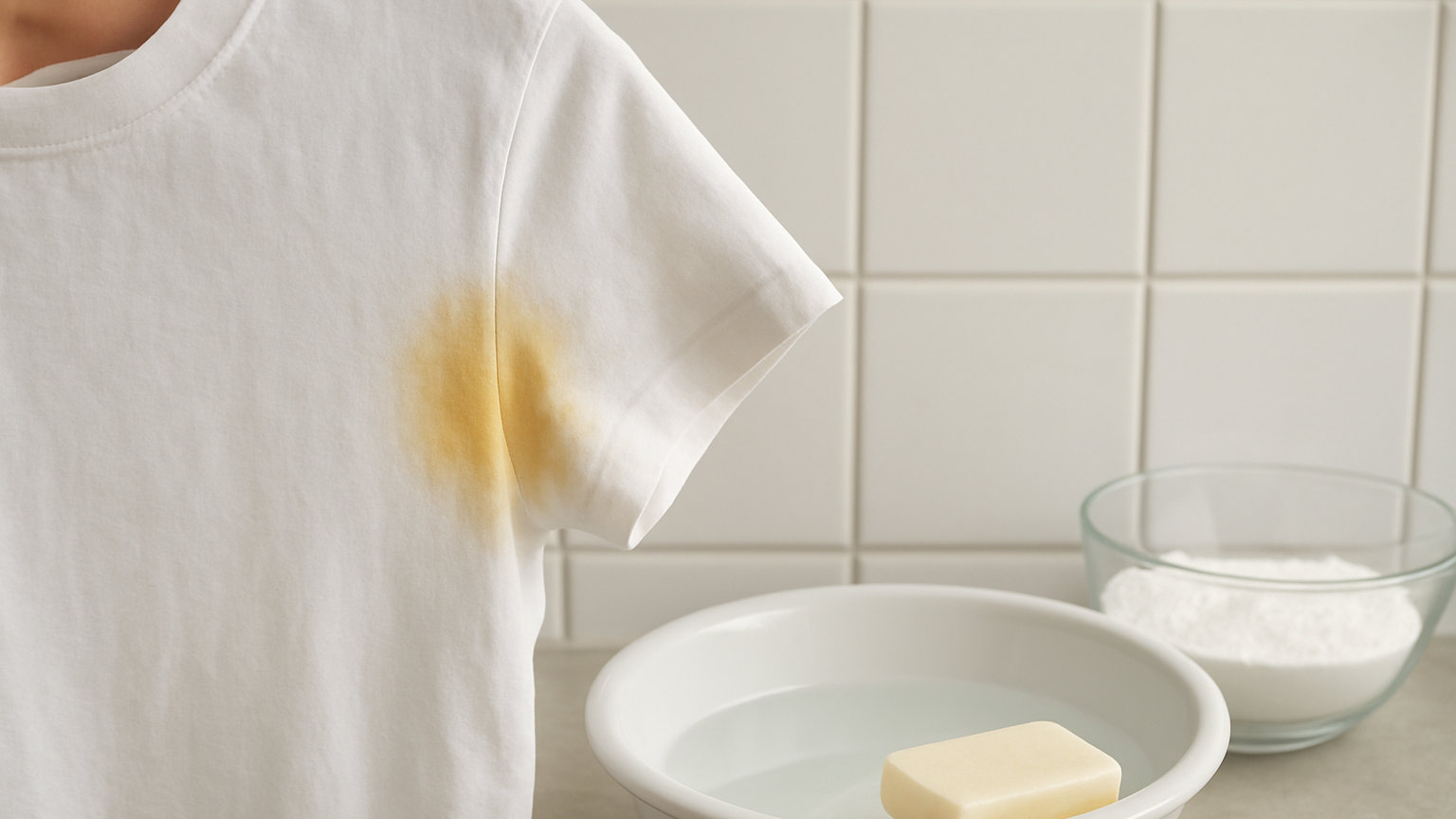
- Sweat, which is why underarm marks yellow and stiffen over time.
- Vomit, which is both protein and acid.
- Grass, which contains proteins alongside its pigment.
- Baby formula and mucus.
All of them need the same approach: cold water first, enzymes second, warmth only afterwards if at all.
What counts as heat in a household?
A hot tap, a warm or hot wash cycle, a tumble dryer, an iron, a hairdryer used to speed drying, a radiator, and a steam cleaner. Even leaving a stained garment in a hot car or in direct sun on a windowsill will contribute over a few hours.
The tumble dryer is the most common culprit, because people wash a garment, fail to check it, and set whatever survived.
What is the practical habit?
Check every washed item while it is still damp, in good light, before it goes anywhere near heat. A stain that is faintly visible when wet will be clearly visible when dry and permanent after a dryer cycle. Treating it again at that point costs nothing.
Can a set stain be improved?
Sometimes. Repeated overnight soaks in cold water with a biological detergent, two or three times, often produce gradual improvement, since the enzymes can still work at the edges of the coagulated material. On white cotton, an oxygen bleach soak afterwards lifts the remaining brown discolouration.
Expect a shadow rather than a clean result.
Is there any situation where heat helps?
Only after the protein has been dealt with. Once a blood or milk stain has been broken down by a cold enzyme soak and rinsed, a warm wash is safe and useful for general cleaning. The order is what matters, not the temperature in isolation.
Why does this rule surprise people?
Because hot water is the instinctive answer to almost everything else in cleaning, and for grease, sugar and general soiling it is the correct one. Protein is the exception, and it is a large enough category that the exception matters: blood, egg, milk, gravy, sweat and grass between them account for a great deal of household laundry. Learning the one rule covers all of them.