Engine oil, chain lube and workshop grease are mineral based rather than animal or vegetable, and that difference matters. Washing up liquid is formulated for cooking fats and will lift some mineral oil, but rarely all of it. These stains need a stronger degreaser and considerably more patience.
What makes mineral oil harder?
The molecules are larger, more chemically stable and often carry carbon particles and metal residue picked up from the engine. The oil itself is the smaller part of the problem; the black colour comes from suspended solids that lodge in the weave.
Many lubricants also contain additives designed specifically to cling to surfaces under heat and pressure, which is the opposite of what you want on a pair of trousers.
What is the method?
- Scrape off any thick deposit with a blunt edge.
- Blot the excess with kitchen paper, pressing rather than wiping.
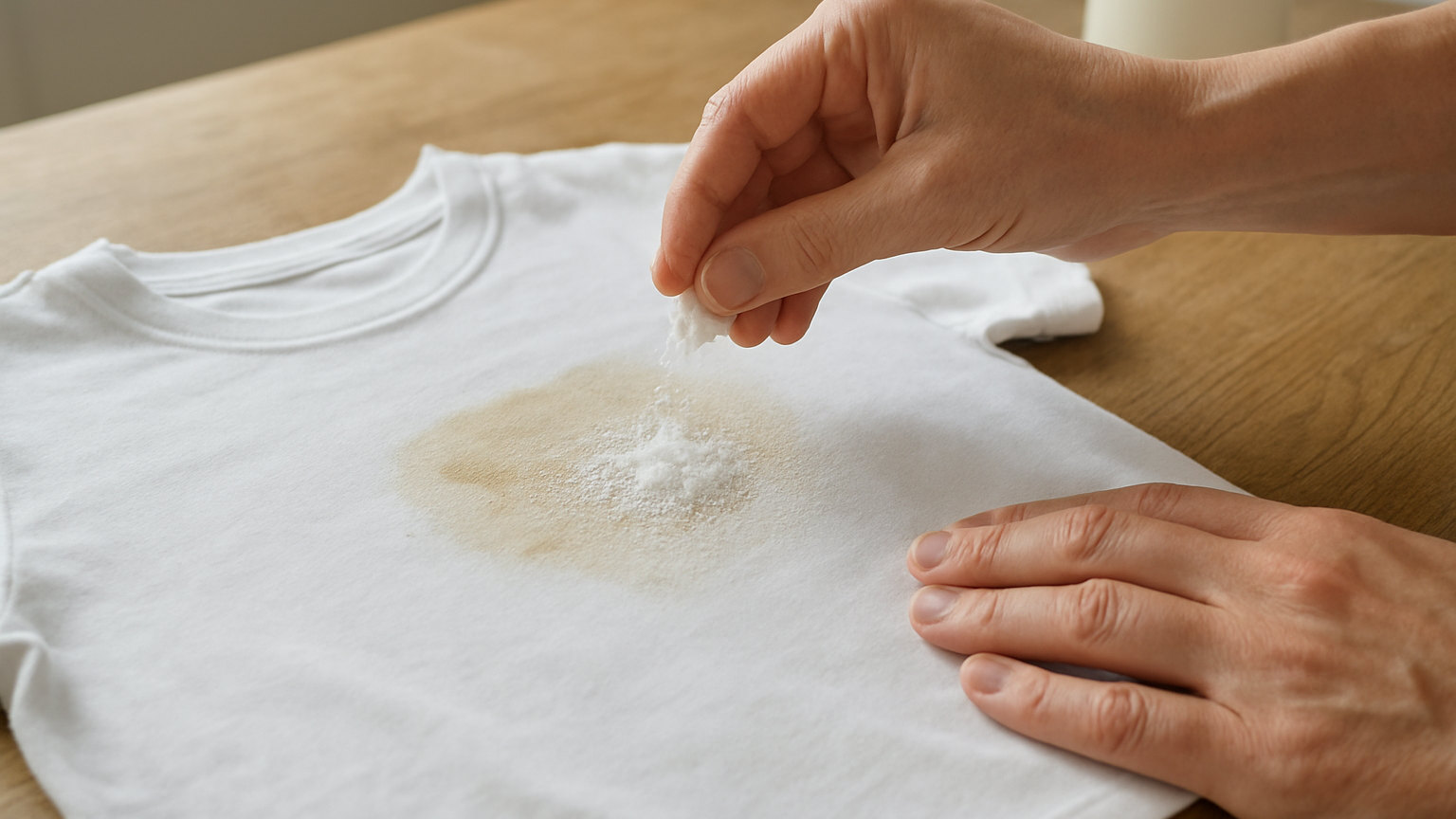
- Sprinkle generously with cornflour, talc or dry cat litter crushed fine, and leave for at least an hour.
- Brush the powder away.
- Apply a heavy duty degreaser or a citrus based hand cleaner directly to the mark.
- Work it in with a brush and leave for thirty minutes.
- Rinse in hot water, then repeat the degreaser stage.
- Wash separately at the highest temperature the fabric allows, with a biological detergent.
Which degreasers work?
- Citrus based mechanics hand cleaner – genuinely effective and designed for exactly this.
- A proprietary heavy duty laundry degreaser, sold for workwear.
- Soda crystals dissolved in hot water as a soak, which is strongly alkaline and cuts mineral grease well.
- Washing up liquid, which is worth trying first on a light mark.
- White spirit, for robust cotton only, applied from the reverse and rinsed thoroughly.
Avoid soda crystals on wool, silk and anything with elastane. Avoid white spirit on synthetics and on anything you cannot test first.
Why does the powder stage matter so much?
Because it removes a proportion of the oil before any liquid is introduced, and with mineral oil that proportion is significant. An hour of powder does more than ten minutes of scrubbing, and it costs nothing except waiting.
Repeat it if the first application turns dark, which it usually will.
Why should these clothes be washed separately?
Because mineral oil transfers readily onto everything else in the drum, and a single pair of contaminated overalls will leave grey smears across a full load. It also leaves residue in the machine that affects subsequent washes.
Run a hot empty cycle after washing heavily soiled workwear, and wipe the door seal.
Is there a fire risk?
Yes, and it is worth taking seriously. Cloths and clothing contaminated with oil, solvent or thinners should never go in a tumble dryer. The residue can continue to oxidise and generate heat after the cycle ends, and dryer fires involving oily rags are well documented.
Air dry anything that has been exposed to oil or solvent, outdoors if possible.
What about the smell?
Mineral oil smell persists after the visible mark has gone, because residue remains in the fibre. A soak with soda crystals followed by a wash with a cup of white vinegar in the drum usually clears it. Drying outdoors helps considerably.
What should you accept?
That heavily soiled workwear will never look new. Dedicated work clothes washed separately, treated promptly and not tumble dried will stay serviceable for years, and trying to keep them pristine is not a realistic goal. For a one off spill on ordinary clothing, treat immediately and expect two or three attempts.
What about oil on a driveway or a garage floor?
The same principle on a larger scale. Cover the spill with cat litter or sand and leave it overnight, then sweep it up. Follow with a strong degreaser or a hot solution of soda crystals scrubbed in with a stiff brush and rinsed away. On porous concrete a shadow usually remains, and repeated treatments fade it gradually.