Grease in carpet behaves differently from a liquid spill. It does not spread and dry; it stays in the pile as a sticky film and then collects every particle of dirt that lands on it. That is why a small oil mark looks worse a month later than it did on the day, and why treating it properly matters even when it is barely visible.
What should you do first?
- Lift off any solid material with a blunt edge.
- Blot the excess with kitchen paper, pressing rather than wiping.
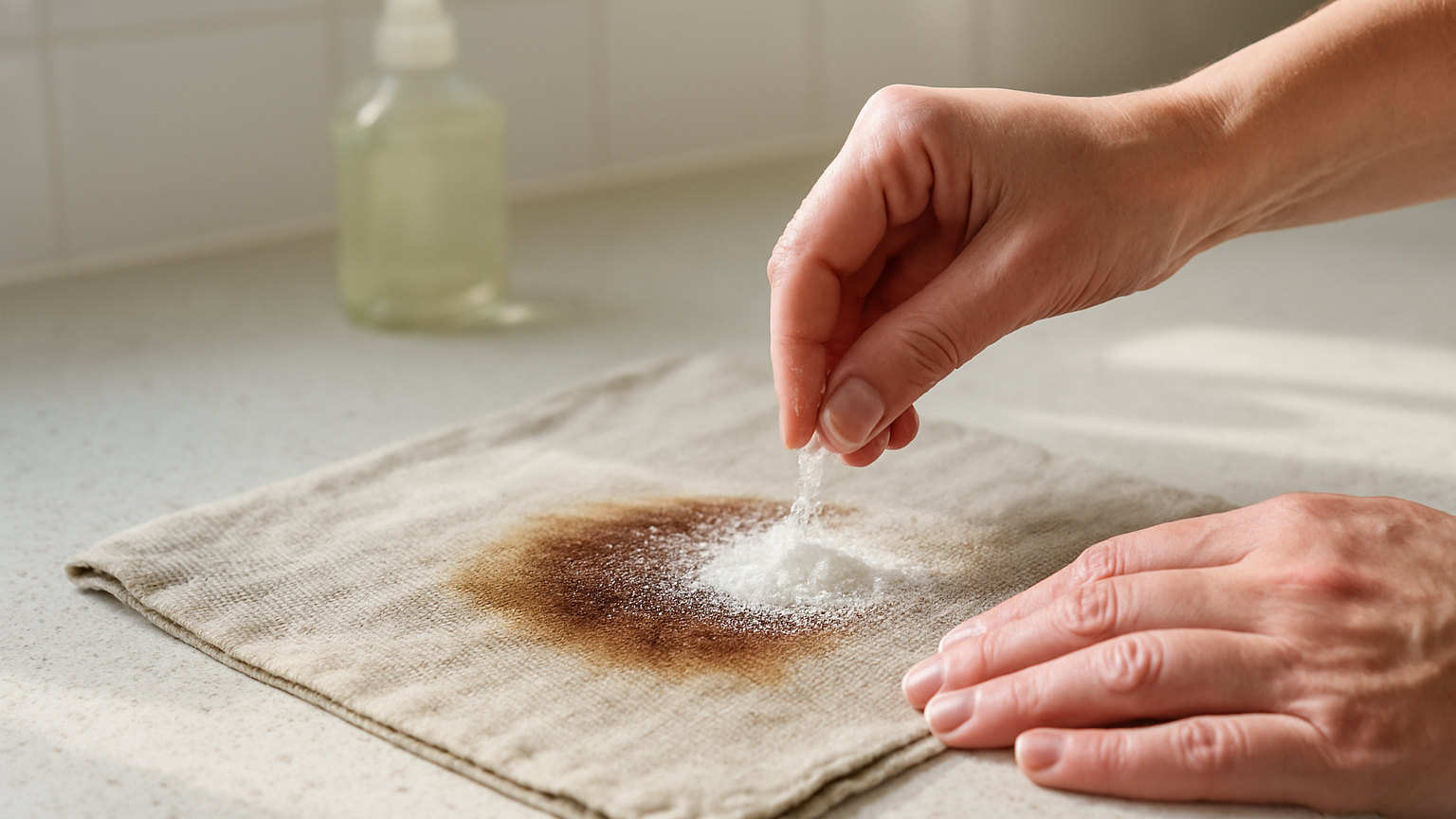
- Cover the area generously with cornflour, talc or bicarbonate of soda.
- Leave the powder for at least an hour, and several hours for a heavy mark.
- Vacuum it up thoroughly.
- Repeat the powder stage if the first application discoloured.
The powder is doing real work here. Oil migrates into a fine powder readily, and removing a proportion of it dry means far less has to be dealt with wet, which matters on a surface that cannot be rinsed.
What comes next?
A solution of warm water with a few drops of washing up liquid, applied to a cloth rather than poured onto the carpet. Dab the area from the outside inwards, blot with a dry cloth, and repeat.
Warm water is correct here, unlike most carpet stains, because fat becomes more fluid as it warms and the surfactants can then lift it.
Why does the rinse stage matter so much?
Because detergent left in carpet is sticky and attracts dirt exactly as the grease did. A patch treated with detergent and not rinsed will be visibly darker than the surrounding carpet within a few weeks, and people assume the stain came back.
Blot with a cloth dampened in clean water several times, then press a dry towel down under weight for a few hours to extract the moisture.
What works on an old greasy patch?
Rehydrate and repeat. Lay a cloth dampened in warm water over the area for fifteen minutes, blot, then apply the detergent solution and leave it for ten minutes before blotting. Two or three rounds are normal.
For a stubborn mark on synthetic carpet, a proprietary carpet spot cleaner formulated for oil works well. Test on an offcut or in a hidden corner first.
What about solvents?
A dry cleaning solvent or an eucalyptus based stain remover is effective on old grease and should be used sparingly, applied to a cloth and dabbed. Never pour a solvent onto carpet, since it can dissolve the latex backing and separate the pile from the base.
Ventilate the room and keep solvents away from anyone with respiratory sensitivity.
What about wool carpet?
Wool absorbs oil more readily than synthetic fibre and is less tolerant of strong treatments. Use the powder stage generously, since it carries no risk, then a wool safe carpet cleaner with minimal moisture. Avoid strong alkalis and solvents.
On a wool carpet with a significant grease spill, a professional is often the cheaper route once the risk of damage is considered.
What causes most carpet grease marks?
Food dropped in front of a sofa, oil carried in on shoes from a driveway or a kitchen, pet food around a bowl, and furniture polish overspray. The last is worth knowing about, since a silicone based spray used on a table will settle on the carpet beneath and create a patch that gradually darkens.
When should you call someone in?
For a large spill, for wool or natural fibre carpet, and for any mark that has darkened despite treatment. Professional hot water extraction with a degreasing pre-spray removes both the oil and the residue, which is the combination that is hard to achieve with a cloth.
How do you tell grease from a general dirty patch?
Press a clean white cloth firmly onto the area and look at it. A greasy patch transfers a faint oily mark; general soiling transfers dust and fibre. It matters because the treatments differ, and using a water based spot cleaner on grease achieves very little while the powder stage would have removed most of it.