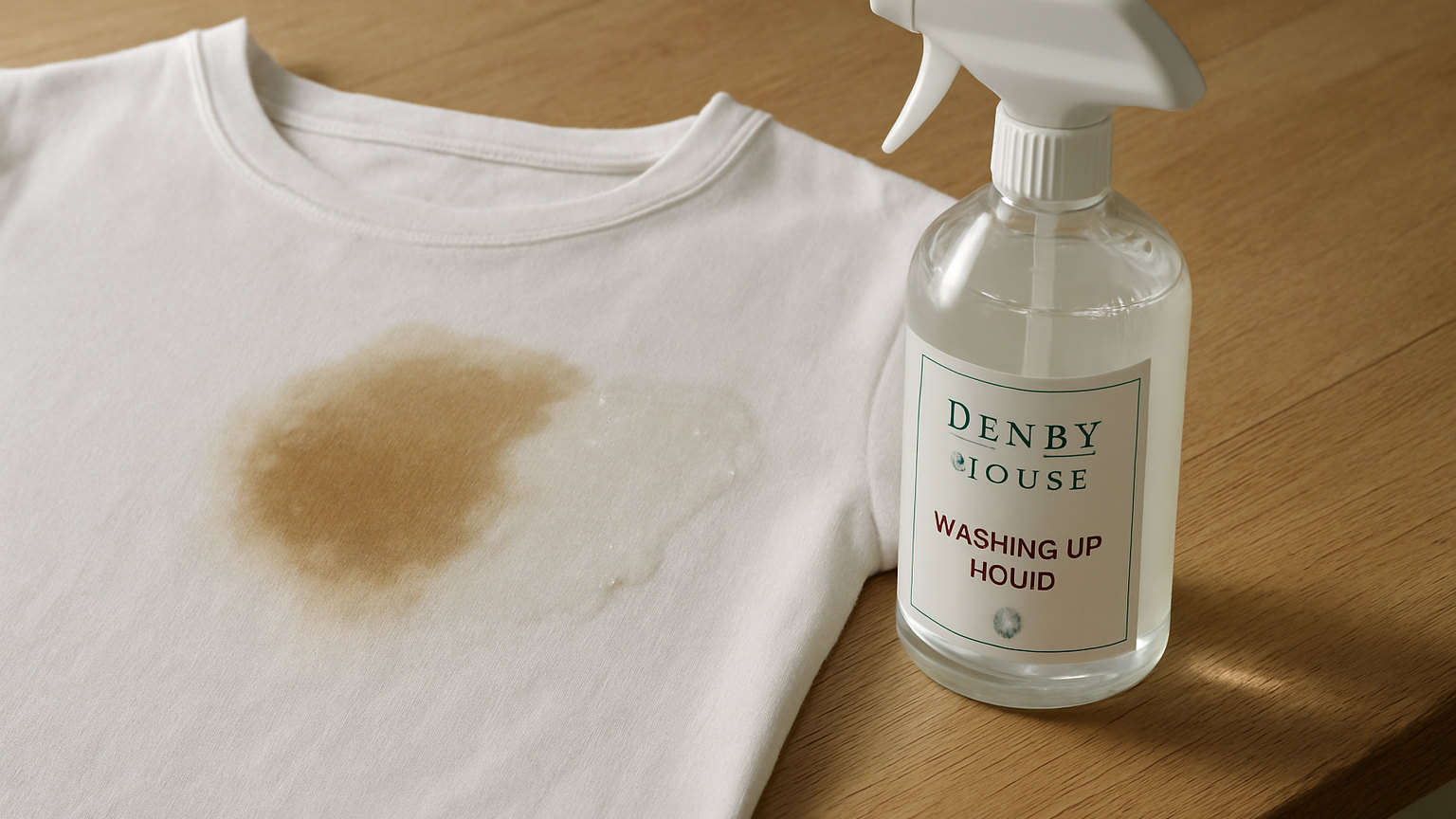
Washing up liquid is the first thing to reach for on almost any greasy mark, and it is not a household improvisation. It is a purpose built degreaser, formulated to lift animal and vegetable fat off surfaces and hold it in water, and that is precisely what a grease stain in fabric requires.
How does it actually work?
Through surfactants. A surfactant molecule has two ends: one that is attracted to oil and one that is attracted to water. The oil loving end buries itself in the grease and the water loving end faces outwards, so the fat is surrounded by molecules that water can then carry away.
Without a surfactant, oil and water simply refuse to mix and the grease stays where it is. That is why rinsing a butter mark under a tap achieves nothing at all.
Why washing up liquid rather than laundry detergent?
Because it is more concentrated in the relevant surfactants and it comes in a form you can apply neat to a specific spot. Laundry detergent is diluted across a whole drum of water and is formulated to handle a mixture of soils rather than to attack fat directly.
For a stain, applying a concentrated degreaser to the mark itself does far more than relying on the same chemistry at wash strength.
What is the method?
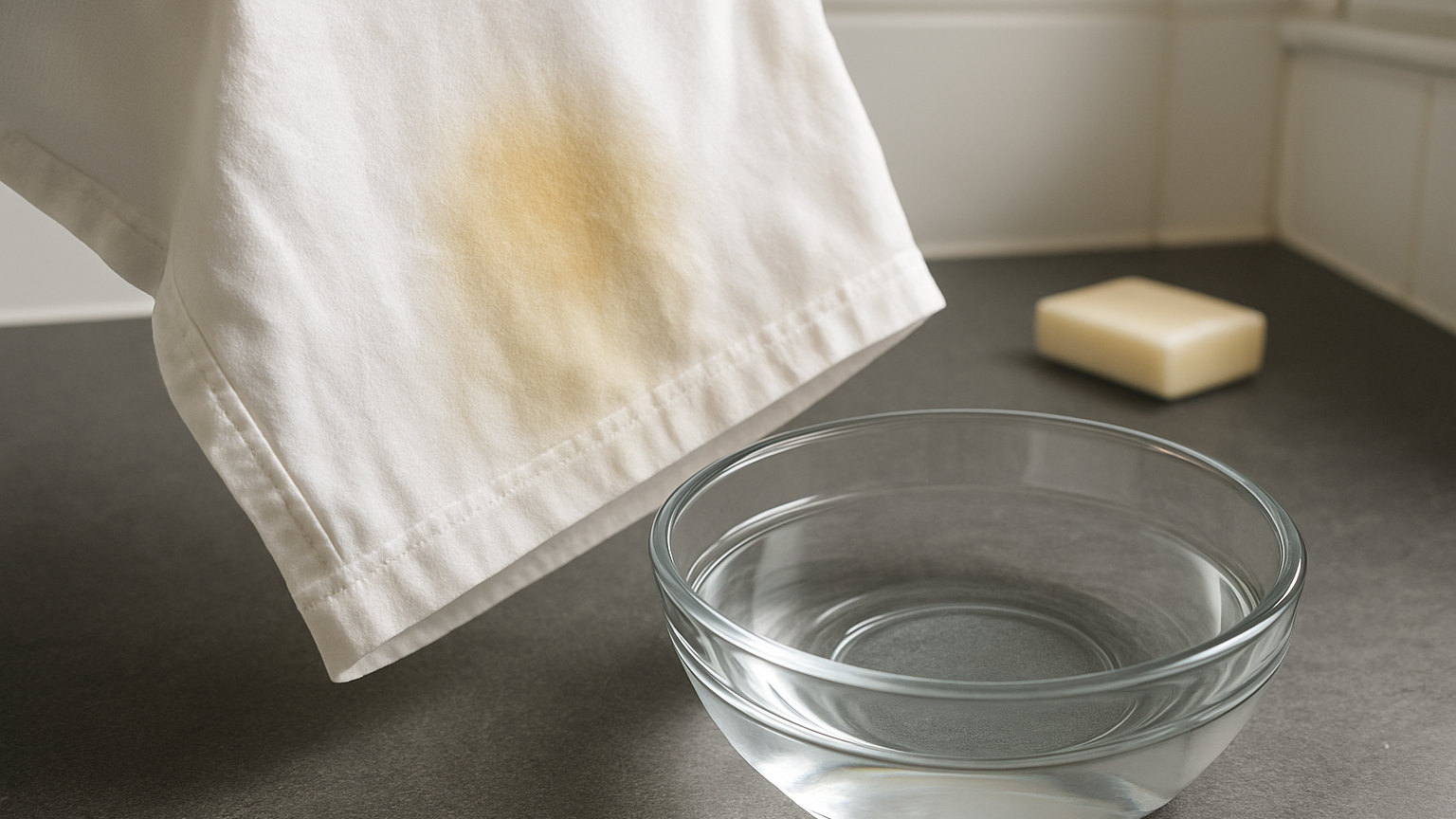
- Blot up any excess oil with kitchen paper, pressing rather than wiping.
- Apply a small amount of washing up liquid directly to the stain.
- Work it in gently with a fingertip or a soft brush, from the outside inwards.
- Leave it for five to ten minutes so the surfactants can penetrate.
- Rinse with the warmest water the fabric allows.
- Repeat if the fabric still feels slightly slick.
- Wash normally, checking before drying.
How much should you use?
A few drops, not a squirt. Too much is difficult to rinse out and leaves a residue that attracts dirt, so the treated patch ends up darker than the fabric around it within a few weeks. A small amount worked in properly outperforms a large amount applied and rinsed off quickly.
Why does grease need warm water?
Because fats become more fluid as they warm, and a fluid fat is easier for surfactants to surround and carry away. A butter stain treated with cold water will often leave a shadow that the same treatment in warm water would have removed entirely.
This is the opposite of the rule for protein stains, and it is the main reason people get inconsistent results. Cold for blood, milk and egg. Warm for oil, butter and grease.
What if the stain has both?
Treat the protein first with cold water and an enzyme detergent, then deal with the grease with washing up liquid and warmth. Gravy, chocolate and creamy sauces all fall into this category, and doing it in the wrong order sets the protein permanently.
Which grease does it not handle?
Mineral based oils, which are chemically different from cooking fats. Engine oil, chain lube, bicycle grease and machine oil all respond better to a dedicated degreaser or a solvent, though washing up liquid is still a reasonable first attempt and will lift some of it.
Waxes are also different, since they are solid at room temperature and need to be melted or hardened rather than dissolved.
Does the colour of the liquid matter?
On white and pale fabric, slightly. A strongly coloured washing up liquid can leave a faint tint if it is not rinsed thoroughly, so a clear or pale product is a safer choice for stain work. Rinse well regardless.
What is the one thing to remember?
Dwell time. Applying the liquid and rinsing it straight off is the most common mistake, because the surfactants need several minutes in contact with the fat to do their work. Five minutes of waiting removes more grease than five minutes of scrubbing.
Can it be used on every surface?
On almost anything that tolerates water, which is a considerable advantage over solvents. It is safe on cotton, synthetics, most carpet and painted surfaces, and it is mild enough for upholstery marked W or WS. The exceptions are the usual ones: no water at all on solvent only fabric, and caution on unsealed wood and natural stone.