Hairspray on ink is one of the best known household remedies and one that has quietly stopped working. It was effective because older hairsprays were largely alcohol, and alcohol dissolves the oily base of ballpoint ink. Most modern formulations contain far less alcohol and considerably more polymer, and the polymer is the problem.
What did the alcohol do?
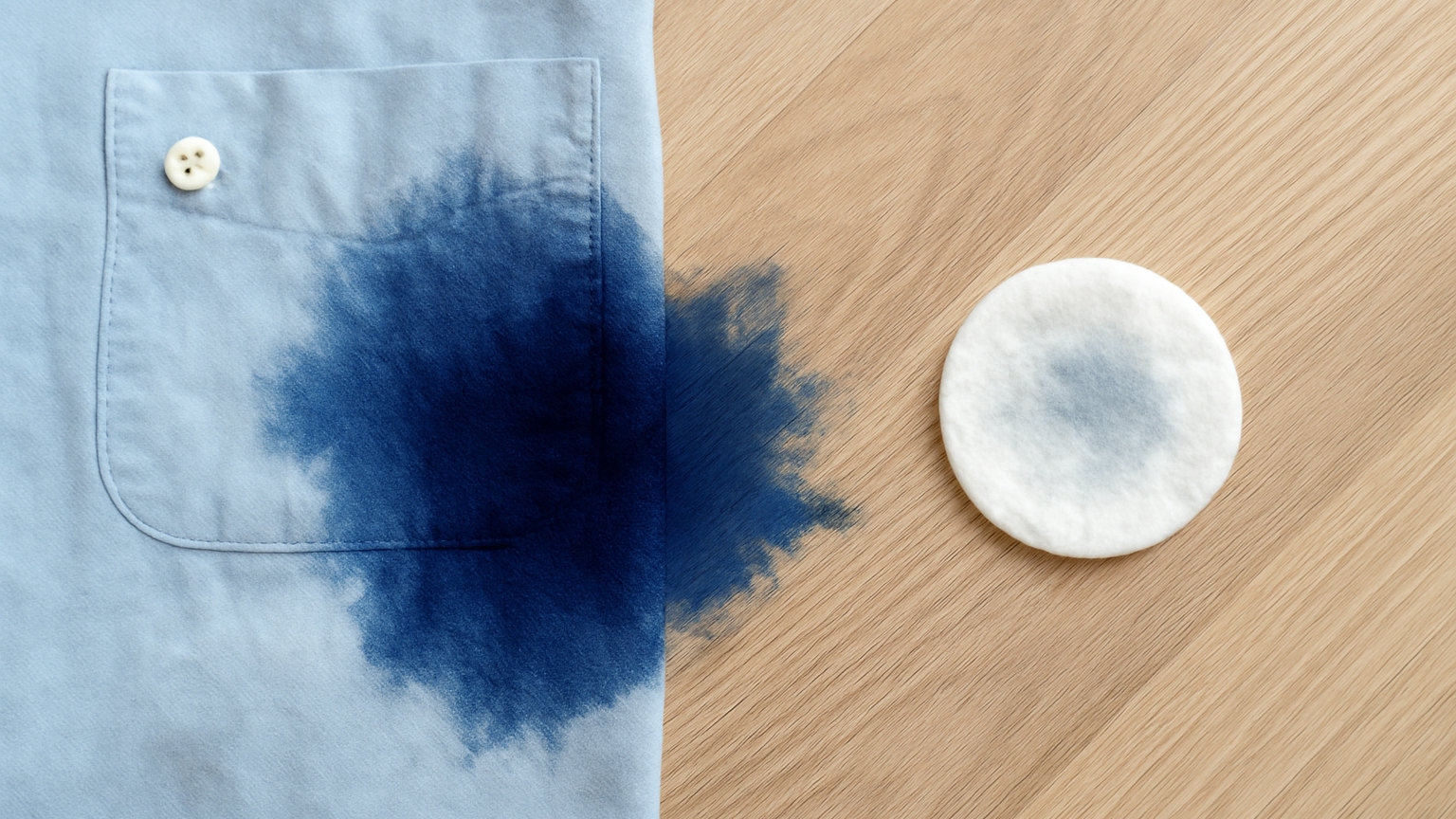
It dissolved the glycol or oil carrier that holds the pigment in ballpoint ink, releasing the pigment so it could be blotted onto an absorbent pad. That is exactly what surgical spirit does, and hairspray was simply a convenient source of alcohol that happened to be in most houses.
The delivery was useful too. A spray put the solvent onto a small area without soaking the fabric.
What changed?
Formulations moved towards lower alcohol content for several reasons, including flammability, hair condition and the shift to pump sprays and alcohol free products. Many current hairsprays are water based with film forming polymers, conditioning oils and fragrance.
Applied to ink, those leave a sticky residue that traps the pigment in the fabric rather than releasing it, and the residue then has to be washed out as well.
How do you tell whether yours will work?
Read the ingredients. If alcohol, denatured alcohol or ethanol appears near the top of the list, it will probably help. If the first ingredient is water and the list is dominated by polymers, it will not.
The practical test is to spray a little on a cotton pad and smell it. A strong alcohol smell is a good sign.
What should you use instead?
Surgical spirit, which is essentially the active ingredient without anything else. It costs very little, keeps indefinitely and does the job reliably. Hand sanitiser gel is a reasonable substitute and leaves a gel residue that needs rinsing.
A proprietary ink remover is formulated for the purpose and is worth having if pens leak in your household regularly.
What is the correct technique with any of them?
- Lay the fabric face down on a pad of clean white kitchen paper.
- Apply the solvent to a cloth or cotton pad rather than spraying the garment.
- Dab the reverse of the mark, pushing the ink out into the paper.
- Change the paper as soon as it takes up colour.
- Repeat until nothing further transfers.
- Wash out the solvent with washing up liquid and warm water.
Spraying directly onto the stain, which is how the remedy is usually described, soaks a wide area and spreads the ink. Applying it to a cloth gives control.
Are there other remedies with the same problem?
Several household remedies have aged badly as products reformulated. Milk on ink worked better when ink formulations differed. Newspaper for cleaning glass works less well with modern inks and thinner paper. Soap flakes for delicates are harder to find than they were.
It is worth checking whether a remedy relies on an ingredient that is still present in the product.
Does hairspray damage fabric?
The polymer residue is the main issue and it washes out with detergent. Some hairsprays contain dyes or oils that can leave their own mark on pale fabric, so test on a hidden seam. The residue is stickier than the ink and will attract dirt if left.
What is the honest summary?
If a can of high alcohol hairspray is the only thing to hand and the ink is fresh, it is worth trying, applied to a cloth rather than sprayed on. For anything else, buy a small bottle of surgical spirit and keep it with the stain kit. It works every time and costs less than the hairspray.
What about on carpet and upholstery?
Worse than on clothing, because the polymer residue cannot be rinsed out of a surface that cannot be washed. A sticky patch in carpet attracts dirt and darkens over the following weeks, which means a hairspray treatment can leave a mark where the ink itself would have faded into the pattern. Use a proper solvent on a cloth instead.