Indigo dye does not penetrate cotton fibre the way most dyes do. It sits in layers on the surface of the yarn, which is precisely why denim fades at the knees and seat in an attractive way, and precisely why it rubs off onto pale sofas, cream car seats, white leather bags and light carpet.
Why do new jeans transfer so much?
Because they carry surplus dye that has not bonded at all. The transfer is worst in the first few wears, worse again when the jeans are damp, and worse with raw or selvedge denim, which is deliberately undyed beyond the surface layers and is expected to transfer.
Dark indigo, unwashed denim and anything sold as raw will all mark light surfaces.
What is the method for fabric upholstery?
- Check the cleaning code on the label before using anything wet.
- Vacuum the area to remove loose fibre and dust.
- On W or WS fabric, whisk a few drops of washing up liquid into warm water and apply the foam only.
- Work across a whole panel rather than a patch, from the outside inwards.
- Blot with a clean dry cloth, changing it as it picks up colour.
- Rinse by wiping with a cloth wrung out in clean water.
- Press a dry towel down and dry quickly with a fan.
- Repeat over several sessions rather than scrubbing in one.
On S coded fabric, use a solvent based upholstery cleaner instead, tested first.
What works on leather?
On pigmented leather, a leather cleaner and a soft cloth will lift most of it if it is caught early. Work gently and repeatedly rather than hard, and condition afterwards.
Dye that has been left on light leather for months sinks into the finish and becomes far harder. A dedicated leather dye transfer remover exists for exactly this problem and is worth buying rather than improvising, since alcohol and abrasives both strip the pigment of the leather itself.
Aniline leather absorbs indigo readily and usually needs a specialist.
What about car seats?
This is the most common version of the problem, since people sit in cars in jeans for long periods and seats are often light. Automotive interior cleaners formulated for dye transfer work well on both fabric and coated leather.
Treat it regularly rather than annually, since each sitting adds more and the accumulation is what becomes difficult.
What about white trainers and bags?
Canvas trainers respond to a paste of bicarbonate of soda and washing up liquid scrubbed with an old toothbrush, then rinsed and dried in sunlight. Coated white leather responds to a leather cleaner or a melamine sponge used very lightly.
On a white leather bag, test anything in a hidden area, since the finish is thinner than on furniture.
How do you stop it happening?
- Wash new jeans two or three times before wearing them, cold, inside out and alone.
- Keep a throw on the sofa in the seat people use most.
- Use seat covers in a car with light upholstery.
- Avoid sitting on light furniture in damp jeans, which transfers far more.
- Check raw denim specifically, which is sold with the expectation that it will transfer.
Does washing jeans stop it?
It reduces it considerably over the first few washes and never stops it completely with dark indigo. Washing inside out in cold water preserves the colour of the jeans while removing the loose surplus, which is the best compromise.
What if the transfer has been there for a long time?
Expect an improvement rather than a full removal, particularly on light leather where the dye has sunk into the finish. Several gentle treatments over a few weeks achieve more than one aggressive attempt, and on a valuable piece a professional cleaner or a leather specialist is the safer route.
What about dye transfer onto light carpet?
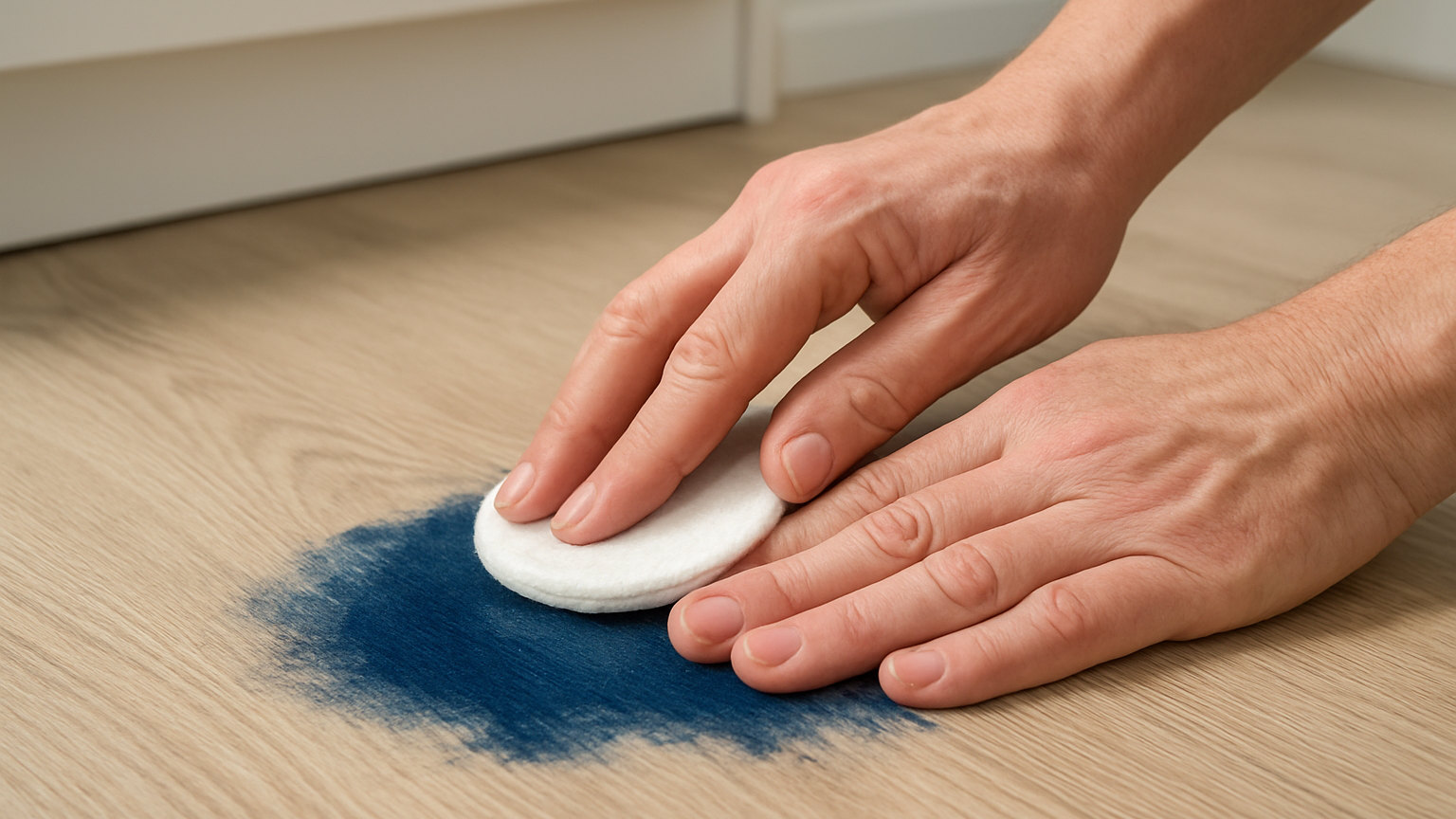
It happens where people sit on the floor in dark jeans, and it shows as a diffuse grey blue patch rather than a defined mark. Treat it with a carpet cleaner suitable for the fibre, working in several light passes with thorough extraction between them. It rarely comes out completely and usually improves enough to be unnoticeable.