Newspaper ink is carbon black pigment suspended in an oil base, and on most papers it is never fully absorbed. That is why it comes off on fingers and why it transfers onto anything damp, warm or absorbent that it rests against. The important consequence is that it should be treated as a grease stain rather than as an ink one.
Where does it usually cause problems?
- Hands, which is normal and washes off.
- Light upholstery and cushions, where a newspaper has been left face down.
- Kitchen worktops, particularly where a paper has sat on a damp surface.
- Tablecloths and placemats.
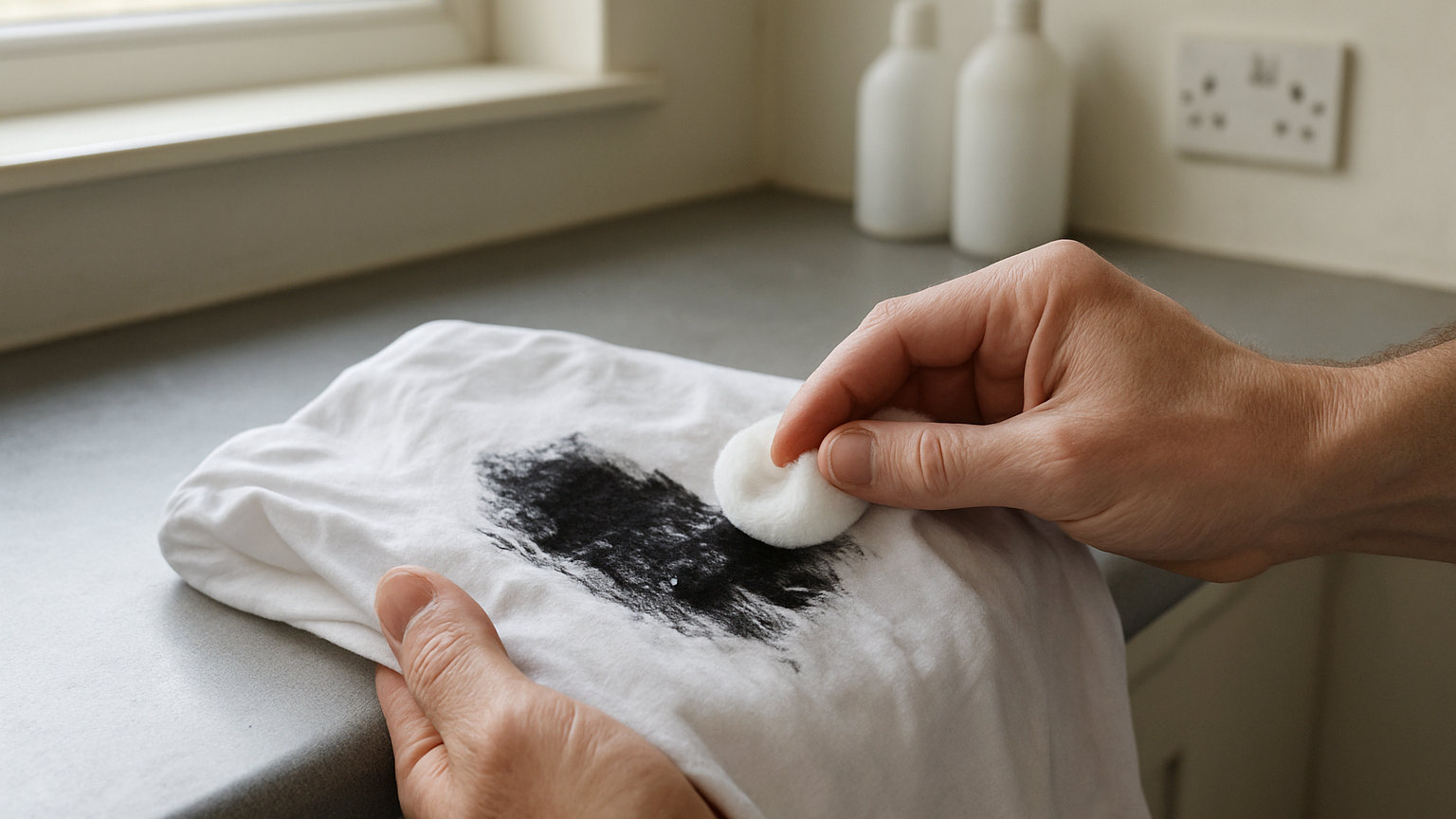
- Clothing, from a folded paper carried under an arm.
- Anything wrapped in newspaper, including items in storage.
What is the method for fabric?
- Brush off any loose material dry.
- Apply washing up liquid directly to the mark, which tackles the oil base.
- Work it in gently from the outside inwards and leave for ten minutes.
- Rinse in warm water from the reverse side.
- For remaining pigment, dab with surgical spirit over a pad of white kitchen paper.
- Wash at the warmest temperature the fabric allows.
- On white cotton, follow with an oxygen bleach soak if a grey shadow remains.
The detergent stage first matters. Going straight to a solvent leaves the oil behind and the pigment simply redeposits.
Why does it transfer so easily?
Because newsprint uses a cheap uncoated paper and an ink that is not fully set. Higher quality glossy printing uses a coated paper and a heat set ink, which is why a magazine transfers far less than a newspaper.
Damp and warmth make it much worse, which is why a paper left on a windowsill in the sun or on a slightly damp worktop leaves a clear image behind.
What about upholstery?
Check the cleaning code first. On W or WS fabric, whisk washing up liquid into warm water and apply the foam only, working across a whole panel. Blot with a clean dry cloth and rinse by wiping with a cloth wrung out in clean water.
On S coded fabric, use a solvent based upholstery cleaner. On light coloured sofas the transfer is often a mirror image of a headline, which makes it obvious and, fortunately, usually superficial.
What about hard surfaces?
On sealed worktops, laminate and painted wood, warm water with washing up liquid lifts most of it. For anything remaining, surgical spirit on a cloth works, tested first on painted surfaces.
On unsealed wood and porous stone the oil carries the pigment into the surface and it may be permanent. A paste of bicarbonate of soda helps, and on wood, light sanding is the reliable answer where it is practical.
What about hands?
Soap and warm water deals with it, and a little oil or a cleansing balm speeds it up if the ink is stubborn. It is not harmful and it fades within hours regardless.
What about items stored wrapped in newspaper?
A common problem with china, glass and seasonal decorations. Ink transfers over months, particularly in a loft where temperature and humidity vary. On glass and glazed ceramic it wipes off with warm soapy water. On unglazed pottery, textiles and paper it may not.
Use plain newsprint or acid free tissue for wrapping anything stored long term, which costs little and avoids the problem entirely.
How do you prevent it?
Do not leave newspapers face down on light upholstery or on damp surfaces, and do not use them as a work surface for anything wet. A folded paper under an arm in the rain is the classic route to a mark on a coat, and a bag solves it.
Is modern newsprint better than it was?
Somewhat. Soy based inks are now widely used and they rub off a little less than the older petroleum based ones, though the paper is still uncoated and transfer still happens. The practical difference is that modern newsprint responds slightly better to a detergent treatment, since soy based ink is more readily lifted by surfactants.