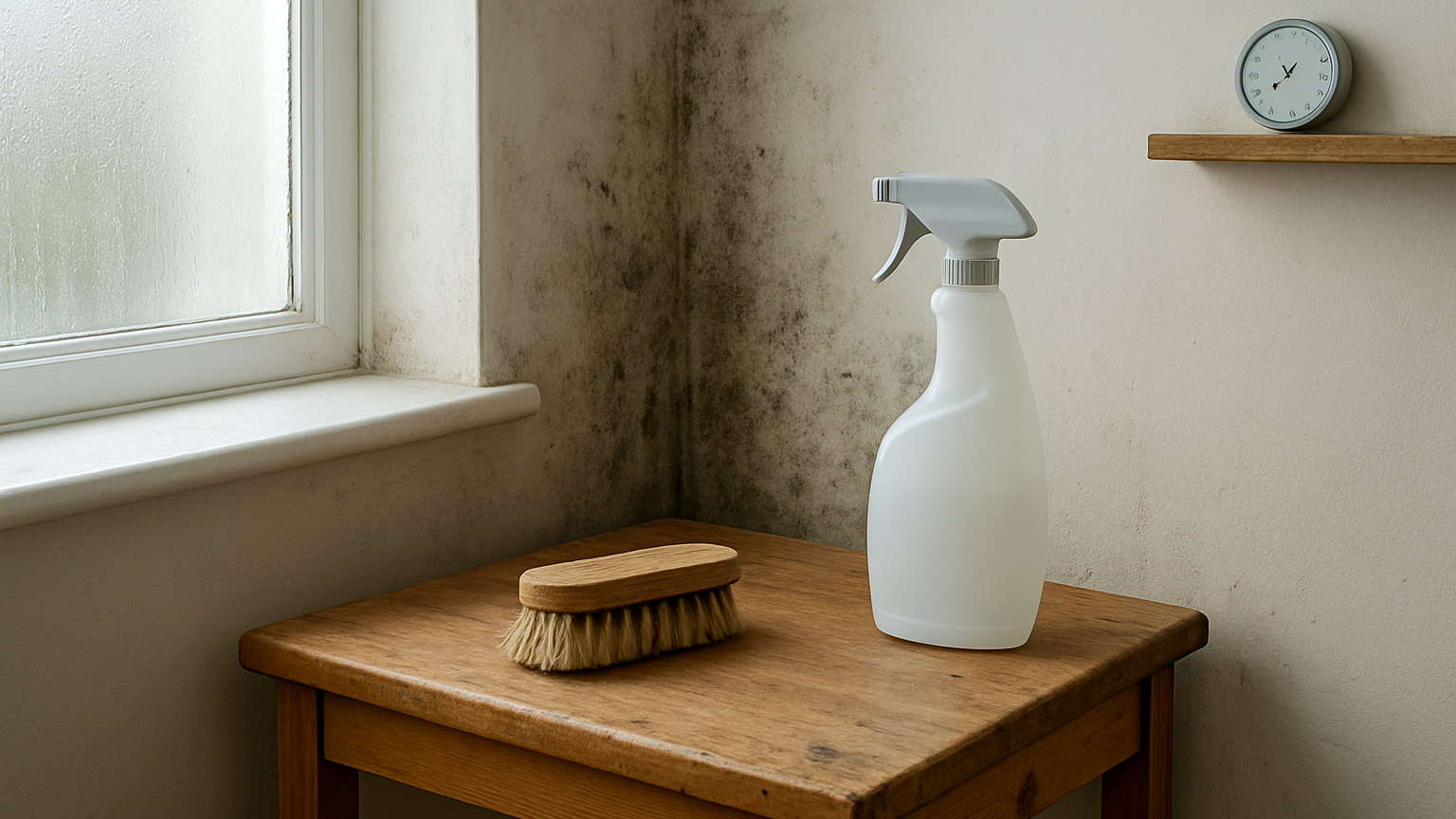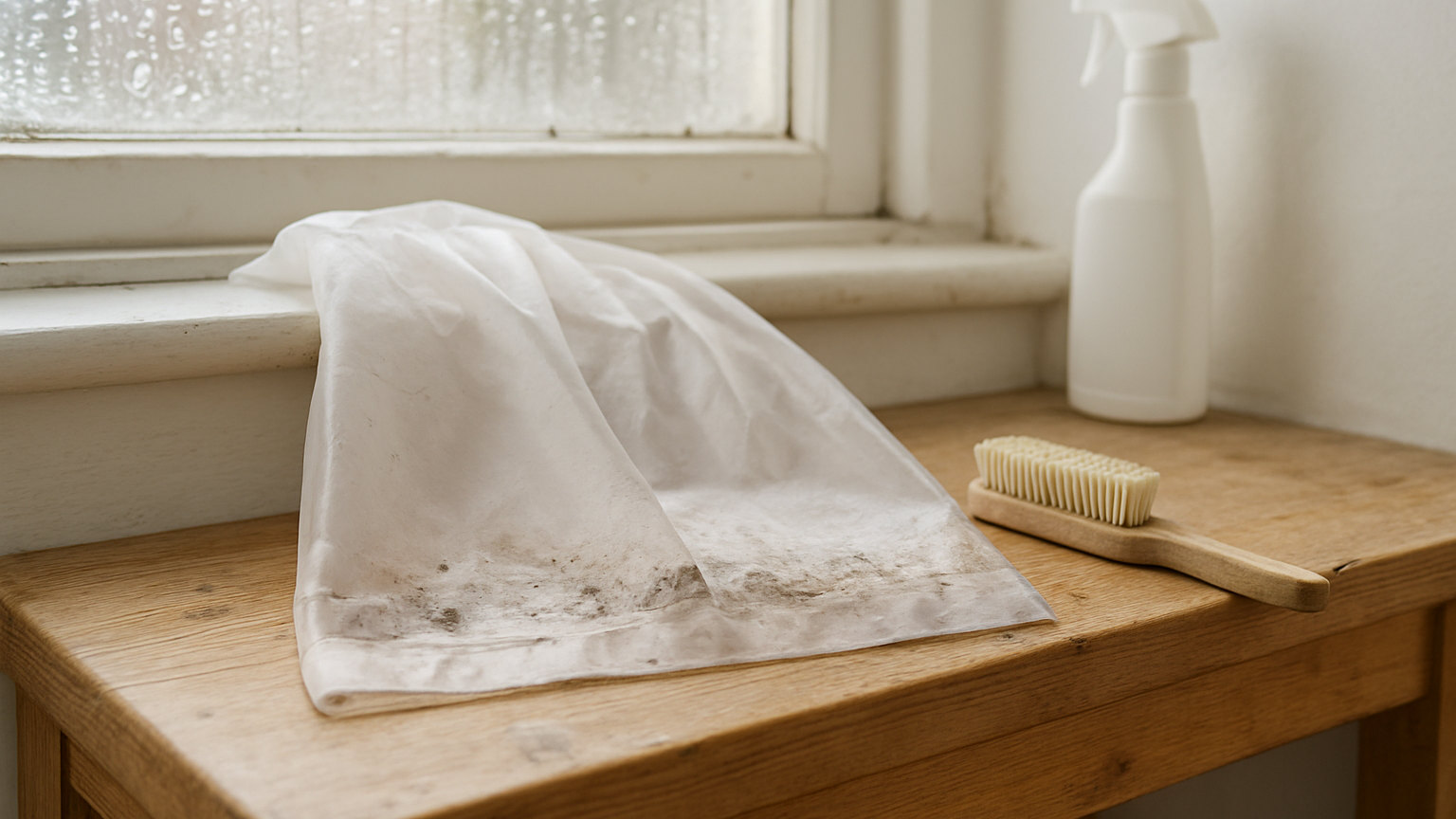
A shower curtain is the item in a bathroom most likely to grow mould, because it spends its life damp and folded against itself with no airflow. It is also one of the easiest things to deal with, since most curtains, including plastic ones, can go through a washing machine.
Can a plastic curtain really be machine washed?
Yes, and it works well. Put it in on a cool or 30 degree gentle cycle with a normal detergent dose. Add two or three old towels to the drum, which provide the scrubbing action the plastic needs and stop it balling up.
Use a low spin or no spin, and hang it straight back on the rail to dry, where the creases fall out under its own weight.
Do not tumble dry a plastic curtain under any circumstances, since it will melt and deform.
What should you add to the wash?
For white and light coloured curtains, a dose of oxygen bleach, which deals with both the growth and the staining. For heavier mould, a cup of white vinegar in the drum alongside the detergent.
Use one or the other rather than both in the same cycle. Chlorine bleach works on a white plastic curtain and shortens its life considerably.
What about fabric curtains?
Check the label. Most polyester fabric curtains wash at 40 degrees with detergent and an oxygen bleach booster, which is more effective than the cool wash a plastic one needs.
Hang them damp on the rail to dry. Do not iron unless the label permits it, since many have a water repellent coating that heat will damage.
What if it will not come clean?
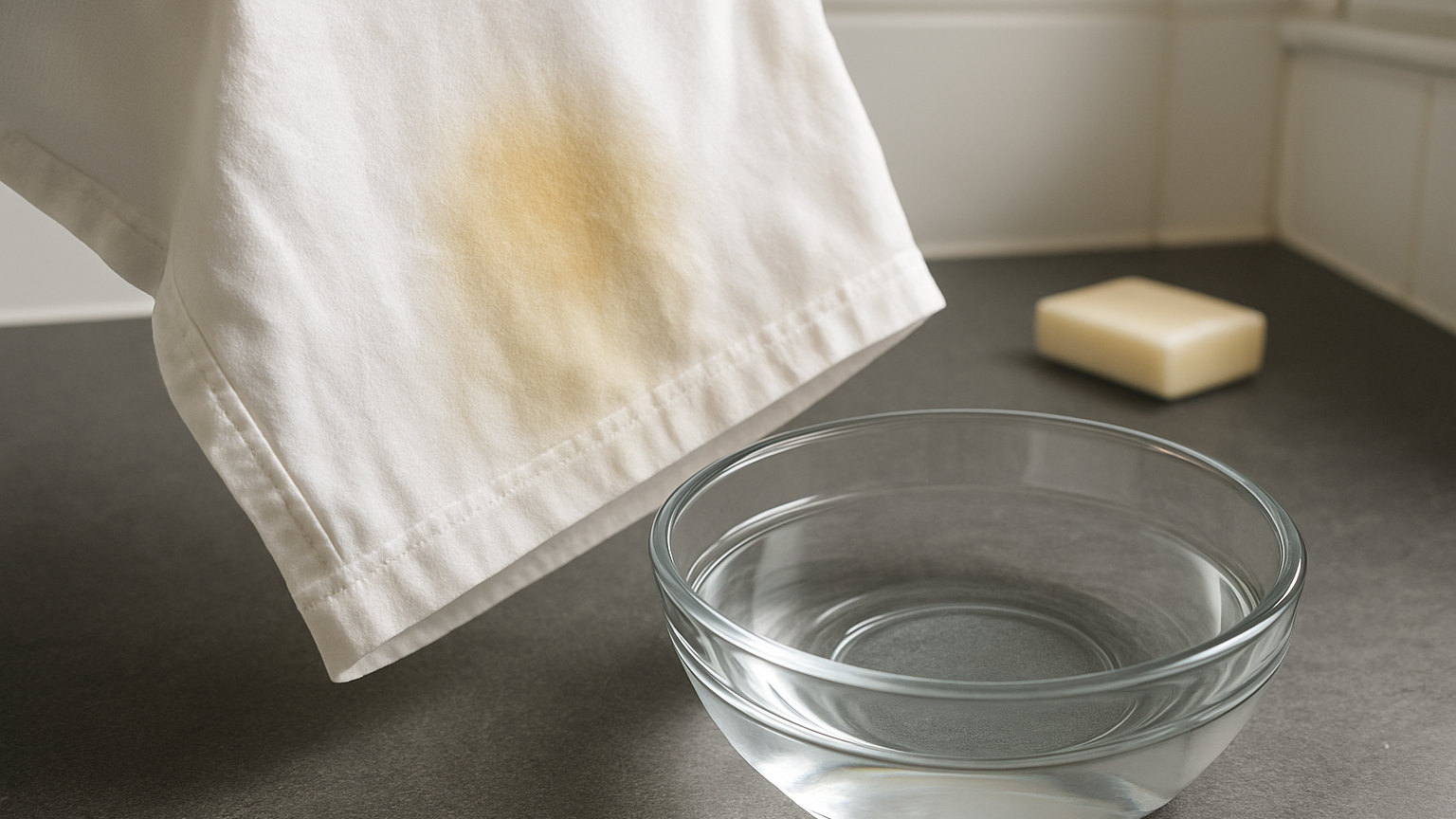
Soak it in the bath first. Fill with warm water, add a generous dose of oxygen bleach, submerge the curtain fully and leave it for several hours or overnight. Then wash it as above.
For a plastic curtain with black spotting in the hem, that is usually growth that has got into the seam and may not come out. At that point replacement is reasonable, since curtains are inexpensive.
Why is the bottom always the worst?
Because water collects in the hem and the weighted strip at the bottom, and it sits there between showers. The folds at the bottom of a curtain stay wet all day while the top dries within an hour.
Pulling the curtain fully across after showering, rather than bunching it at one end, is the single most useful habit. Spread out it dries; bunched it does not.
How do you stop it coming back?
- Pull the curtain across fully after every shower so it can dry.
- Shake the water off the bottom before leaving the bathroom.
- Run the extractor for fifteen to twenty minutes after showering.
- Keep the curtain inside the bath or tray while showering, so less water ends up on the floor and the hem.
- Wash it monthly rather than waiting for spots to appear.
- Replace a plastic liner annually, since they are cheap and degrade.
Is a liner worth using?
A separate plastic liner inside a fabric curtain means only the cheap item takes the water, and it can be replaced every year for very little. The fabric curtain outside stays dry and needs washing far less often.
What about the rail and the rings?
Both collect soap scum and mould and are usually forgotten. Wipe the rail when the curtain comes down, and put plastic rings through the wash with the curtain. A rail that is never cleaned reseeds the curtain within weeks of it going back up.
Is a glass screen better than a curtain?
For mould specifically, considerably. Glass does not absorb anything, it dries quickly and it can be squeegeed in seconds. The trade is limescale, which needs its own routine, and the cost of installation. For anyone repeatedly replacing mouldy curtains, a screen usually works out cheaper within a few years as well as being easier to keep clean.