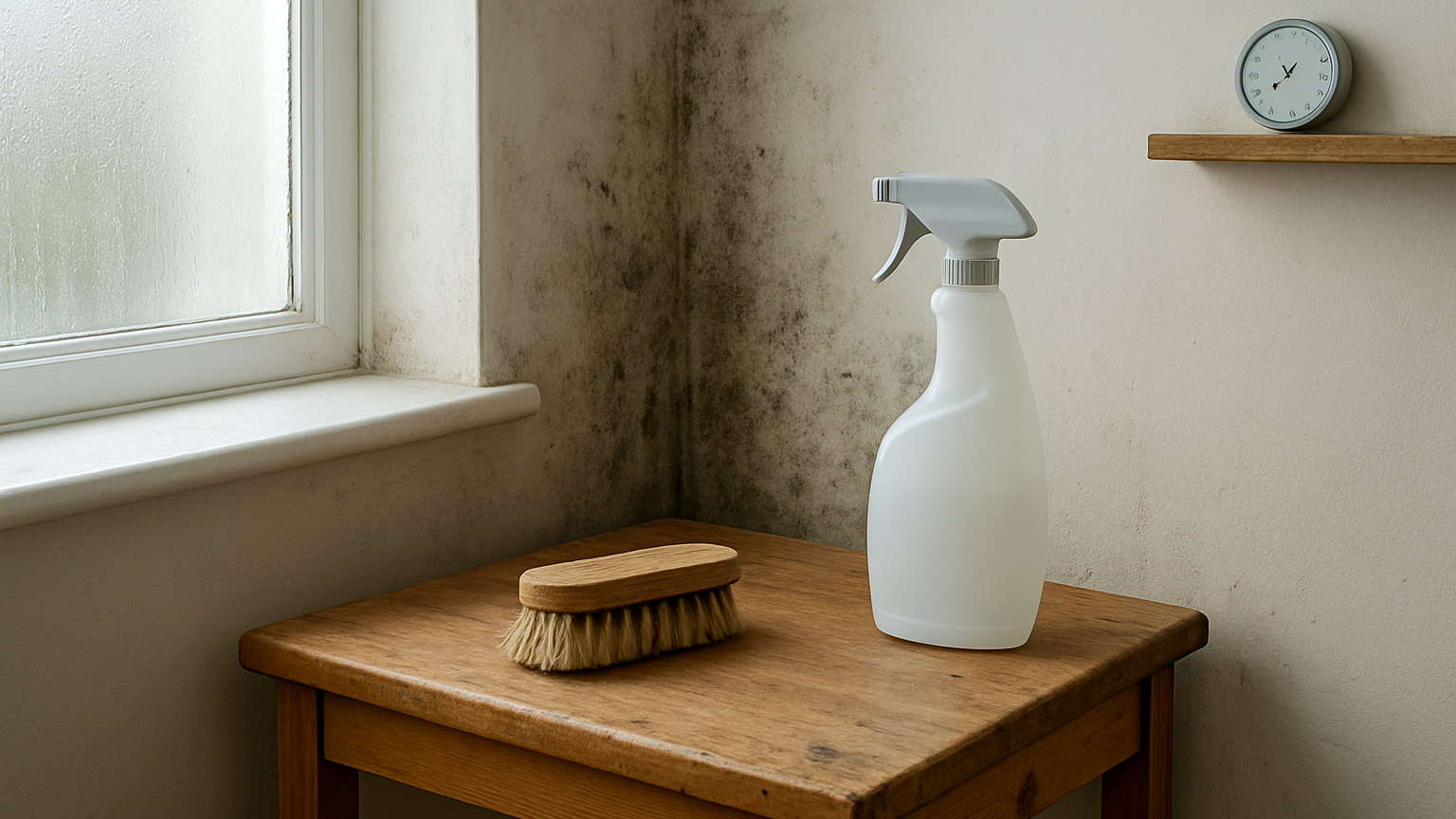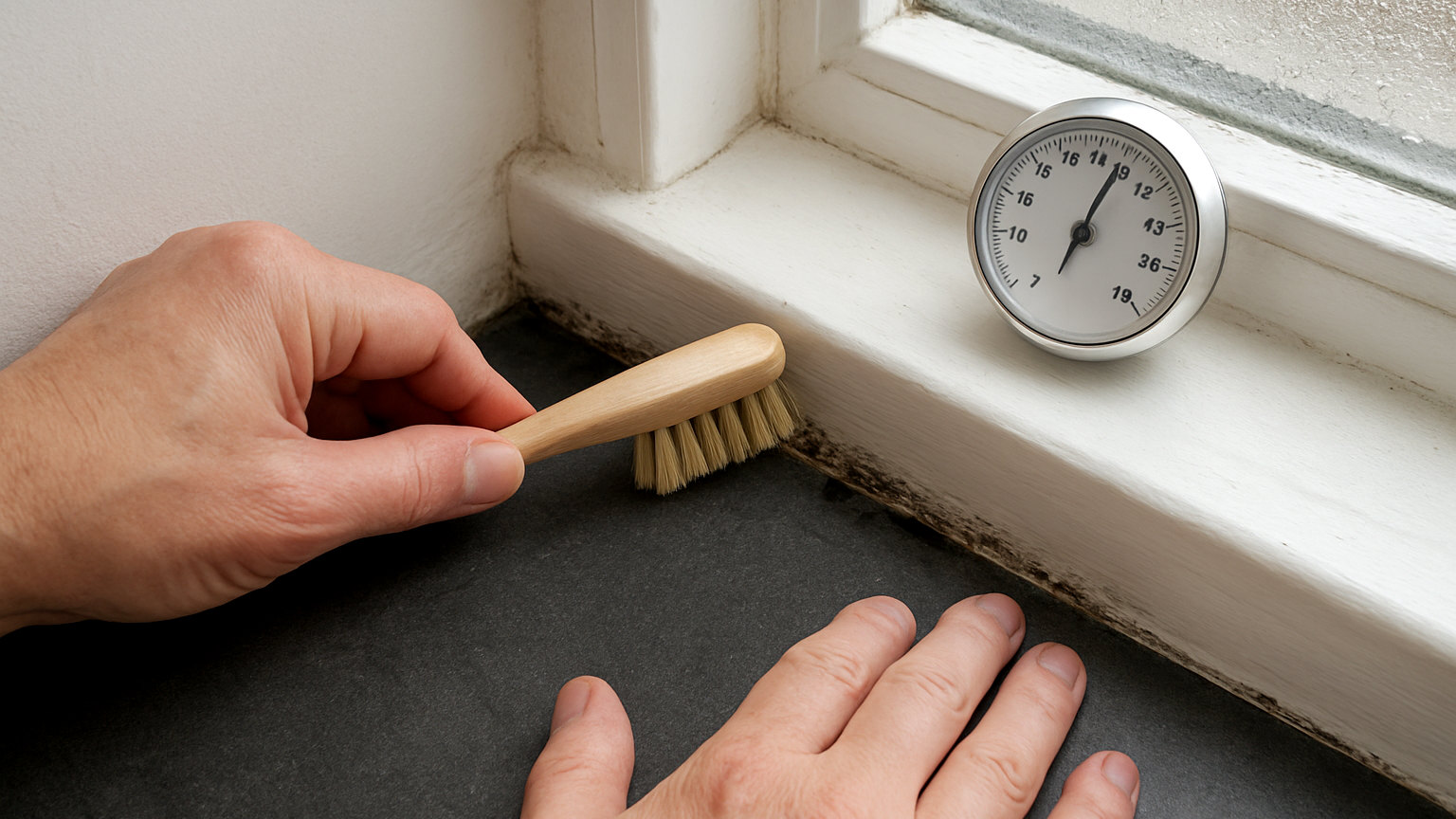
Paper is the most difficult material in this category. It cannot be washed, it is damaged by almost every cleaning product, and mould feeds on the cellulose and the sizing in it directly. The approach is therefore about drying, physical removal and preventing spread rather than about killing the growth with anything applied.
What should you do first?
- Isolate the affected books immediately in a sealed bag, away from everything else.
- Do not brush or open them while they are damp.
- Move them somewhere dry with good airflow.
- Dry them completely before attempting anything, which may take several days.
- Work outdoors when you come to clean them.
Brushing damp mould smears it into the paper and spreads spores. Everything waits until the item is bone dry.
How do you dry a damp book?
Stand it on end, fanned open, in a dry room with air moving. A fan on a low setting helps considerably. Interleaving every twenty or thirty pages with plain kitchen paper draws moisture out, and the interleaving should be changed as it becomes damp.
Do not use heat, a radiator or direct sunlight, all of which cockle the pages and damage the binding. Do not stack damp books, which traps moisture between them.
How do you remove the growth?
Once completely dry, take the book outdoors and brush the affected areas with a soft brush, working away from yourself and from the page rather than across it. A soft artist brush or a clean makeup brush is ideal.
For a book with growth on the edges of the text block, brush downwards away from the spine so nothing is pushed into the binding.
A vacuum on very low suction, held slightly away from the surface with a piece of muslin over the nozzle, removes what the brush lifts. Never touch the nozzle to the paper.
What about the remaining stain?
Usually permanent. Mould pigment and the brown spotting known as foxing are both in the paper fibres rather than on them, and domestic treatment will not remove them without damaging the page.
For a book of real value, a paper conservator can treat both, and that is a specialist skill rather than something to attempt at home.
What about the smell?
Air the book thoroughly first, which does a good deal on its own. Then seal it in a box or bag with an open container of bicarbonate of soda or activated charcoal, not touching the book, and leave it for a week or two.
Dry rice, silica gel and cat litter are also used as absorbents in the same way. Nothing should be applied to the paper directly.
Should you use anything wet?
No. Water, vinegar, alcohol and bleach all damage paper, either by cockling it, dissolving inks or weakening the fibres. The only exception is a conservator using controlled techniques on an item that justifies it.
Alcohol is sometimes suggested for book covers and should be kept off the paper itself.
How do you prevent it?
- Store books in a heated part of the house, not in a loft, garage, cellar or conservatory.
- Keep shelves off external walls, or leave a gap behind them for airflow.
- Do not pack shelves tightly, since air needs to move around the books.
- Keep humidity below about 60 per cent, with a dehumidifier if necessary.
- Check boxed books annually rather than leaving them for years.
- Never store books in sealed plastic boxes, which trap whatever moisture was present.
When is a book beyond saving?
When the paper has gone soft or crumbles at the edges, when the binding has failed and the pages are stuck together, or when growth is extensive through the text block. At that point the fibres have been consumed rather than stained. For anything sentimental, photographing the pages before disposal is worth doing.
What about photographs and documents?
More fragile again, and more urgent. Separate anything stuck together only once it is fully dry, and never force it. Photographs in particular can bond to each other and to glass in a frame, and a conservator can often separate them where an attempt at home will destroy the image. Scan or photograph anything important before attempting any treatment.