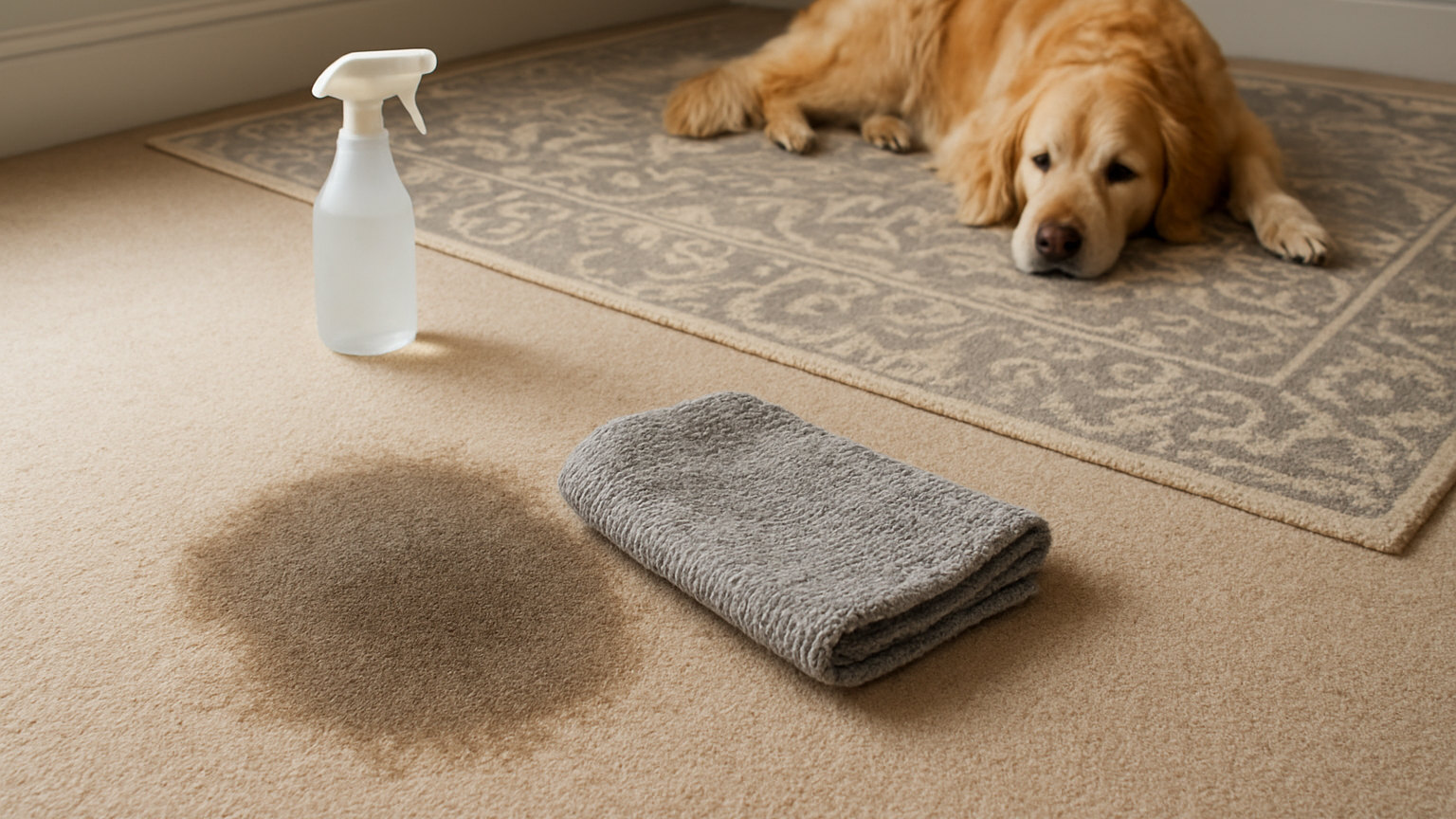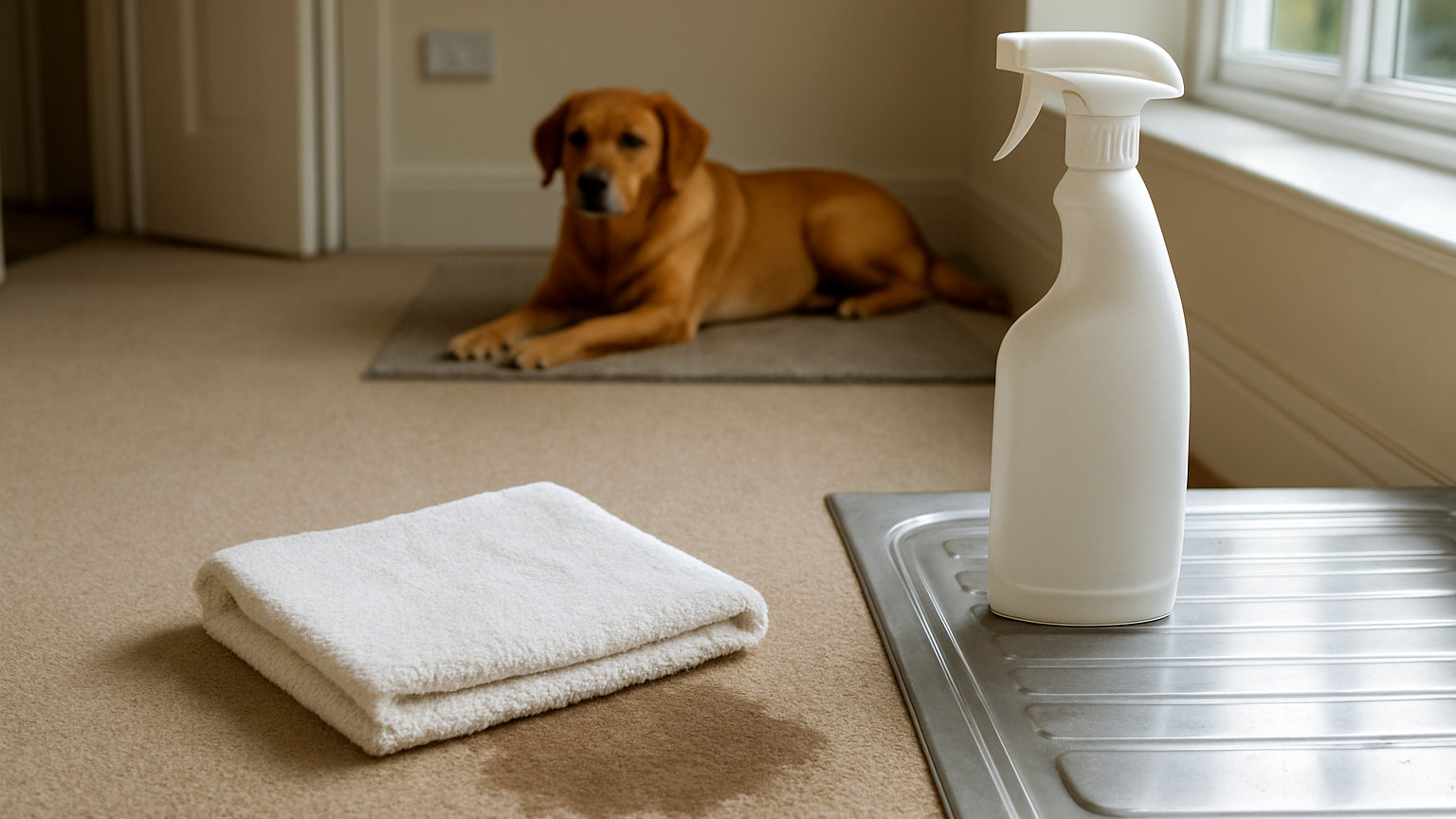
An animal that keeps using the same spot is responding to what it can smell. Dogs and cats detect residue at concentrations far below human perception, and an untreated or partly treated area reads as an established toilet. That is why the cleaning and the behaviour cannot be separated: until the scent is genuinely gone, nothing else will work reliably.
What is the first step?
Complete removal with an enzyme cleaner, applied generously, kept wet for the full contact time and repeated if necessary. Detergent and disinfectant leave the uric acid crystals in place, which means the spot still smells to the animal even when it does not to you.
Use an ultraviolet torch in a dark room to find every affected area rather than treating only the one you know about.
Which products make it worse?
Anything containing ammonia. Ammonia is a component of urine, so a floor cleaned with an ammonia based product smells to an animal exactly like a spot that has already been used. Check the labels on general purpose and glass cleaners used in the affected room.
Strongly perfumed products are also unhelpful, since they mask the smell from you while leaving it detectable to the animal.
How do you block access while you work?
- Physically prevent it with a closed door, a baby gate or furniture, at least until the area has been treated and dried.
- Change what the spot is used for. Animals rarely soil where they eat, so a food or water bowl placed there can break the pattern.
- Cover the area temporarily with a mat or foil, which changes the surface underfoot.
- Move a bed or a scratching post there, which marks it as living space rather than toilet space.
These are holding measures while the scent is dealt with rather than solutions in themselves.
What about litter tray problems in cats?
Most repeat soiling by a cat has a tray related cause. The usual ones are a tray that is not cleaned often enough, a litter type the cat dislikes, a tray in a busy or exposed location, a covered tray the cat finds confining, or too few trays in a multi-cat household.
The general guidance is one tray per cat plus one spare, placed in quiet separate locations. Scoop daily and change fully every week.
What about dogs?
Repeat indoor accidents in a house trained dog usually mean one of three things: a medical problem, a change in routine or access, or anxiety. Age is a factor too, both in puppies still learning and in older dogs losing continence.
Increase outdoor opportunities, re-establish a predictable routine, and reward outdoor toileting rather than punishing indoor accidents, which tends to make a dog hide the behaviour rather than stop it.
Are deterrent sprays worth using?
They have a limited role and only after the area has been properly cleaned. Citrus scents deter some animals and are ignored by others. A deterrent applied over untreated residue achieves nothing, since the attraction is still there underneath.
Never use anything containing essential oils around cats, which cannot metabolise many of them safely.
When should you see a vet?
Sooner than most people do. A sudden change in toileting is frequently the first sign of a medical problem, including urinary tract infections, bladder stones, diabetes and kidney disease. In cats, urinary blockage is an emergency.
Any change in frequency, straining, blood, or accidents in a previously reliable animal warrants a call rather than a cleaning strategy.
What if nothing works?
Once medical causes are excluded, a veterinary behaviourist is the right next step, particularly with cats where marking is often stress related. Repeated accidents in the same place after thorough cleaning are a behavioural signal rather than a cleaning failure.
Does punishment ever help?
No, and it reliably makes things worse. An animal punished after the event does not connect the punishment with the behaviour, and the usual result is that it learns to toilet where it cannot be seen, which means behind furniture rather than on an open floor. That is harder to find and harder to clean. Rewarding the behaviour you want is the only approach that works.