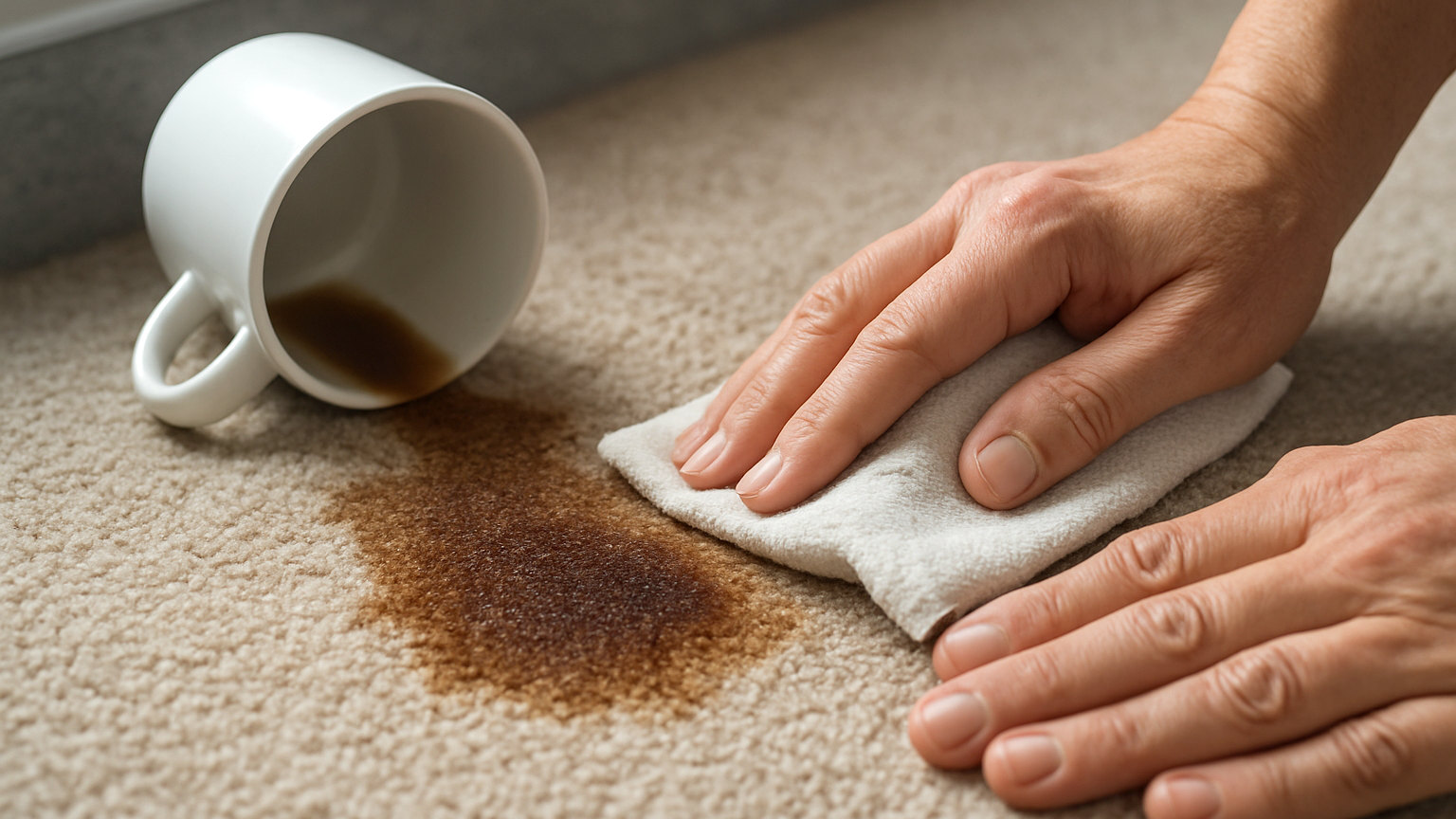
Coffee is one of the worst carpet spills, not because the stain is especially stubborn but because of the circumstances. A dropped mug delivers a large volume of hot liquid all at once, and heat drives it into the backing and the underlay far faster than a cold spill would. The damage is done in the first thirty seconds.
What should you do immediately?
- Blot with dry towels straight away, pressing hard and standing on them if the spill is large.
- Keep moving to dry sections until little further transfers.
- Work from the outside of the spill inwards.
- Apply cold water to a cloth, not to the carpet, and dab the area.
- Blot again with a dry cloth.
- Repeat the damp and dry cycle several times rather than soaking the area once.
- Press a dry towel down under weight for several hours to extract the moisture.
Cold water at this stage is deliberate, both because it helps with any milk content and because it does not drive the tannins deeper.
What should you use after the first response?
A solution of cold water with a drop of washing up liquid, applied to a cloth and dabbed on. For a stubborn mark on a colourfast synthetic carpet, a solution of one part white vinegar to two parts water works well on tannins, tested first in a hidden area.
Rinse by blotting with a cloth dampened in clean water, since detergent left in the pile attracts dirt and produces a dark patch within weeks.
Why does the stain come back a day later?
Wicking. Coffee that soaked into the backing travels back up the fibres as the carpet dries and reappears as a ring or a faint shadow. It is the single most common frustration with carpet spills and it means the extraction was not thorough enough rather than that the treatment failed.
Press a dry towel down over the area with a heavy weight on top for several hours, then dry the carpet quickly with a fan. If it does wick back, repeat the treatment and extract more aggressively.
What about milk in the coffee?
It matters more on carpet than on clothing, because the residue cannot be rinsed away and will go sour. A carpet that smells faintly a week after a spill has milk residue in the backing.
Follow the stain treatment with an enzyme cleaner, applied generously enough to reach everywhere the coffee reached, and left for the time stated on the label before blotting. This is the step that prevents the smell rather than the mark.
Does hot water help?
No, and it is a common mistake. Heat sets tannins and coagulates any milk protein, and a steam cleaner used before the stain has been removed will fix it into the fibre permanently. Everything stays cold until the mark has gone.
What about wool carpet?
Wool absorbs more readily and is less tolerant of treatment. Blot more thoroughly and for longer, use only a wool safe carpet cleaner, and avoid oxygen bleach, hydrogen peroxide and strong alkalis entirely. Keep moisture to a minimum and dry quickly.
On a wool carpet with a large spill, a professional is often the cheaper option once the risk of a bleached patch is taken into account.
How do you deal with an old coffee stain?
Rehydrate first by laying a damp cloth over it for fifteen minutes, then blot. Repeat two or three times before applying any product, since dried tannins release gradually rather than all at once.
Then treat with a proprietary carpet stain remover suitable for the fibre, and expect two or three rounds. Old coffee marks usually fade substantially rather than disappearing outright.
What is the best prevention?
Lidded cups, which sounds obvious and removes most of the risk. A rug in the area where people sit with drinks is easier to treat or replace than fitted carpet, and a spill on a hard floor is a two minute job rather than a two day one.