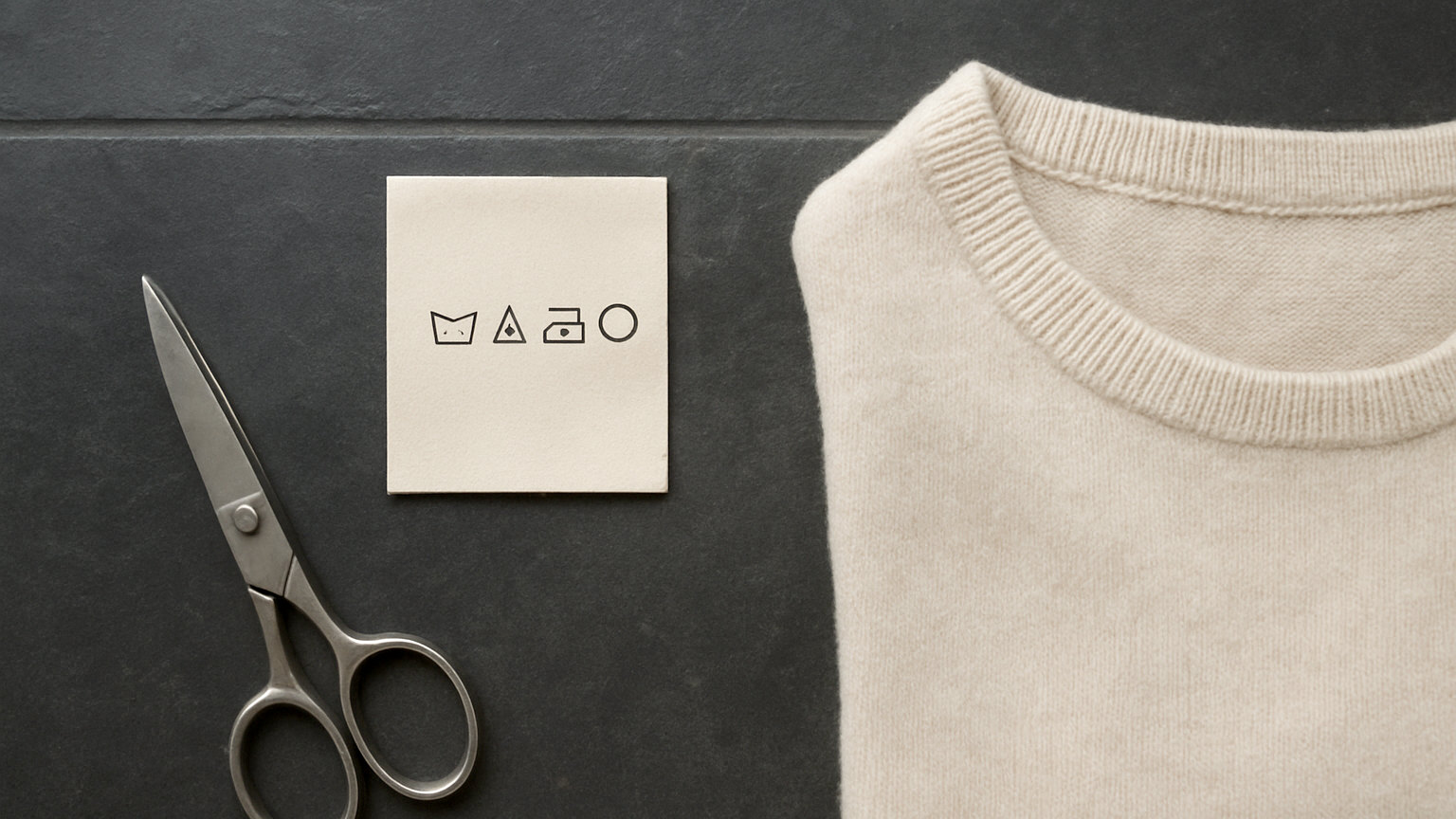
The circle covers professional cleaning, and the letters inside it are technical instructions to the cleaner rather than information for you. That is why they appear unhelpful at home: they specify which solvent should be used, which is not a decision anybody makes in a domestic laundry.
What do the letters mean?
- P – clean with perchloroethylene or a hydrocarbon solvent. The most common marking.
- F – hydrocarbon solvent only. A gentler process, used for more sensitive fabrics.
- W – professional wet cleaning, which uses water with specialist machinery and controlled drying rather than solvent.
- A – any solvent may be used. Now largely obsolete.
A bar underneath the circle means a reduced process: lower temperature, less mechanical action or shorter drying. Two bars mean a very gentle process. A cleaner will read those and adjust accordingly.
What does a crossed out circle mean?
Do not dry clean. This is worth taking seriously, because it usually means the fabric or a coating on it would be dissolved or damaged by solvent. It appears on some rubberised and waterproof fabrics, on certain plastics and vinyls, and on garments with glued rather than stitched construction.
A crossed out circle alongside a permitted wash tub means the garment is meant to be washed at home.
What is wet cleaning?
Professional cleaning in water, using carefully controlled temperature, mechanical action, detergent and drying. It is not the same as washing at home. The machines are programmable to a far finer degree, and the finishing equipment restores shape in a way a domestic dryer cannot.
The W symbol has become more common as solvent use has been reduced for environmental reasons, and many cleaners now offer it as their default for suitable garments.
Does the circle mean a garment cannot be washed?
Not on its own. A circle tells you what a professional cleaner should do; the tub symbol tells you what you can do. A label with both a circle and a permitted wash tub means either route is acceptable.
A circle with a crossed out tub next to it is the combination that genuinely means professional cleaning only.
How reliable is a dry clean only label?
Less than it appears. Manufacturers apply it defensively, and a good proportion of unlined, unstructured garments carrying it can be hand washed successfully. What genuinely needs it is tailoring with interlinings, structured coats, pleated items, heavy embellishment, leather and suede, and anything vintage.
The test is construction rather than fabric. If the garment is essentially a piece of cloth sewn into a simple shape, water is unlikely to ruin it.
What should you tell the cleaner?
What every stain is and what caused it. Dry cleaning solvent removes oils and greases well and water based stains such as coffee, wine and sweat poorly, so those need pre-treating separately. A stain that goes through untreated is usually set permanently by the heat of the finishing press.
Point out any damage or loose seam as well, since a small tear becomes a large one in a commercial machine.
What should you do when it comes home?
Take the plastic cover off straight away. It traps residual solvent and moisture against the fabric and causes yellowing over months. Hang the garment somewhere ventilated for a day, on a wide shaped hanger rather than the wire one it arrived on.
How often is dry cleaning actually needed?
Less often than most people assume. The process is mildly hard on fabric and on trims, so a suit in regular use needs it two or three times a year rather than monthly. Brushing after wearing, airing overnight, steaming and spot cleaning fill the gap and do far less damage.
Is wet cleaning better than solvent?
For many garments, yes, and it has become the default at a lot of cleaners. It handles water based stains such as sweat, coffee and wine far better than solvent does, and it avoids the residual smell some people notice after traditional dry cleaning. Solvent still has the advantage on greasy soiling and on heavily structured tailoring.