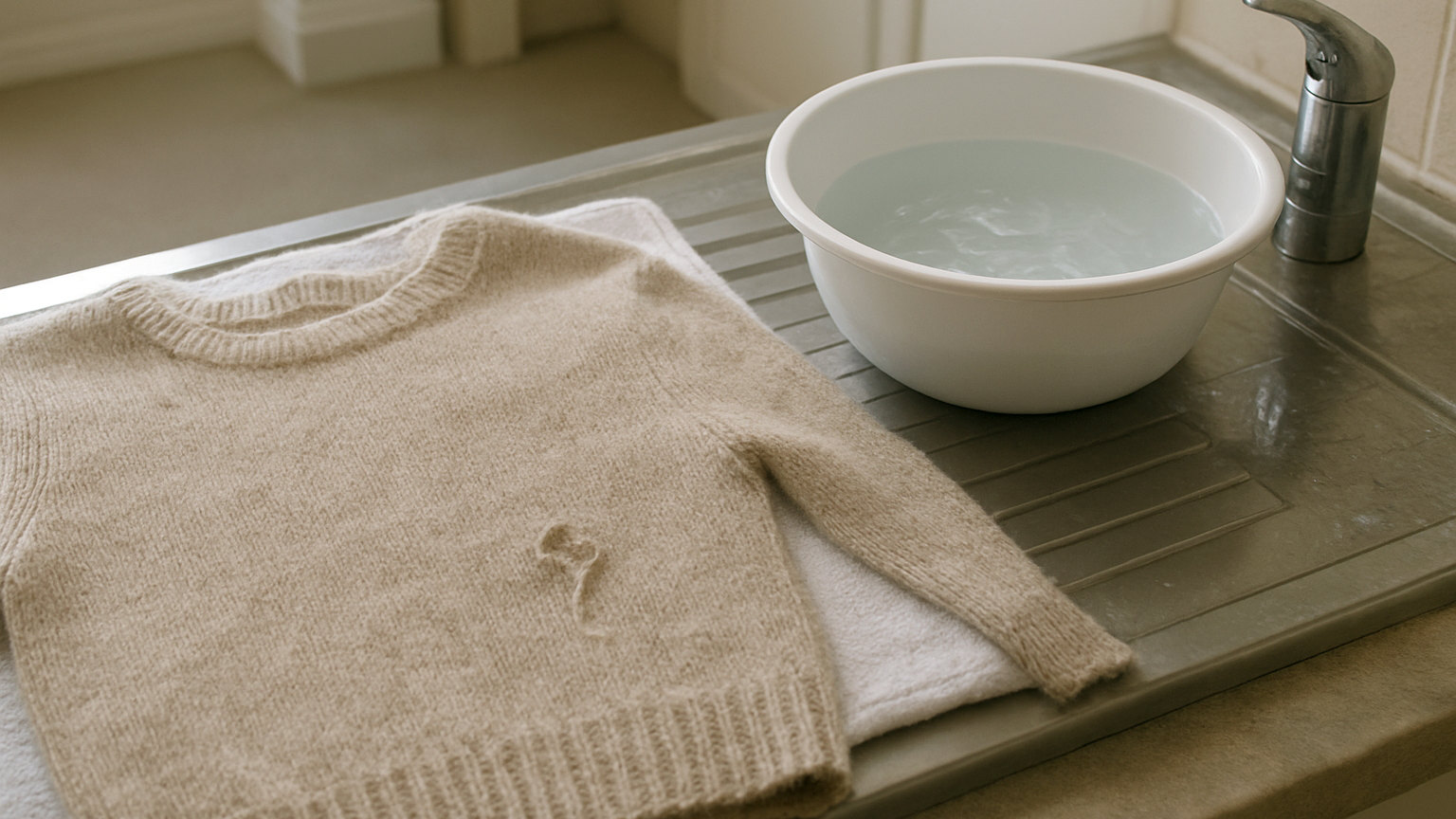
A snag in knitwear is a loop of yarn that has been pulled out of the fabric. The yarn is still there and still continuous, which is why it can almost always be repaired invisibly. The one thing that turns a repairable snag into permanent damage is cutting it, because a cut end unravels and the hole grows with every wear.
How do you ease a pull back in?
- Lay the garment flat with the snag facing up and the fabric relaxed rather than stretched.
- Gently stretch the knit sideways across the pull, first in one direction and then the other. On a loose knit this alone often draws the loop most of the way back.
- Work the remaining slack outwards along the row using a blunt needle, distributing it into the neighbouring stitches a little at a time.
- Repeat from both sides of the pull, easing rather than tugging.
- Smooth the area flat and check it from the right side.
Patience is the whole technique. The slack has to be redistributed across many stitches rather than forced back into one.
What if the loop will not go back?
Push it through to the reverse side. Thread a blunt tapestry needle or use a fine crochet hook, catch the loop, and pull it through to the inside of the garment. Secure it on the reverse with a small stitch in matching thread so it cannot work its way back out.
From the outside this is invisible, and it is the standard fix for a pull that has gone too far to ease back.
Are snag repair tools worth having?
A snag repair needle, which is a latch hook with a rough section along the shaft, is inexpensive and does the job well. It grips the loop and pulls it through to the reverse in one movement. A fine crochet hook works nearly as well and is easier to find.
A blunt tapestry needle covers most situations and is the one thing worth keeping in a drawer.
What about a small hole?
A hole needs closing rather than easing. For a very small one in a fine knit, thread matching yarn and work a few small stitches around the edge, drawing them gently together so the fabric is not puckered. Work on the reverse side.
For a larger hole, Swiss darning recreates the knitted structure stitch by stitch and is nearly invisible when done in matching yarn. It takes practice and is well worth learning for anyone with good knitwear.
Many jumpers come with a small length of spare yarn attached to the care label, which is exactly what it is for.
How do you tell a moth hole from wear?
Moth damage produces small round holes with clean edges, often several of them close together, and typically in areas that are not subject to any friction at all, such as the middle of the back or the inside of a folded sleeve. Wear produces gradual thinning and larger irregular holes in the places that actually rub: elbows, underarms, cuffs and the front of a shoulder where a bag sits.
Several small round holes appearing in stored wool means an active problem, and the garment should be washed at 60 degrees or frozen for 72 hours before repair.
What causes most snags?
Rings, watches and bracelets when dressing. Rough nails. Zips, hooks and velcro in the wash. Handbag straps and seatbelts. Splintered drawer edges and rough wooden hangers.
Taking rings off before pulling on a fine knit, and washing knitwear in a mesh bag, prevents a good proportion of them.
Is a repaired garment as good as new?
An eased pull usually is, and it often becomes completely invisible after the next wash as the fibres settle back into place. A loop secured on the reverse is invisible from the outside but leaves a slight tightness in that one stitch. A darn is a repair rather than a restoration, and on a garment worth keeping it is entirely worth doing.