A great deal of silk labelled dry clean only can be washed at home successfully. The label is often a manufacturer protecting itself rather than a strict requirement. What silk genuinely cannot tolerate is alkaline detergent, heat, wringing and water droplets left to dry on the surface, and avoiding those four is the whole of the method.
Should you test first?
Always, with anything you value. Dampen a hidden area such as an inside seam or a hem allowance, press a white cloth against it for a minute, and check for colour transfer. Dyed silk, particularly deep colours and prints, frequently bleeds.
If colour transfers, the garment needs professional cleaning. If it does not, home washing is likely to be fine.
What detergent should be used?
A silk or delicates detergent, or a pH neutral product. Silk is a protein fibre, so biological detergents with protease enzymes will attack the fibre itself. Alkaline products such as ordinary powder strip the natural sericin and leave silk dull, limp and yellowed.
Baby shampoo is a reasonable substitute in a pinch, since it is mild and close to neutral. Use a very small amount and mix it into the water fully before the garment goes in, because concentrated detergent in direct contact with silk causes patchy discolouration.
What is the method?
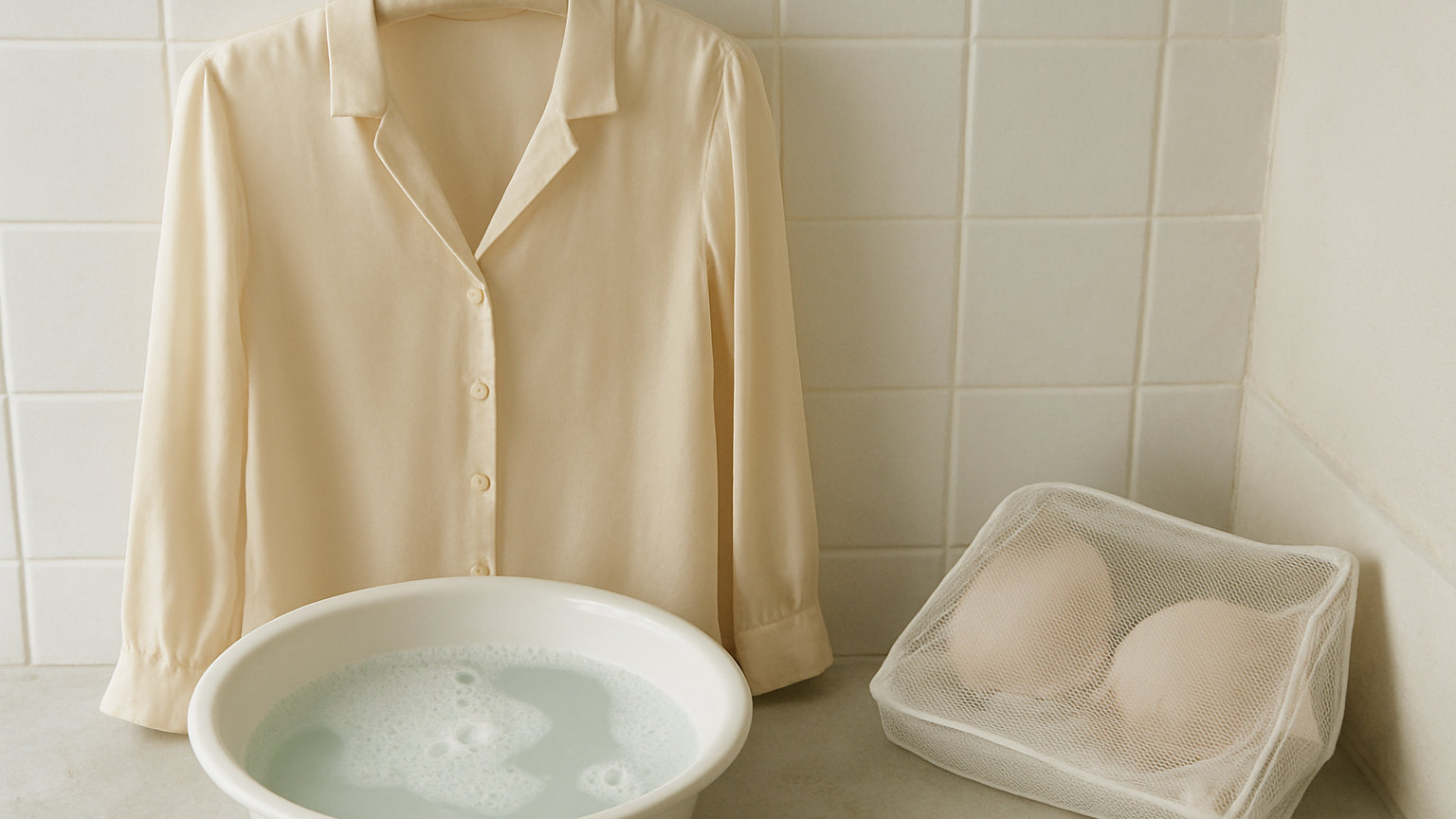
- Fill a clean basin with cool water, no warmer than about 30 degrees.
- Dissolve a small amount of detergent completely.
- Submerge the garment and swish it gently for a couple of minutes. Do not soak silk for long periods.
- Rinse in water at the same temperature until no suds remain.
- Add a capful of white vinegar to the final rinse, which removes residue and restores the natural sheen.
- Lift the garment supporting its weight, and press the water out gently.
Why does wringing matter so much?
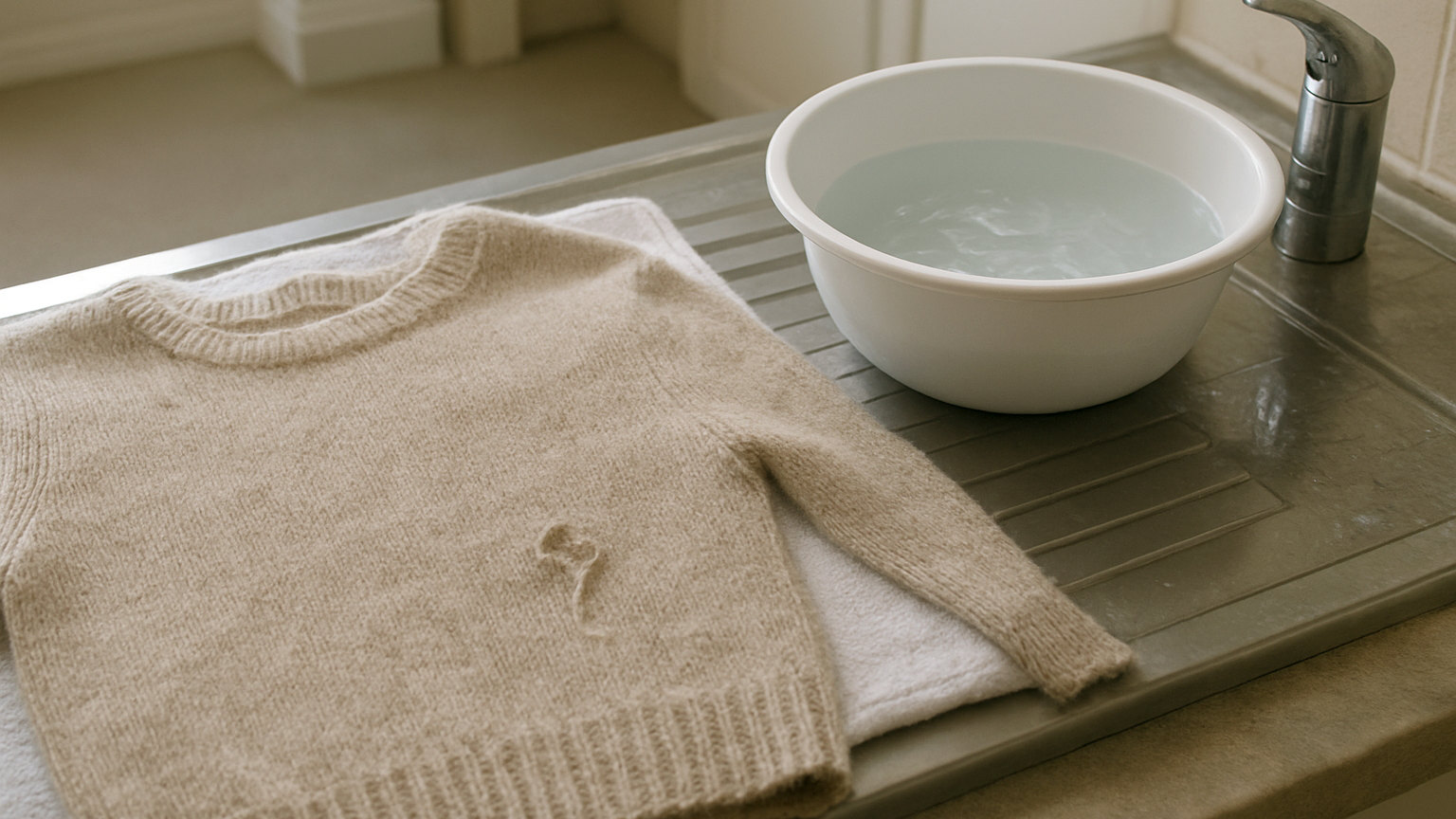
Because silk loses a significant proportion of its strength when wet, and twisting a wet silk garment breaks fibres and creates permanent creases along the twist lines. Roll it in a dry towel and press instead, then move it to a second towel.
How should silk be dried?
Flat or on a padded hanger, away from direct sunlight, heat and radiators. Sunlight fades and weakens silk noticeably. Never tumble dry it.
Dry it away from anything that drips, because a single water droplet landing on partly dry silk leaves a permanent ring mark. That is the most common way silk is spoiled at home.
What causes water marks and can they be fixed?
A droplet disturbs the alignment of the fibres as it dries, leaving a visible ring. The remedy is counter-intuitive: rewet the whole panel evenly, so there is no boundary between wet and dry, and let it dry uniformly. Spot treating makes it worse.
This is also why steam and spraying are poor ideas on silk, and why most silk labels carry the crossed out steam symbol.
How do you iron it?
On the reverse side, on a low to medium setting, through a dry pressing cloth, with no steam. Iron while the garment is still slightly damp from washing rather than letting it dry completely and then dampening it, which risks water marks.
Which silk should not be washed at home?
Structured or lined items such as jackets and tailored dresses, where the lining and the interfacing shrink at a different rate from the outer shell. Anything with beading or embroidery attached. Vintage and antique silk, which is fragile and irreplaceable. Any silk that failed the colour fastness test. And silk crepe in particular, which shrinks noticeably as soon as it gets wet.
How often does silk need washing?
After every two or three wears for anything worn directly against skin, and considerably less often for outer layers. Silk resists odour reasonably well, and airing a garment overnight between wears extends the interval a good deal further. Deodorant and perfume are both hard on silk, so let each dry fully before dressing.