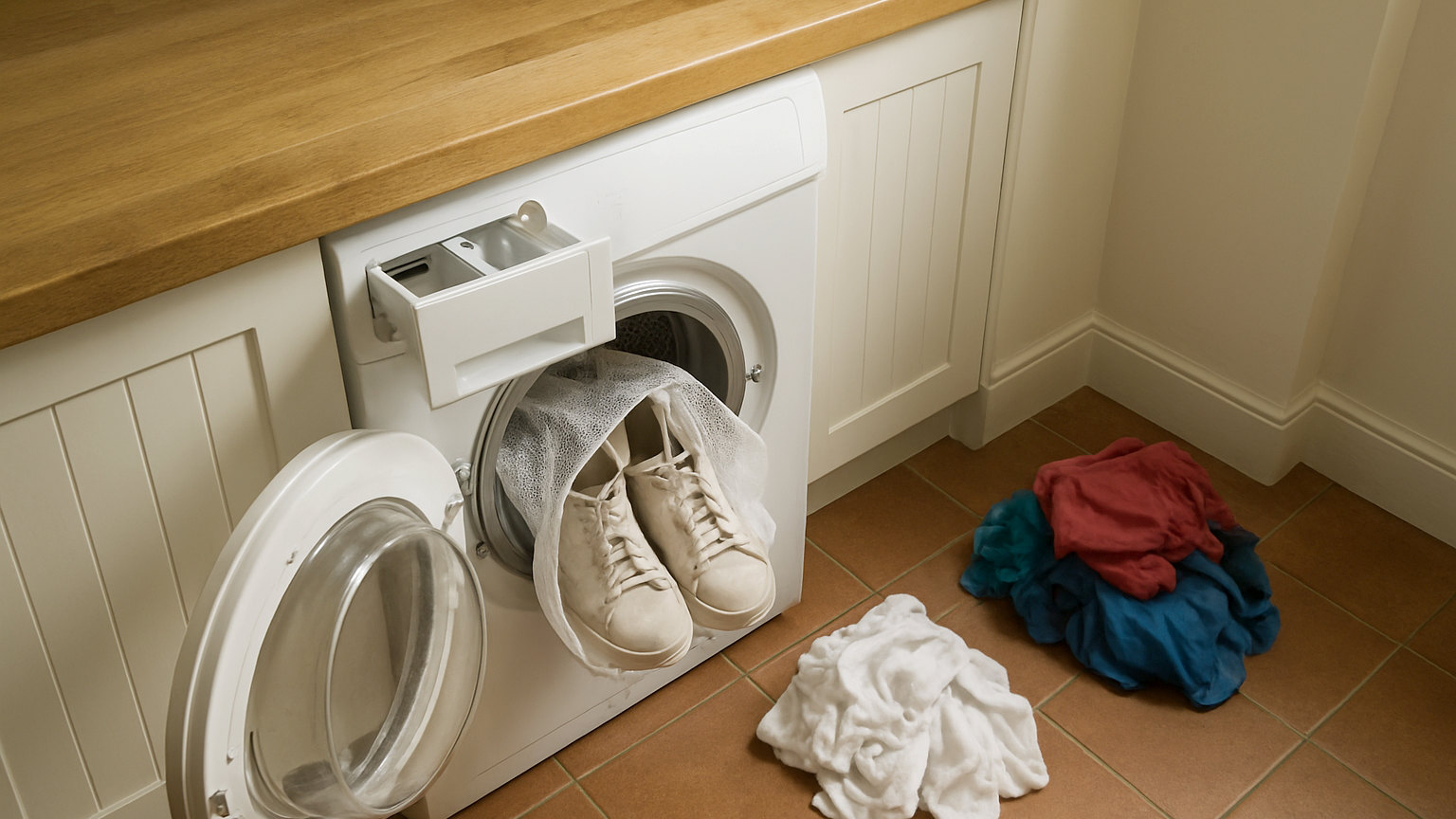
Most of the creases you iron out were put in during the spin cycle and then set permanently while the garment dried. Pressing them out afterwards is fixing a problem that was created two steps earlier, and a few changes at the washing and drying stage can cut ironing dramatically.
Why does the spin cause creases?
Because the load is pressed hard against the drum wall at high speed for several minutes, in whatever crumpled position it happens to be in. The fabric is wet, which makes fibres pliable, and it holds that shape as it begins to dry.
Reducing the spin speed on shirts and anything you intend to iron makes a noticeable difference. The load comes out wetter, which takes a little longer to dry, and the extra water weight actually helps the fabric hang its own creases out.
What should you do the moment the cycle ends?
Take the washing out immediately. Damp clothes left sitting in a drum for hours set into folds that are very difficult to remove, and they start to smell as well. If you cannot be there, use the delay start function so the cycle finishes when you are.
Shake each item out firmly as you take it from the drum. This one habit does more than almost anything else, because it opens the fabric out and lets it begin drying flat rather than folded.
How should shirts be dried?
On hangers, buttoned at the collar and one or two buttons down the front, with the collar turned up and the shoulders squared onto the hanger. Smooth the front placket, the cuffs and the collar with your hands while the fabric is still damp.
Dried this way, a cotton shirt often needs only a light press on the collar and cuffs, and a polycotton shirt may need nothing at all. Folding a wet shirt over a line or an airer bar guarantees a crease across the middle that will need ironing out.
What about trousers and bedding?
Hang trousers by the waistband from the belt loops, or fold them along the existing crease line and peg at the waistband, which reinforces the crease you want rather than creating new ones.
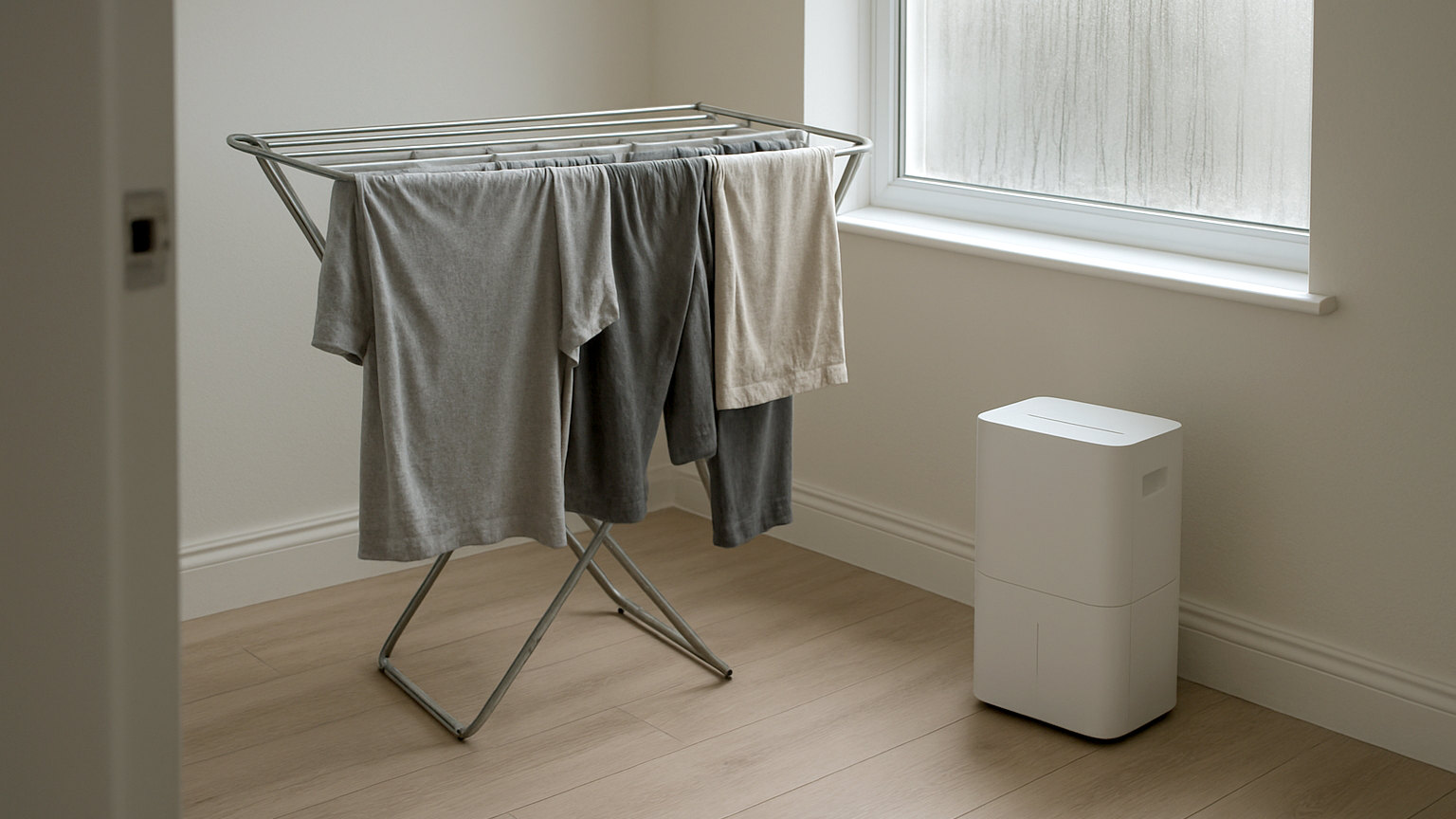
Sheets and duvet covers should be hung over a line along their long edge and spread as wide as possible. A sheet bundled onto an airer dries in folds. Smoothing it with your hands while damp and folding it neatly as soon as it is dry usually removes the need to iron bedding at all.
How do you use a tumble dryer without creasing?
- Do not overload. Clothes need room to tumble freely; a packed drum presses everything into folds.
- Use a sensor programme so the machine stops when the load is dry rather than continuing to heat it.
- Take the load out immediately the cycle ends, and hang or fold it straight away.
- Use the anti-crease or crease guard setting if there is one, which tumbles the load periodically after the heat stops.
- Remove items slightly damp and finish them on a hanger, which lets the remaining moisture relax the fabric.
Over-drying is the main cause of creasing in a dryer. Bone dry cotton left tumbling in a hot drum creases far worse than the same load taken out a few minutes earlier.
Which fabrics crease most?
Linen, by a wide margin, and pure cotton. Viscose creases badly and is fragile when wet. Polyester and polycotton blends resist creasing well, which is why they dominate school uniform and workwear. Wool creases very little and recovers on a hanger.
For linen, the honest answer is to accept some crease as part of the fabric rather than fighting it, and to hang it damp so the worst folds fall out.
Does anything help once creases have set?
Hanging the garment in a steamy bathroom relaxes light creasing, and a handheld steamer does the same job faster. A brief tumble with a damp cloth in the drum will take the edge off a load that has been left folded. Anything deeper needs an iron, which is the point of getting the drying right in the first place.