Bulky and structured items are the hardest things in a household to dry and the easiest to ruin. The materials that fail first are not the fabrics but the components: the adhesive in a trainer sole, the membrane in a waterproof, the down in a jacket. Almost all of them are damaged by heat long before the outer fabric is.
How should trainers be dried?
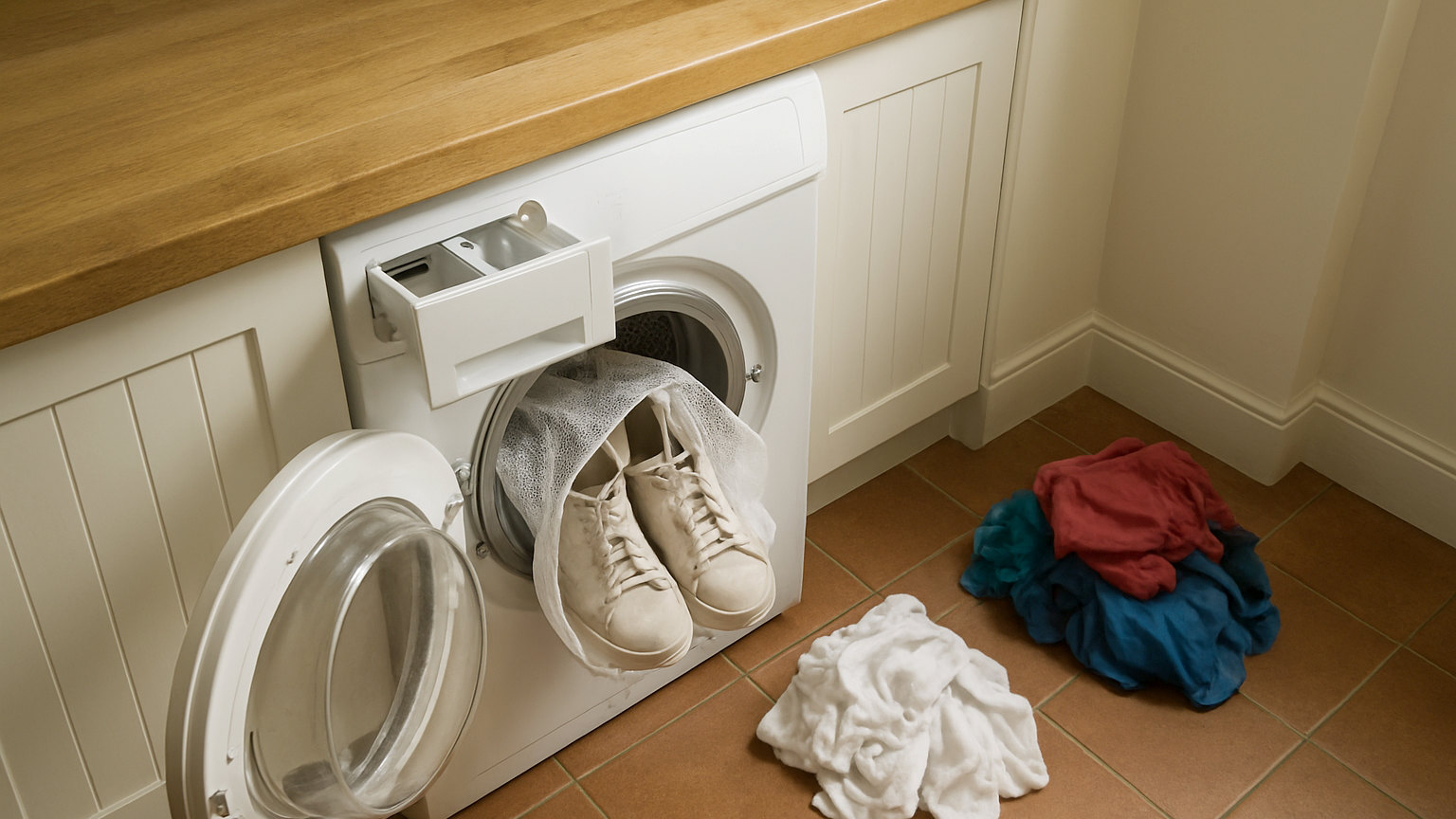
Air dried, away from any heat source, and never in a tumble dryer. Heat softens the adhesive bonding the upper to the sole, which is the most common way trainers are destroyed, and it can warp foam midsoles permanently.
Remove the laces and the insoles and dry them separately. Stuff the shoes loosely with newspaper or kitchen paper to absorb moisture from the inside and hold the shape, and change the paper after a few hours. Stand them somewhere with air movement, ideally with a fan pointed at them. Expect a day or two.
A radiator will dry them faster and shorten their life considerably.
What about coats and waterproofs?
Check the label first, because this is one case where the advice is counter-intuitive. Many technical waterproofs specify a low tumble dry or a warm iron to reactivate the durable water repellent finish on the outer fabric, and skipping that step leaves the jacket wetting out even though the membrane is intact.
For ordinary coats without a membrane, hang on a broad hanger that supports the shoulders, away from direct heat, and turn the pockets out. Wool coats should be dried flat or on a shaped hanger and never hung wet from a thin wire hanger, which leaves a permanent mark.
How do you dry a down jacket or duvet?
Down is the item where drying matters more than washing. Wet down clumps together, and if it dries in clumps the garment loses its loft permanently and develops cold spots. It also grows mould if it stays damp inside.
Tumble dry on a low heat with two or three clean dryer balls or tennis balls in a sock, which break the clumps up as the drum turns. Stop the machine every twenty minutes, take the item out, shake it hard and redistribute the filling by hand, then continue. Expect two or three hours for a jacket and considerably longer for a duvet.
Without a dryer, lay it flat outdoors on a warm breezy day, turning and shaking it every hour or two. It will take most of a day and needs constant attention to the clumping.
What about pillows and cushions?
The same principle. Dryer balls, low heat, frequent shaking, and never put anything away until it is completely dry to the core. Feel the centre of the item rather than the surface, since a pillow can feel dry on the outside and still hold moisture inside, which will smell within days.
How do you dry heavy jeans and hoodies?
Turn them inside out, which exposes the pockets and the inner waistband, both of which are several layers thick and dry last. Hang jeans by the waistband from the belt loops rather than folded over a line. Spread the hood of a hoodie out rather than letting it lie flat against the back.
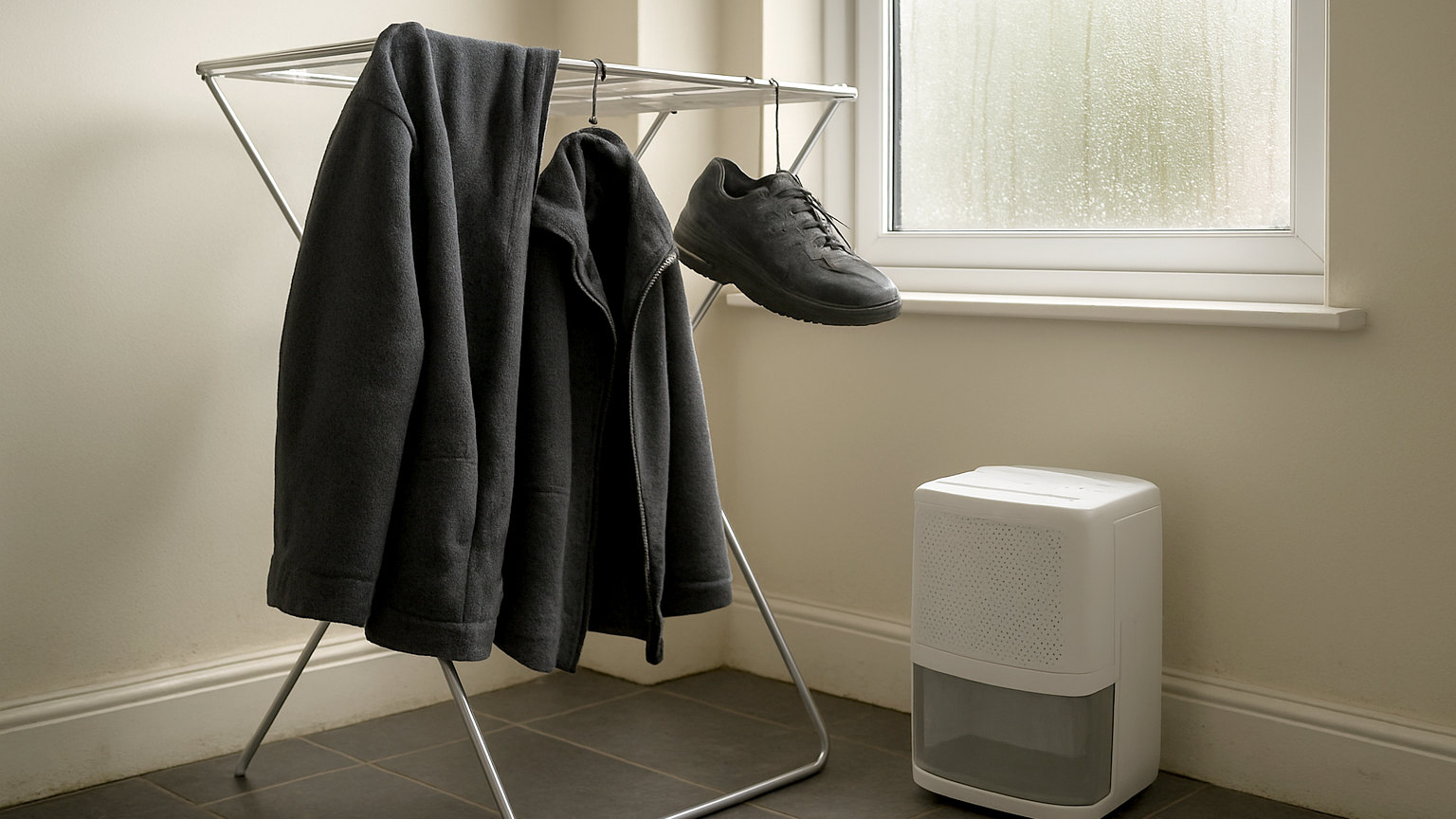
These items are worth positioning near a fan or a dehumidifier, since the thick sections are what hold the load back from being finished.
What should never be dried with heat?
- Anything with adhesive construction, including trainers and some structured bags.
- Foam and latex, including memory foam pillows and rubber backed bath mats.
- Anything contaminated with oil or solvent, which is a fire risk.
- Waterproof membranes above the temperature the label allows.
- Leather and suede, which stiffen and crack.
What is the general rule?
Move air rather than apply heat. A fan, an open window and patience will dry almost anything safely, where a radiator or a hot drum will dry it faster and take years off it. For bulky items, the extra day is almost always worth it.