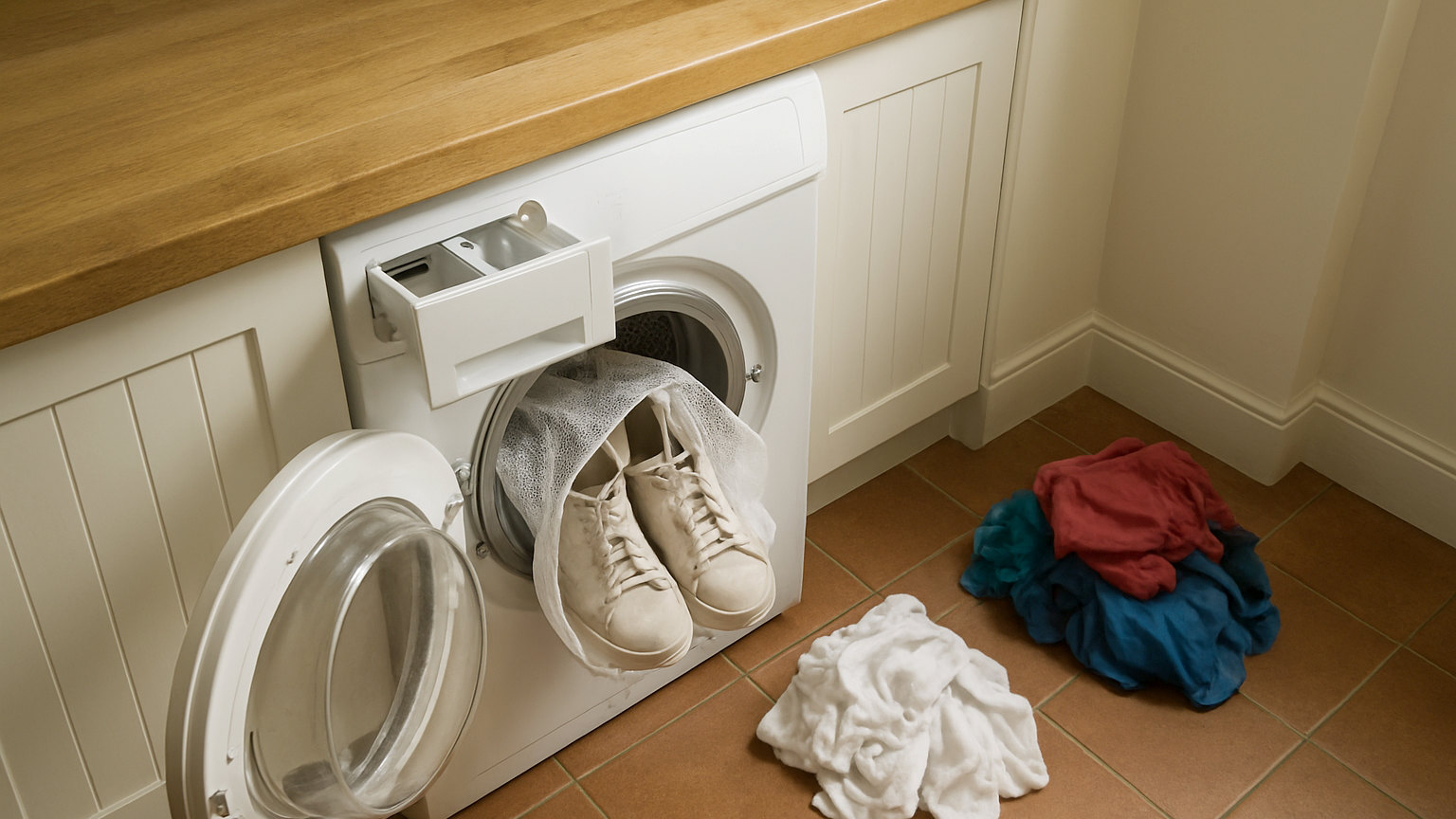
A tumble dryer damages clothes in two ways at once: heat, which degrades fibres and finishes, and mechanical tumbling, which abrades and distorts. Different fabrics fail differently, and the items on the never list fail badly enough that one cycle is often enough to finish them.
What should never go in?
- Wool and cashmere – heat plus agitation felts the fibres and shrinks the garment permanently, often by several sizes.
- Silk – heat damages the fibre and dulls the surface, and the tumbling causes creasing that will not press out.
- Anything with a significant elastane content, including swimwear, sportswear, tights and fitted shirts. Heat breaks down the elastic fibres and the garment loses its shape and recovery.
- Waterproof and technical outerwear, where heat can damage the membrane and the seam tape, though some manufacturers specify a low tumble to reactivate the water repellent finish. Follow the label rather than general advice.
- Leather, suede and anything with leather trim.
- Bras and structured underwear, where the underwire, foam cups and elastic all suffer.
- Anything with plastic prints or vinyl lettering, which softens, cracks and can transfer.
- Sequins, beading and heavy embellishment, which detach and can damage the drum.
- Tights and anything very fine, which tangle, snag and can get drawn into the drum seal.
Which items are a genuine fire risk?
Anything contaminated with oil, petrol, cooking oil, solvent or wax. Oily residues can continue to oxidise and generate heat after the cycle ends, and dryer fires involving oily cloths are well documented. Wash such items thoroughly and air dry them.
Foam backed items, rubber backed mats and anything with a foam or latex component should also be kept out, since the material degrades and can ignite. Bath mats with rubber backing are the most common example in a domestic setting.
What does heat do to elastane?
It breaks the elastic filaments down, and the effect is cumulative and invisible until the garment suddenly stops fitting. Leggings that have gone baggy at the knee, swimwear that has lost its shape and gym tops that no longer hold are usually victims of the dryer rather than of wear.
Since almost all fitted modern clothing contains some elastane, this is the single most common form of dryer damage and the one people least often identify.
How do you read the drying symbols?
A square with a circle inside means tumble drying is permitted. One dot inside the circle means low heat, two means medium, three means high. A cross through the square and circle means no tumble drying at all. A square with a horizontal line inside means dry flat, and a square with a curved line at the top means line dry.
The symbols are a maximum rather than a recommendation, so a garment marked with two dots will still last longer dried on one.
What if something has already shrunk?
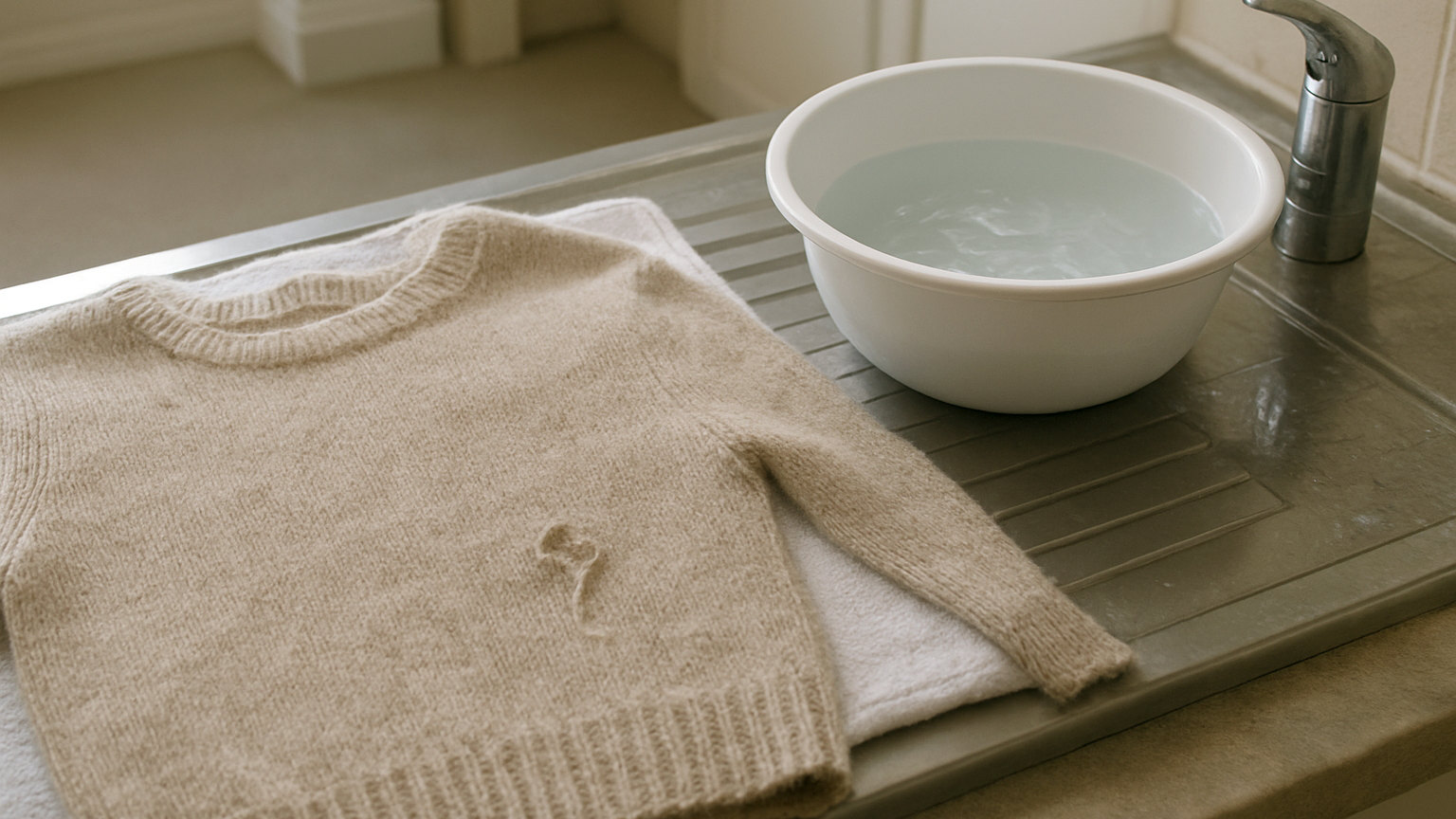
Wool that has felted cannot be restored, since the fibres have physically interlocked. Cotton that has shrunk can sometimes be recovered by soaking in cool water with a little hair conditioner, gently stretching while damp and drying flat, which relaxes the fibres. It works partially at best.
Elastane damage is permanent.
What can safely be dried, and how?
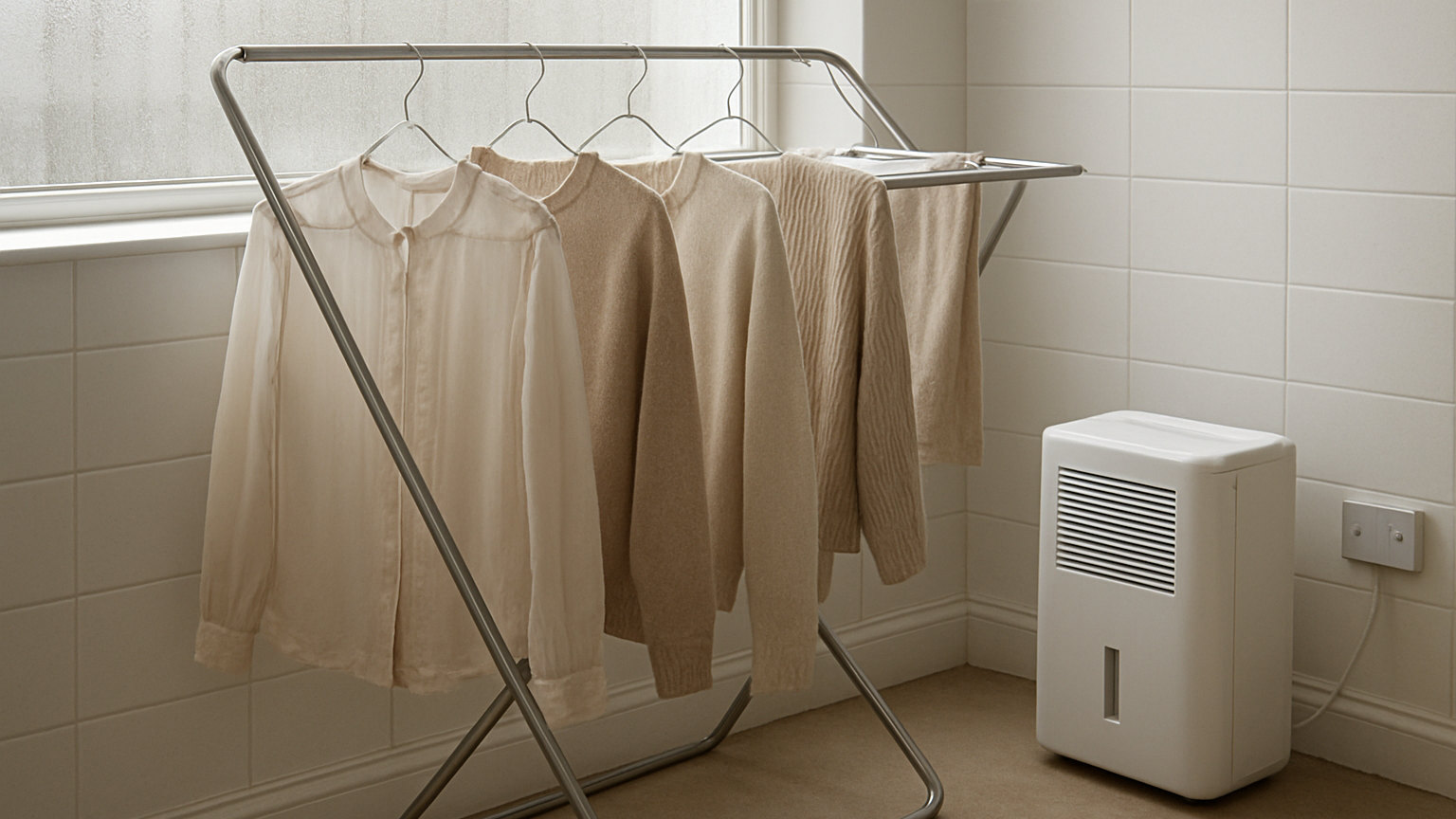
Cotton towels, bedding, socks, underwear without elastic content, robust cottons and most synthetics without a stretch component. Use the lowest heat that gets the job done, use a sensor programme rather than a timed one, and take the load out slightly before it is bone dry.
Over-drying is what does most of the cumulative damage, and it also causes the static and the creasing that people then blame on the machine.
What about items with no label?
Treat them as no tumble dry until you know otherwise. Feel the fabric for stretch, which indicates elastane, and check for any coating, print or bonded seam on the inside. If in doubt, dry the item flat once and see how it behaves before risking a cycle.