Washing is the main thing that wears clothes out, so freshening a garment rather than laundering it extends its life considerably. Most of what makes clothing smell after one wear is moisture and volatile compounds, and both disperse on their own given air and a few hours.
What does airing actually remove?
Perspiration moisture, which is the main carrier of odour. Volatile compounds from the environment, such as cooking and smoke. And the general staleness that comes from a garment being enclosed against the body for a day.
What it does not remove is body oils, visible marks or anything that has soaked into the fabric. A garment that still smells after proper airing needs washing.
How should clothes be aired?
- Hang the garment on a broad hanger rather than folding it or draping it over a chair.
- Put it somewhere with air movement, near an open window if possible.
- Turn it inside out if the inner face is the part that was against skin.
- Leave it for several hours, ideally overnight.
- Check it by smelling the underarm and collar areas before putting it away.
The difference between a jumper hung by an open window overnight and the same jumper folded onto a chair is obvious the next morning.
Which items can be worn several times?
- Jumpers and cardigans worn over another layer – five or six wears.
- Trousers and skirts – three or four.
- Jeans – considerably longer, and washing is what fades them.
- Coats and blazers – a whole season with brushing and airing.
- Shirts worn over a vest – two or three.
Underwear, socks, tights, sportswear and anything worn against bare skin in warm weather need washing after every wear regardless.
Does steaming help?
Considerably, and it is the most effective freshening method after airing. Steam relaxes creases and carries volatile compounds out of the fabric, and the heat has a mild effect on surface bacteria. A handheld steamer takes a minute or two per garment and needs no board.
Hanging a garment in a steamy bathroom achieves a weaker version of the same thing for free.
What about brushing?
For wool in particular, a clothes brush with natural bristles lifts dust, hair and surface soil out of the weave before it works in and becomes a stain. Brush downwards following the nap after each wearing. It genuinely extends the interval between cleans for suits and coats.
Does freezing work?
It is a popular claim and largely does not. Freezing does not kill most of the bacteria involved, and it does nothing about body oils or the residues causing the smell. Any improvement people notice is usually from the garment being aired as it thaws.
Freezing is genuinely useful for killing clothes moth larvae, which is a different problem entirely.
Are fabric refresher sprays worth using?
They mask rather than remove, adding a fragrance on top of whatever is there. Some contain compounds that bind odour molecules and have a modest genuine effect. None is a substitute for airing, and using one on a garment that actually needs washing simply delays the wash while the oils continue to oxidise.
A light mist of water with a little vodka in a spray bottle is a common alternative and works on much the same principle, evaporating and taking volatile compounds with it.
How do you deal with a single mark?
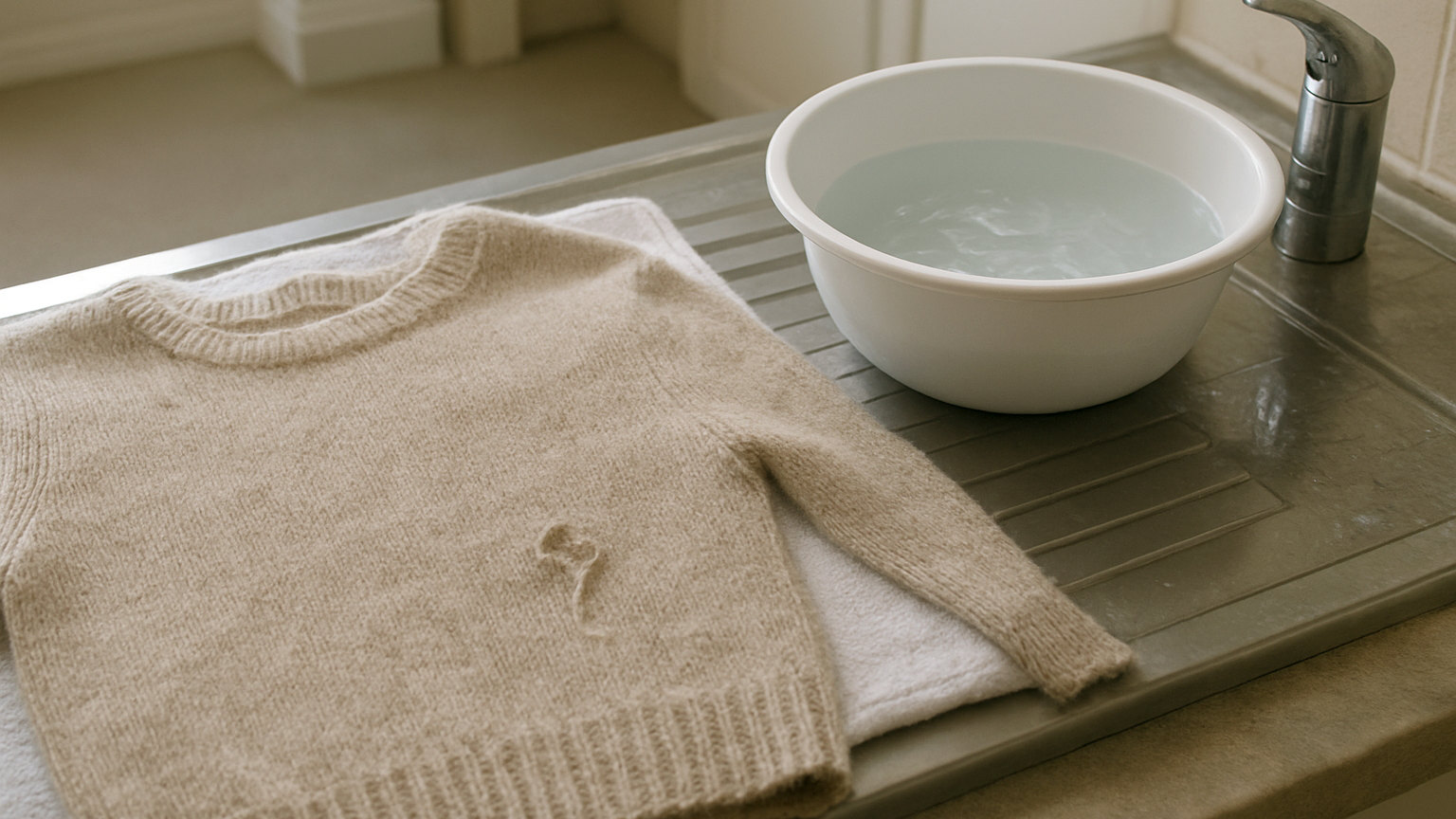
Spot clean it rather than washing the whole garment. Blot with a barely damp cloth, working from the outside of the mark inwards, and let the area dry fully. Two minutes of spot cleaning saves a full cycle and the wear that comes with it.
When does a garment definitely need washing?
When it still smells after a night of airing, when there are visible marks, when it has been worn while sweating heavily, or when it has been worn against bare skin in warm weather. Airing is a way of avoiding unnecessary washes, not of avoiding necessary ones.