Perfume is engineered to last. The fixatives in fragrance are designed to bind to fibres and release scent slowly over hours, which is precisely why a strongly scented garment survives a normal wash and comes out still smelling. Removing it means breaking those compounds down rather than simply rinsing.
Why does it matter beyond preference?
Fragrance is one of the most common causes of contact irritation and of headaches in people sensitive to it, and secondhand clothing frequently arrives carrying the previous owner scent. It is also a practical problem when a garment has picked up someone else fragrance and the smell is unwanted.
What is the first step?
Airing, outdoors, for as long as possible. Fragrance compounds are volatile by design, and moving air removes a substantial proportion over a day or two. A breezy spot out of direct sunlight is ideal, and for light exposure this alone may be enough.
Do this before washing rather than after, since heat from a dryer will set what remains.
What is the soaking method?
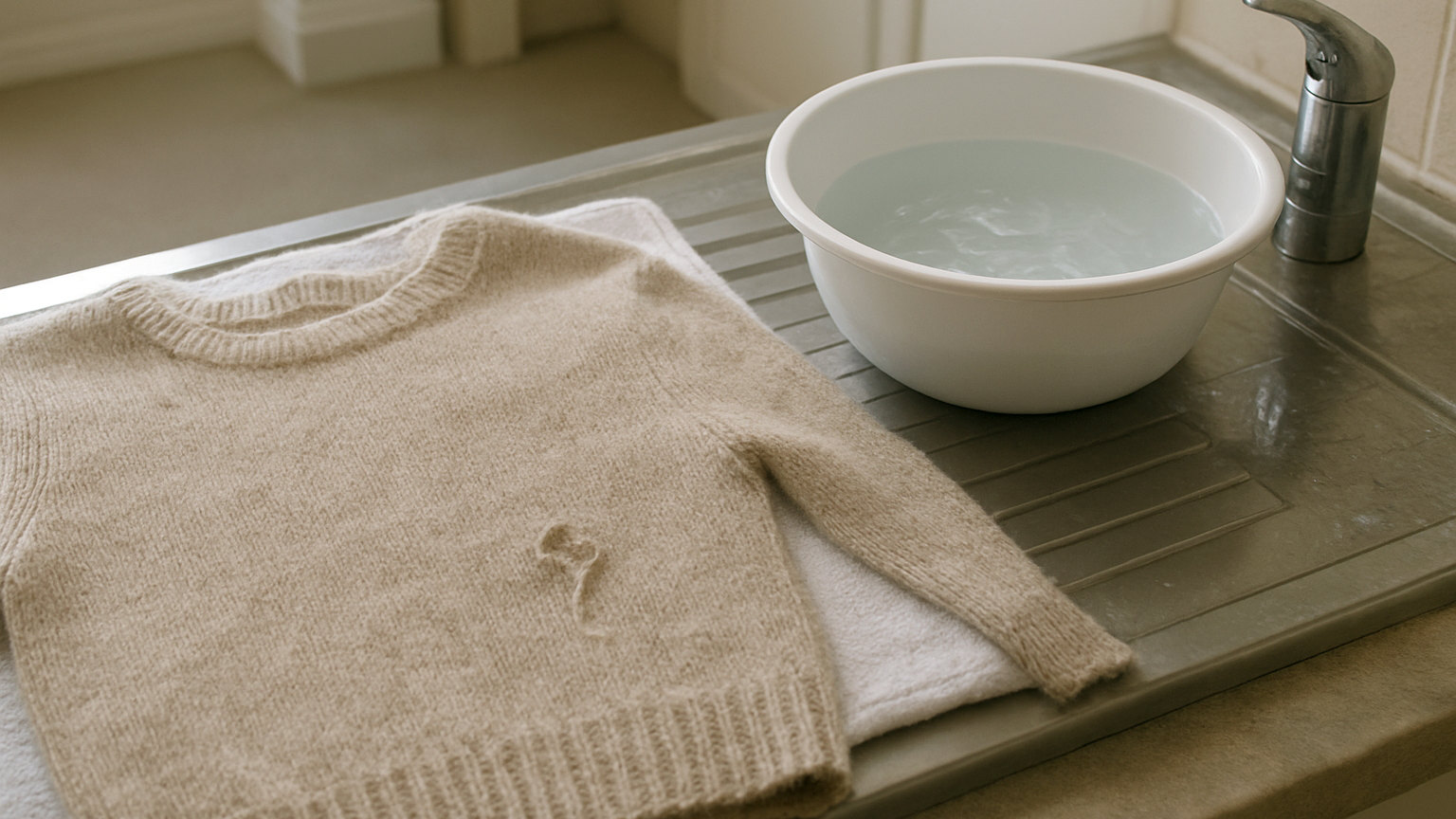
- Fill a basin with warm water and add a cup of white vinegar.
- Submerge the garment fully and leave it for two to four hours, or overnight for heavy fragrance.
- Drain and squeeze the water through the fabric.
- Wash normally with an unscented detergent, at the highest temperature the label allows.
- Add an extra rinse.
- Air dry outdoors rather than tumble drying.
Vinegar is the most effective household treatment, and its own smell does not survive the rinse and drying.
What does bicarbonate of soda do?
It absorbs and neutralises odour rather than dissolving it. Half a cup in the drum during the wash helps, and for a dry treatment you can seal the garment in a bag with an open tub of bicarbonate for a few days.
Use vinegar and bicarbonate in separate steps rather than together, since combining them neutralises both.
Why does washing sometimes make it worse?
Because most detergents and all fabric conditioners are themselves heavily fragranced. Washing a perfumed garment in a scented detergent adds a second fragrance on top of the first, and the combination is usually less pleasant than either alone.
Use an unscented or sensitive detergent for this, and skip conditioner entirely.
What about items that cannot be washed?
Coats, jackets, suits and anything dry clean only respond well to prolonged airing, which should be the first resort. A garment steamer helps, since steam opens the fibres and carries compounds away.
Sealing the item in a bag with bicarbonate of soda or activated charcoal for several days absorbs a good deal. For heavy fragrance in a valuable item, professional cleaning is the reliable answer, and it is worth telling the cleaner why.
How long does it take?
Longer than people expect, and repetition works better than intensity. A single vinegar soak and wash clears light fragrance. Heavy or long standing fragrance, particularly in a coat or a wool garment, may need two or three rounds with airing in between.
Wool and synthetic fibres hold fragrance more stubbornly than cotton does.
What about secondhand clothing generally?
Treat everything as though it needs it. A vinegar soak followed by a wash in unscented detergent and a day of outdoor airing will clear fragrance, smoke and storage smells in one routine, and it is a sensible default for anything bought secondhand before it goes into a wardrobe with other clothes.
Can you prevent it?
Apply fragrance to skin rather than to clothing, and let it dry before dressing. Perfume sprayed directly onto fabric is far harder to remove, can stain silk and light colours, and the alcohol in it damages some finishes. Applying it last, after dressing, is the common mistake.
What about fragrance in the detergent itself?
It is often the larger source, and people rarely connect the two. Detergent, conditioner and scent boosters all deposit fragrance deliberately, and a household that uses all three has laundry carrying several layers of it. Switching to an unscented detergent for a few washes is the quickest way to find out how much of the smell is coming from the wash rather than from the wearer.