Grey whites are not usually dirty in the way people assume. The grey is soil that was lifted off the fabric during the wash and then settled back onto it before the water drained, distributed evenly across the whole load. That is called redeposition, and it happens when the wash water cannot hold the soil in suspension.
What causes redeposition?
- Too little detergent, so there is not enough to keep the lifted soil suspended until it drains away.
- An overloaded drum, where there is too little water for the amount of fabric and soil.
- Hard water, where minerals deactivate part of the detergent and reduce its capacity.
- Washing too cool for the soil level, particularly with greasy or oily soiling.
- A dirty washing machine, returning residue from previous loads into the water.
- Washing whites with coloured or heavily soiled items, which adds to the load the water has to carry.
Is dye transfer the same thing?
No, and it is the second cause of dull whites. Every coloured garment releases a small amount of dye into the wash water, and white cotton absorbs it readily. A single wash makes no visible difference; fifty washes with a mixed load produces a distinctly grey or blue-grey cast.
The two look similar and are distinguished by the tint. Redeposition gives a flat dirty grey; dye transfer gives a colour cast, often blue, pink or beige depending on what has been in the machine.
Could it be detergent residue?
It can, and it is the third possibility. Too much detergent, or a machine that cannot rinse properly because it is overloaded, leaves a film on the fabric that dulls the white and feels slightly stiff. This one is easy to test: run the load again with no detergent at all and an extra rinse, and see whether it improves.
How do you recover greyed whites?
- Soak the items overnight in warm water with a generous dose of oxygen bleach or a laundry booster. This is the step that does most of the work.
- Wash at 60 degrees with a powder detergent at the correct dose, in a load no more than two thirds full.
- Add an extra rinse.
- Dry outdoors in sunlight if at all possible.
- Repeat the soak once more if the improvement is partial.
Two rounds will restore most cotton that has greyed gradually. Fabric that has taken up dye heavily may not fully recover.
What should you change permanently?
Wash whites separately and only with other whites. Use powder rather than liquid for white cotton. Check the detergent dose against your water hardness, which your water supplier publishes by postcode. Leave space in the drum. And clean the machine itself with a hot maintenance wash monthly.
Does the washing machine cause it?
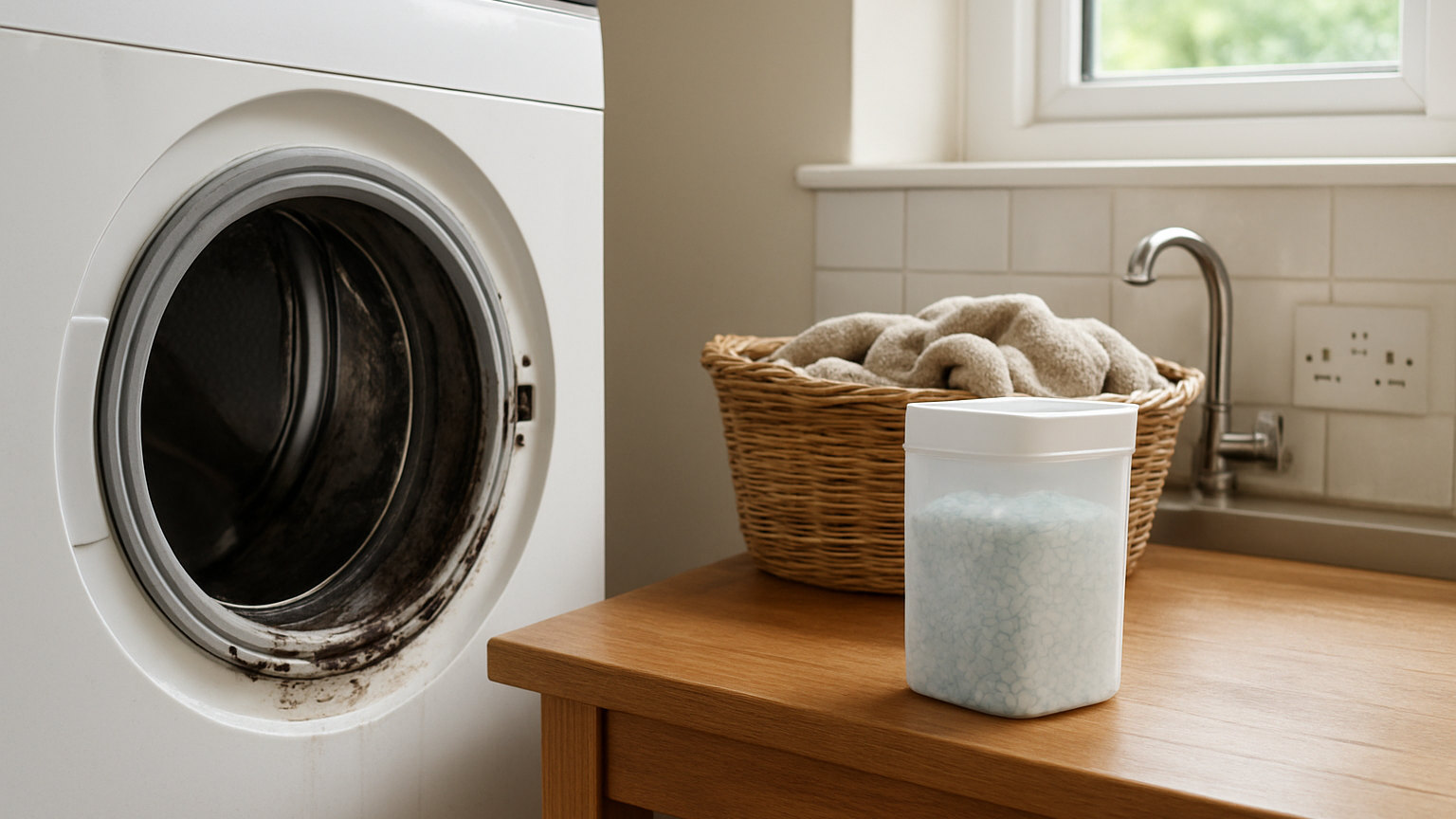
More often than people expect. A machine used exclusively on cool short cycles builds a film of detergent residue, fabric conditioner and lint behind the door seal, in the drawer and in the drain hose. That deposit releases back into subsequent loads and can leave grey smears as well as a general dullness.
Run an empty wash at 60 or 90 with a machine cleaner, clean the drawer and wipe under the lip of the door seal. If whites improve noticeably afterwards, that was the cause.
Does water hardness matter?
Considerably. In hard water, calcium and magnesium react with detergent and take it out of circulation, so the effective dose is lower than the amount you put in. The same scoop that works in a soft water area may be well short of what is needed in a hard one, which produces exactly the conditions for redeposition.
Check your local hardness, adjust the dose accordingly, and consider a water softening additive if the supply is very hard.
Can greyed whites be prevented entirely?
Largely, and the habits that do it are the same ones that keep a machine working well. Separate loads, a correct detergent dose for your water, space in the drum, a monthly hot maintenance wash, and powder rather than liquid on white cotton. A household doing all five rarely sees greying at all, which is why the problem tends to appear in homes where cool short cycles have become the default for everything.