For most household cleaning a washable cloth is better: it cleans more effectively, costs almost nothing per use and produces no waste. There is one situation where paper towel is the correct choice rather than the lazy one, and it is worth being clear about which.
Where is paper towel genuinely right?
- Raw meat, poultry, fish and egg residue, which should be wiped up with paper and binned.
- Pet accidents and anything biologically contaminated.
- Grease and oil that would ruin a cloth or clog a washing machine.
- Paint, adhesive and solvents.
- Vomit and similar, where the material should not go in with laundry.
- Anything you would not want to wash and reuse.
Why does raw meat matter specifically?
Because a cloth used on raw meat residue carries the contamination to wherever it is used next, and that next surface may be one where food is eaten without further cooking. This is how cross contamination actually happens in domestic kitchens, far more often than through the air or the surfaces themselves.
Paper used once and binned removes the pathway entirely. It is the one place where the disposable option is the hygienically correct one.
Where are cloths better?
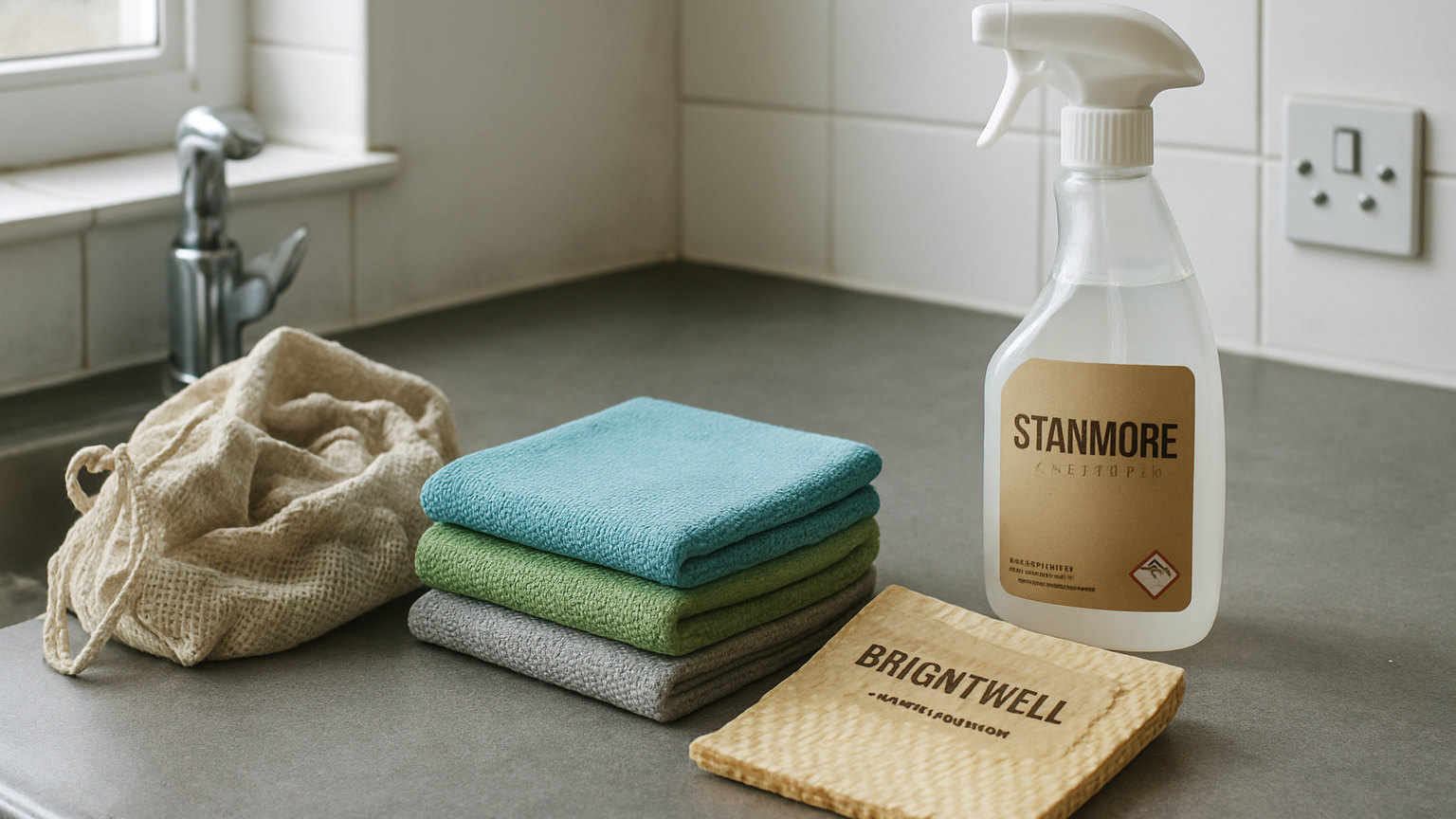
Almost everywhere else. General surface wiping, glass and mirrors, dusting, bathrooms, floors, polishing and spills. A microfibre cloth cleans considerably better than paper, which pushes dirt around and leaves lint.
On glass in particular paper towel is poor, since it shreds and leaves fibres behind.
What does paper cost over a year?
More than most households realise. A kitchen that gets through several rolls a month is spending a meaningful amount annually on something that a pack of cloths replaces for a few pounds and hundreds of uses.
The waste is the other consideration, since kitchen roll cannot generally be recycled once soiled.
How do you reduce paper use without losing hygiene?
- Keep a stack of cloths somewhere as accessible as the kitchen roll.
- Cut old cotton sheets or towels into squares for the genuinely dirty jobs.
- Keep kitchen paper for the specific list above rather than as the default.
- Move the roll away from the worktop so reaching for it is a decision.
- Keep a bin or bag for used cloths so they are easy to deal with.
What about reusable kitchen roll?
Washable cloth sheets sold on a roll work reasonably and are essentially microfibre or cotton in a different format. They are worth trying if the habit of reaching for a roll is the obstacle, since they fit the existing routine.
They still need washing at sixty degrees and should not be used for raw meat.
What about disposable wipes?
Expensive per use, poorer at cleaning than a cloth and a spray, and a genuine waste problem since most contain plastic and should never be flushed. They suit awkward situations away from a sink and make a poor default.
A wipe also stops being clean after its first pass, so using one across several surfaces spreads what it picked up first.
Does paper have a hygiene advantage generally?
Only because it is used once. A freshly laundered cloth is at least as clean as a paper towel; the risk comes from reusing a cloth that has not been washed. Households that wash cloths at sixty degrees and change them daily have no hygiene disadvantage.
What is the practical arrangement?
Cloths as the default for everything, kitchen roll kept for raw meat, grease and anything contaminated, and old cotton rags for the jobs that would ruin either. That covers every situation, keeps the hygiene where it matters and cuts the paper use substantially.
Which paper towel is worth buying?
A stronger two or three ply roll uses fewer sheets per job than a thin one, which frequently makes it cheaper in use despite a higher price per roll. For the jobs where paper is genuinely the right choice, usually greasy or contaminated ones, a flimsy sheet that disintegrates is a false economy.