A kitchen sponge is an open cell structure with an enormous internal surface area, permanently damp and loaded with food residue. It is close to ideal as a growing environment, and the bacterial population reaches very high levels within days of first use.
How often should it be replaced?
Weekly for a sponge in daily use, and sooner if it smells, feels slimy or has been used on anything contaminated. Some guidance suggests every two weeks; weekly is the safer interval for one used on food surfaces.
A sponge used only for washing up in hot soapy water lasts a little longer than one used to wipe worktops.
Why not just clean it?
Because the cleaning methods are less effective than they seem. Research on domestic sponges has found that attempts to sanitise them, including microwaving and boiling, reduce the total population temporarily while the more resistant species survive and recolonise.
Some studies have found regularly sanitised sponges no less contaminated overall than untreated ones. The structure that makes a sponge useful also makes it very difficult to clean properly.
What about the dishwasher?
A hot dishwasher cycle with a drying phase is the most effective domestic option and it extends the life of a sponge rather than making it permanent. Put it in the cutlery basket on a hot cycle.
Even then, replace it weekly. The dishwasher reduces the load rather than resetting it.
Is microwaving a good idea?
It is widely suggested and has two problems. The effectiveness is debated for the reason above, and there is a genuine fire risk: a sponge that is not thoroughly saturated, or one containing any metal or a scouring layer with metallic content, can ignite.
If you do it, soak the sponge completely, use a short burst, and never leave the microwave unattended. A dishwasher cycle is safer and at least as effective.
What makes a sponge worse faster?
- Leaving it wet in a sink or on a flat surface where it cannot drain.
- Using it to wipe worktops as well as dishes.
- Using it on raw meat residue, which should always be kitchen paper.
- Not rinsing and wringing it thoroughly after each use.
- Keeping it in a closed caddy with no airflow.
How should it be stored between uses?
Rinsed thoroughly, squeezed out hard and stood on edge in a rack or a holder that drains, somewhere with air moving around it. A sponge that dries out between uses is considerably better than one that stays wet.
The plastic caddies that sit in the sink are among the worst options, since they hold water.
What are the alternatives?
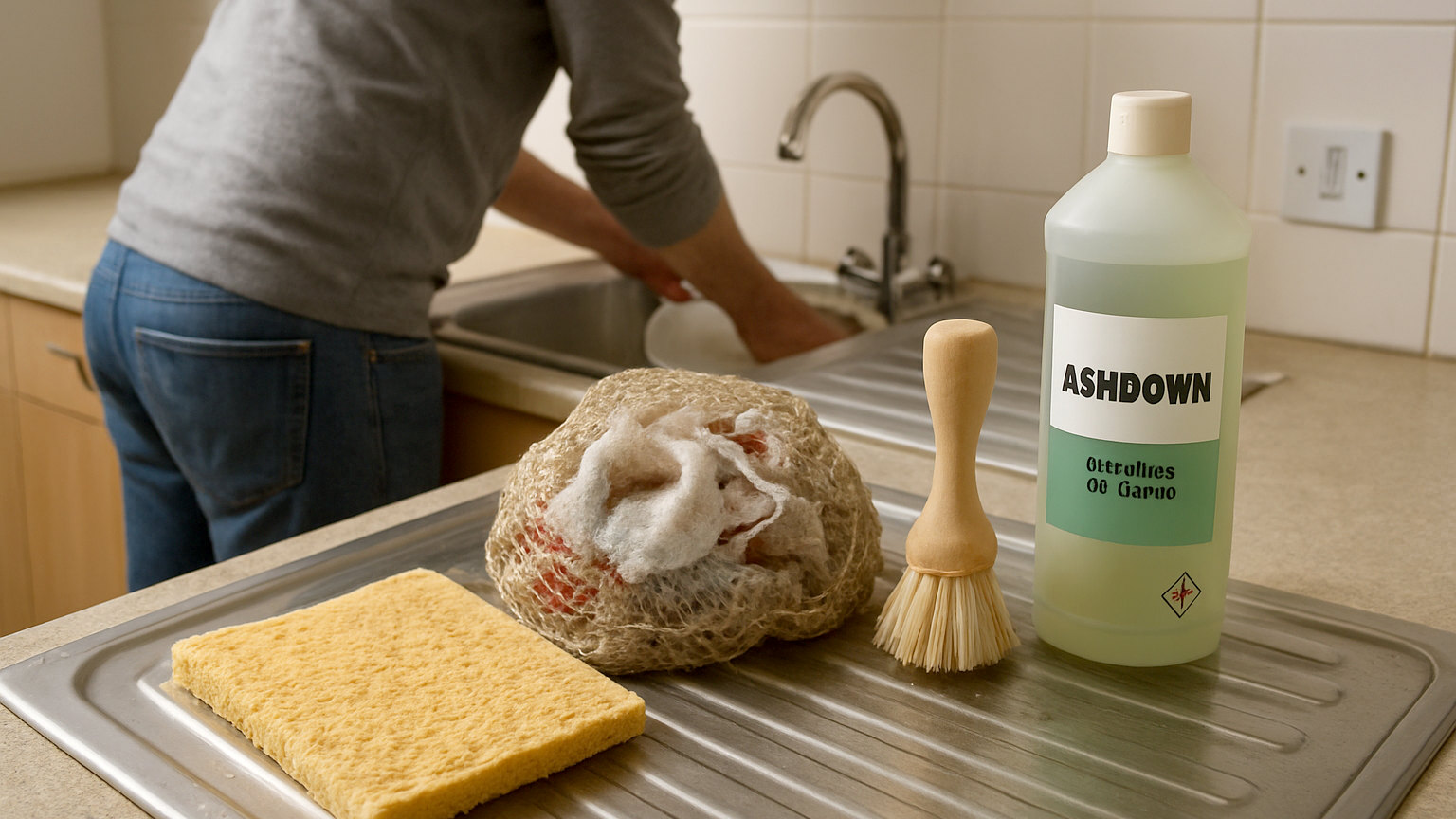
- A washing up brush, which dries between uses and is far more hygienic. The head can go in the dishwasher.
- Microfibre or cotton dishcloths, which can be washed at sixty degrees daily.
- Silicone scrubbers, which are non-porous and easy to sanitise.
- Loofah and natural sponges, which are compostable and still damp and porous.
- Coconut fibre scourers, which dry quickly.
A brush and a daily dishcloth between them cover most of what a sponge does, with far less of the problem.
Does it actually matter?
For most healthy households the risk from a sponge is modest, and it matters more where someone is vulnerable, where raw meat is handled regularly, or where the sponge is used to wipe surfaces rather than only dishes.
Given how cheap sponges are, weekly replacement is a small cost for removing the question entirely.
What is the practical routine?
Buy them in multipacks. Use a fresh one each week, put the old one in the dishwasher and demote it to cleaning the bin, the outside of appliances or floors before binning it. Never use a sponge on raw meat residue, and never leave it lying wet in the sink.
Do the scouring backed ones last as long?
The sponge part behaves identically and the abrasive layer usually outlasts it, which tempts people to keep using a sponge that should have been replaced. Judge by the sponge rather than the pad. A scouring backed sponge also cannot be microwaved, since the abrasive layer may contain material that will spark.