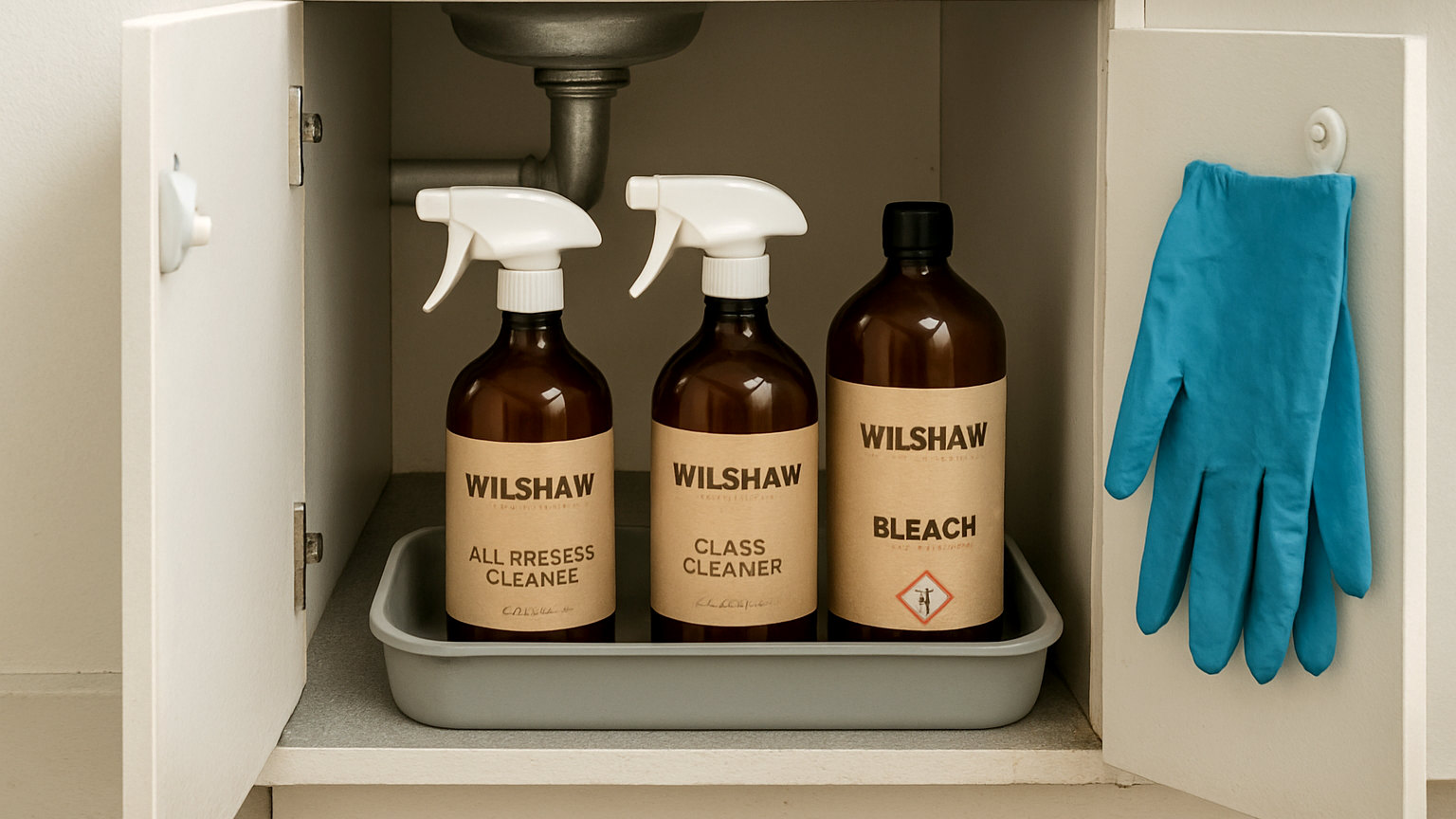
Cleaning products are a leading cause of accidental poisoning in young children, and the traditional storage place, the cupboard under the kitchen sink, is at exactly the height a toddler can reach and open.
What are the highest risk products?
- Laundry and dishwasher capsules, which are brightly coloured, soft and resemble sweets.
- Dishwasher powder and salt, which are strongly alkaline and cause mouth and throat burns.
- Drain and oven cleaners, which are corrosive.
- Bleach, in any form.
- Descalers and limescale removers.
- Anything decanted into an unlabelled container.
Why are capsules a particular problem?
Because they look like something to eat or play with, they burst easily under bite pressure, and they contain concentrated detergent. Contents in the eyes cause serious irritation and swallowing causes burns and vomiting.
Keep them in their original tub with the child resistant lid closed, stored high, and never leave one out on a worktop while loading a machine.
Where should products be stored?
High, in a cupboard a child cannot reach even by climbing. That is the single most effective measure, and it costs nothing beyond rearranging what is where.
Where a low cupboard must be used, fit magnetic or mechanical safety catches, which are inexpensive and effective. Treat the catch as a second line rather than the first.
What else matters?
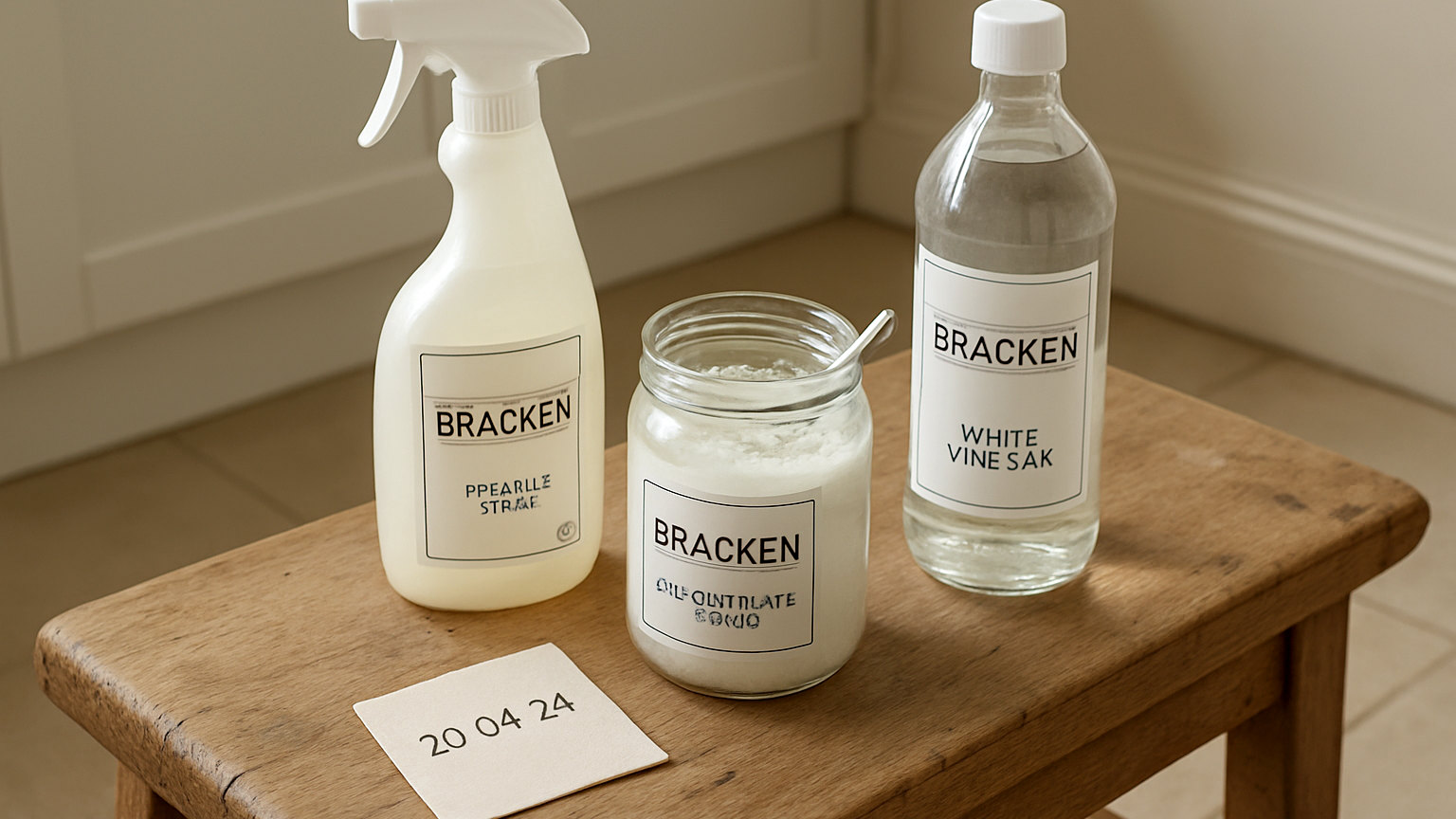
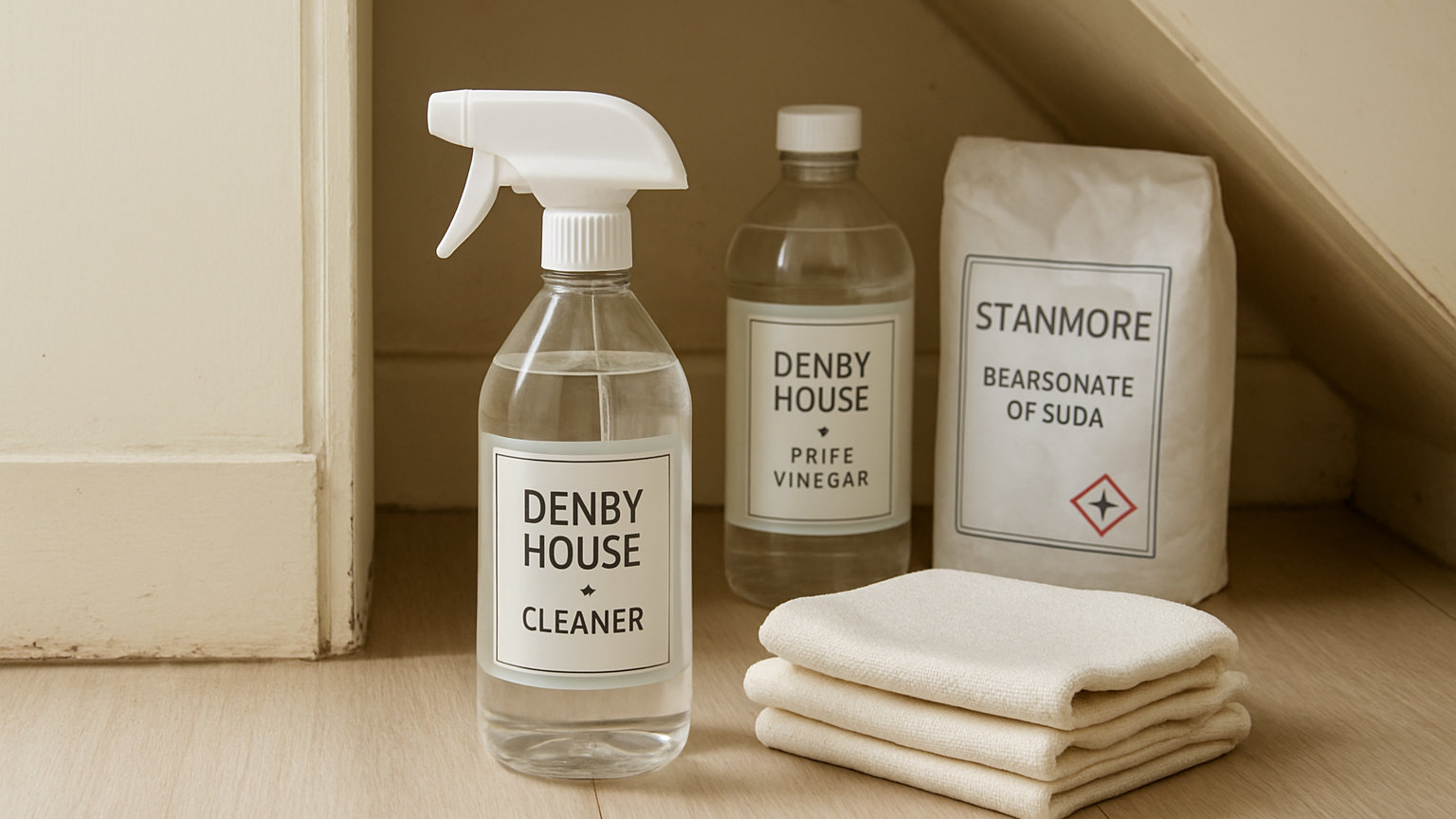
- Keep everything in its original labelled container.
- Close lids and caps properly every time, including child resistant ones.
- Never leave a product out while cleaning, even briefly.
- Never leave a bucket of cleaning solution unattended.
- Put products away immediately after use rather than at the end.
- Check bags and cupboards after shopping.
Are child resistant caps enough?
No. They are designed to slow a child down rather than to prevent access entirely, and many children work them out. They also rely on being closed correctly, which does not always happen in the middle of a job.
Height and a locked cupboard are the real protection; the cap is a backup.
When is the risk highest?
During cleaning itself, when products are out of the cupboard, caps are off and attention is on the job. Most incidents happen while a product is in use rather than while it is stored.
The other high risk period is around a house move or a visit, where products are in unfamiliar places and normal arrangements are disrupted.
What about visiting houses?
Grandparents and friends without young children often store products low and leave them out. It is worth a quick look when visiting, and worth mentioning before a child stays somewhere.
What should you teach children?
Age appropriately, that these are not food and are not toys, and that they should tell an adult if they find one. Do not rely on teaching as a substitute for storage, since young children explore by mouth regardless of instruction.
What should you do in an emergency?
If a child has swallowed something, do not make them sick. Do not give anything to drink unless advised to. Remove anything remaining from the mouth.
Call 999 immediately if they are drowsy, having difficulty breathing, or have swallowed something corrosive. Otherwise contact NHS 111 or your GP urgently, and take the product container with you so the contents are known.
What about products in eyes or on skin?
Rinse immediately with plenty of cool running water for at least fifteen minutes for eyes, holding the lid open gently, and ten minutes for skin. Then seek medical advice, which for eyes should be urgent.
What is the summary?
Store high, keep everything labelled and in its original container, never leave anything out while cleaning, and know what to do. Those four cover almost every realistic scenario.
What about older children?
The risk changes rather than disappearing. Older children may use products themselves without reading labels, mix things out of curiosity, or use something in an unventilated bathroom. Explaining why products are not combined is worth doing once they are old enough to help with cleaning.