The red bordered diamonds on cleaning products are part of a standardised international system, used across the UK and Europe. Each symbol carries a specific meaning, and they appear alongside a signal word and written hazard statements that say precisely what the risk is.
What are the symbols you will see?
- Corrosive – a test tube pouring onto a hand and a surface. Causes severe burns to skin and eyes. Oven cleaners, drain cleaners, strong descalers.
- Exclamation mark – irritant or harmful. Causes skin or eye irritation, or is harmful if swallowed. The most common symbol on household products.
- Flammable – a flame. Aerosols, polishes, some solvents.
- Health hazard – a figure with a starburst on the chest. Longer term effects such as respiratory sensitisation.
- Environment – a dead fish and tree. Toxic to aquatic life.
- Gas under pressure – a cylinder. Aerosols and pressurised containers.
- Toxic – a skull and crossbones. Rare on domestic cleaning products.
What do the signal words mean?
Two are used. Warning indicates a lesser hazard, and Danger indicates a more serious one. A product marked Danger with a corrosive symbol needs considerably more care than one marked Warning with an exclamation mark.
The signal word is a quick way to gauge how careful to be before reading further.
What are the hazard statements?
The written phrases beside the symbols, which are standardised wording. They say exactly what the risk is: causes serious eye damage, may cause respiratory irritation, harmful if swallowed, and so on.
These are more informative than the symbols, since they specify the route of exposure and the effect.
What are the precautionary statements?
The instructions telling you what to do: wear protective gloves, use only outdoors or in a well ventilated area, keep out of reach of children, and what to do in case of contact.
They are the part most worth reading, since they say what precautions the manufacturer considers necessary.
What does no symbol mean?
That the product does not meet the classification thresholds for any hazard category. It does not mean it is harmless to drink or safe in eyes.
Plenty of unclassified products will still irritate if splashed in an eye or cause an upset stomach if swallowed, and all cleaning products should be kept away from children regardless.
Which symbols matter most at home?
Corrosive, by a distance. Products carrying it can cause permanent injury within seconds and include oven cleaners, drain unblockers, strong limescale removers and some dishwasher products.
These warrant gloves, eye protection and care with storage, and they are the products to consider whether you need at all.
What about the environment symbol?
It indicates aquatic toxicity, which matters for how the product is used and disposed of rather than for personal safety. Use it sparingly, dilute as directed, and never pour quantities away.
Where do you find the full information?
The label carries the essentials. Manufacturers also publish safety data sheets for their products, which are more detailed and usually available on their website, giving first aid measures, handling advice and ingredient information.
These are worth looking at for any product you use regularly or in quantity.
Do the symbols change?
The current system replaced older orange and black symbols some years ago. Very old products in a garage or shed may still carry the previous set, and anything that old is worth disposing of rather than using.
What should you actually do with this?
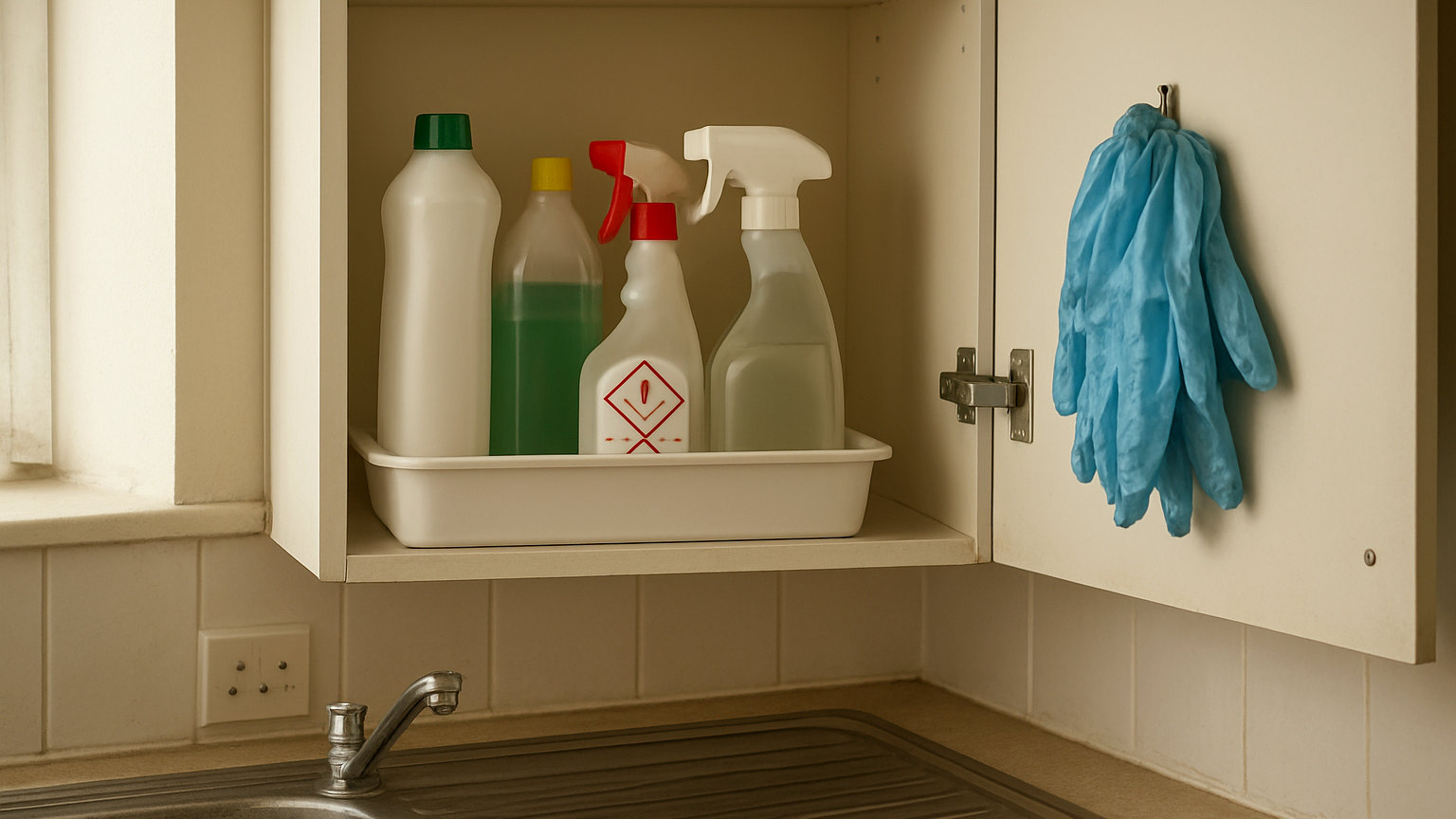
Read the label once when you buy something, note the symbols and the precautions, and store accordingly. Products with a corrosive symbol should be kept separately, high up, and used with gloves and ventilation.
That takes a minute per product and covers most of what safety in a cleaning cupboard amounts to.
Do professional products differ?
The same system applies, and products sold to trade are frequently more concentrated and therefore more heavily classified. A janitorial concentrate may carry a corrosive symbol where the domestic equivalent carries only an exclamation mark, purely because of the strength in the container.
What should you do with an unlabelled bottle?
Treat it as hazardous and do not use it. Without a label there is no way to know what it is, what it reacts with, or what the first aid advice would be. Take it to a household waste recycling centre and tell the staff the contents are unknown.