A vacuum cleaner collects everything it removes, and every part of the path from the floor head to the exhaust gradually clogs. Cleaning it is the difference between a machine that works properly for a decade and one that seems worn out in two years.
What is the full routine?
- Unplug the machine, or remove the battery on a cordless.
- Empty the cylinder or change the bag.
- Remove and wash the filters according to the manual.
- Clear the brush bar of hair and thread.
- Check the floor head for blockages and wash the soleplate.
- Check the hose by feeding something flexible through it.
- Wipe the body, the cord and the wheels.
- Refit everything once the filters are completely dry.
How do you clean the filters?
Check first whether they are washable, since washing a non-washable filter ruins it. Washable filters are rinsed under cold running water until the water runs clear, without detergent, and squeezed gently rather than wrung.
Then leave them to dry for at least twenty four hours, and longer in a cool room. This is the step people rush, and a damp filter grows mould, smells and restricts airflow.
Owning a spare set of filters means the machine can be used while one set dries.
How often should filters be done?
Monthly for most machines in normal use, and more often with pets or in a dusty house. Non-washable filters usually need replacing every six to twelve months.
The clearest indicator is suction. If it has dropped noticeably, check the filters first.
How do you clear the brush bar?
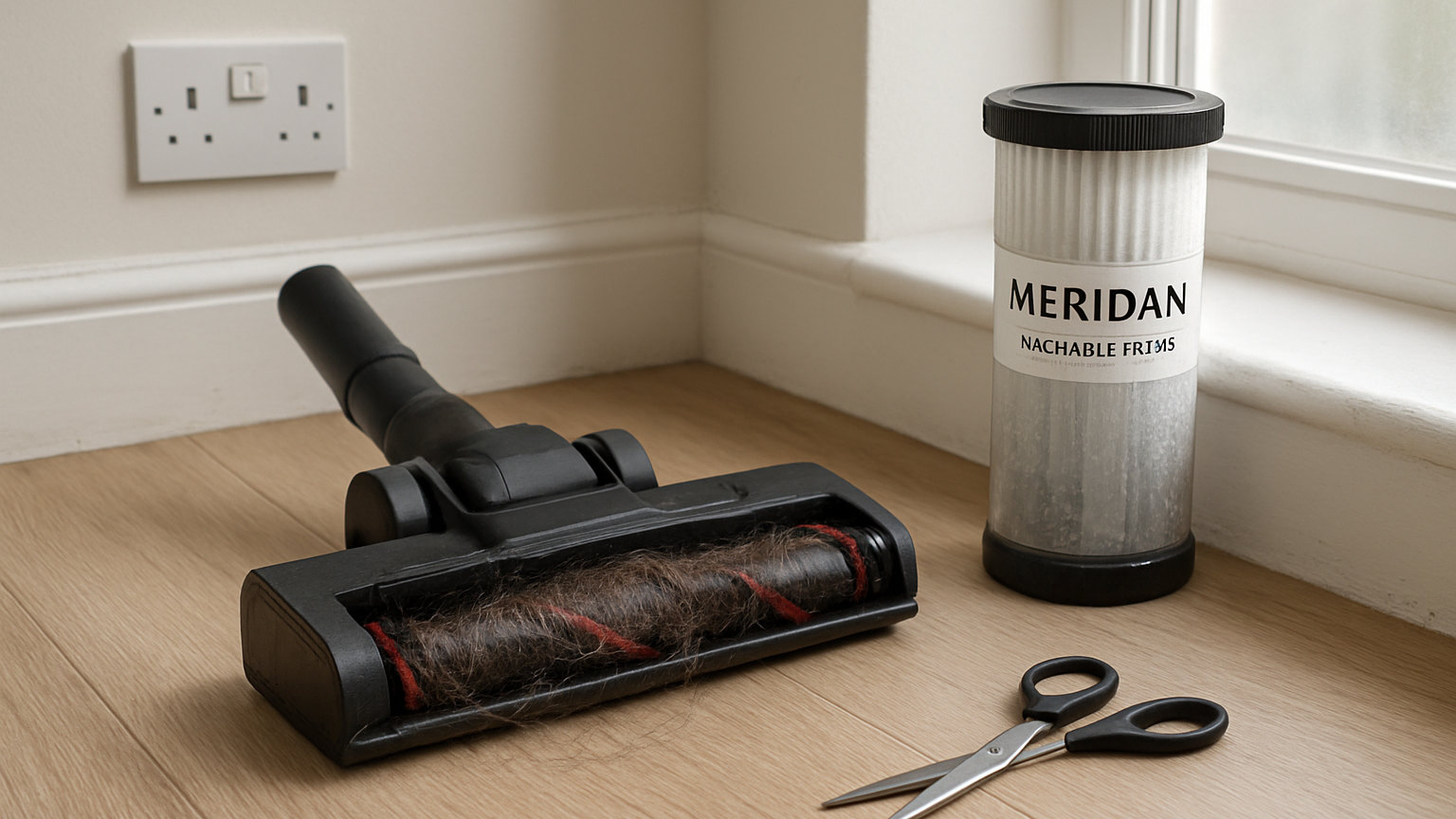
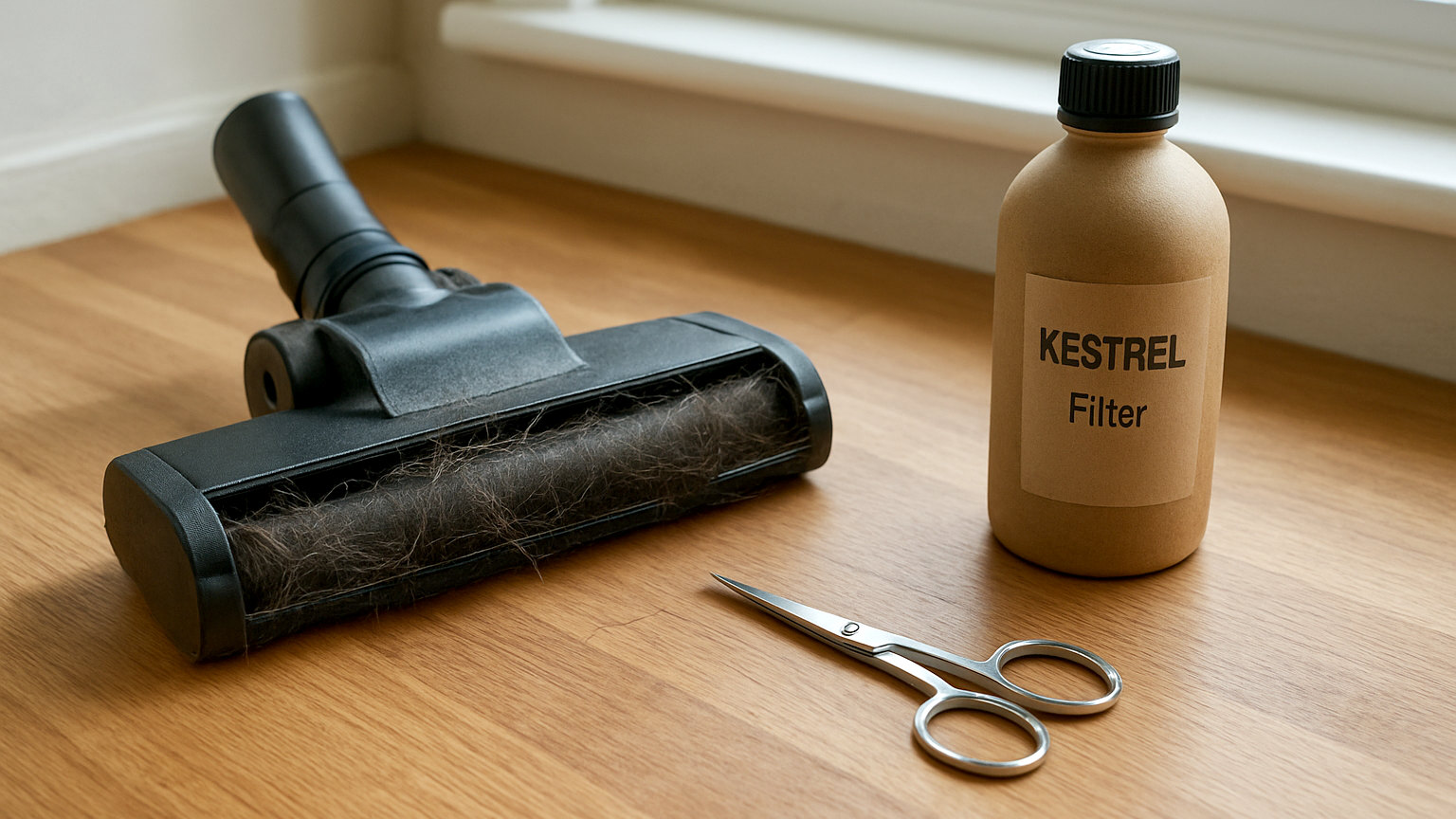
Remove it if the design allows, which on most machines means releasing a cover or a clip. Cut through wrapped hair and thread with scissors or a seam ripper, working along the bar rather than across it, then pull it free.
Check the end caps and the bearings, where hair works its way in and eventually stops the bar turning. Wash the bar if the manual permits and dry it fully.
What about the floor head?
Turn it over and check the opening for anything lodged across it, which is a common and easily missed blockage. Wash the soleplate and the wheels, which pick up grease in a kitchen and then transfer it onto other floors.
Check that the height adjustment still moves freely.
How do you check the hose?
Detach it and hold it up to the light, or feed a length of flexible cable or a straightened coat hanger gently through it. A partial blockage is far more common than a complete one and shows as gradually reduced suction.
Never force anything rigid through a hose, which will puncture it.
What about the cylinder or bag housing?
Wash a bagless cylinder with warm water and a little washing up liquid, rinse, and dry completely before refitting. Do not put it in a dishwasher unless the manual says so.
Wipe out a bag housing with a dry cloth, and check the seal around the bag collar, which affects how well the system holds its vacuum.
What causes a vacuum to smell?
A damp filter, a full bag left in place, something organic in the cylinder, or hair wrapped around the brush bar. Clear all four and the smell goes.
Adding a scented product to a vacuum masks rather than solves and does nothing about the airflow.
What should never go in it?
Water or anything damp, unless it is a wet and dry machine. Fireplace ash and fine construction dust, which pass through filters and damage motors, and hot ash which is a fire risk. Large or sharp objects. And anything sticky.
How long does the whole job take?
About twenty minutes, plus the drying time for the filters. Doing it monthly keeps a vacuum performing as it did when new, which is a considerable return for the time involved.
What about a cordless machine?
The same jobs with the battery removed first. Cordless bins are small and need emptying every use, and the filters clog faster because there is less of them. Several models have a washable pre-filter that needs rinsing weekly rather than monthly, which is worth checking in the manual.