More bathroom surfaces are ruined by the wrong cleaning product than by ordinary use. Limescale removers strip coated taps, bleach degrades silicone, abrasives haze acrylic, and acid etches stone on contact. Most of the damage is permanent and none of it is obvious until afterwards.
What does acid damage?
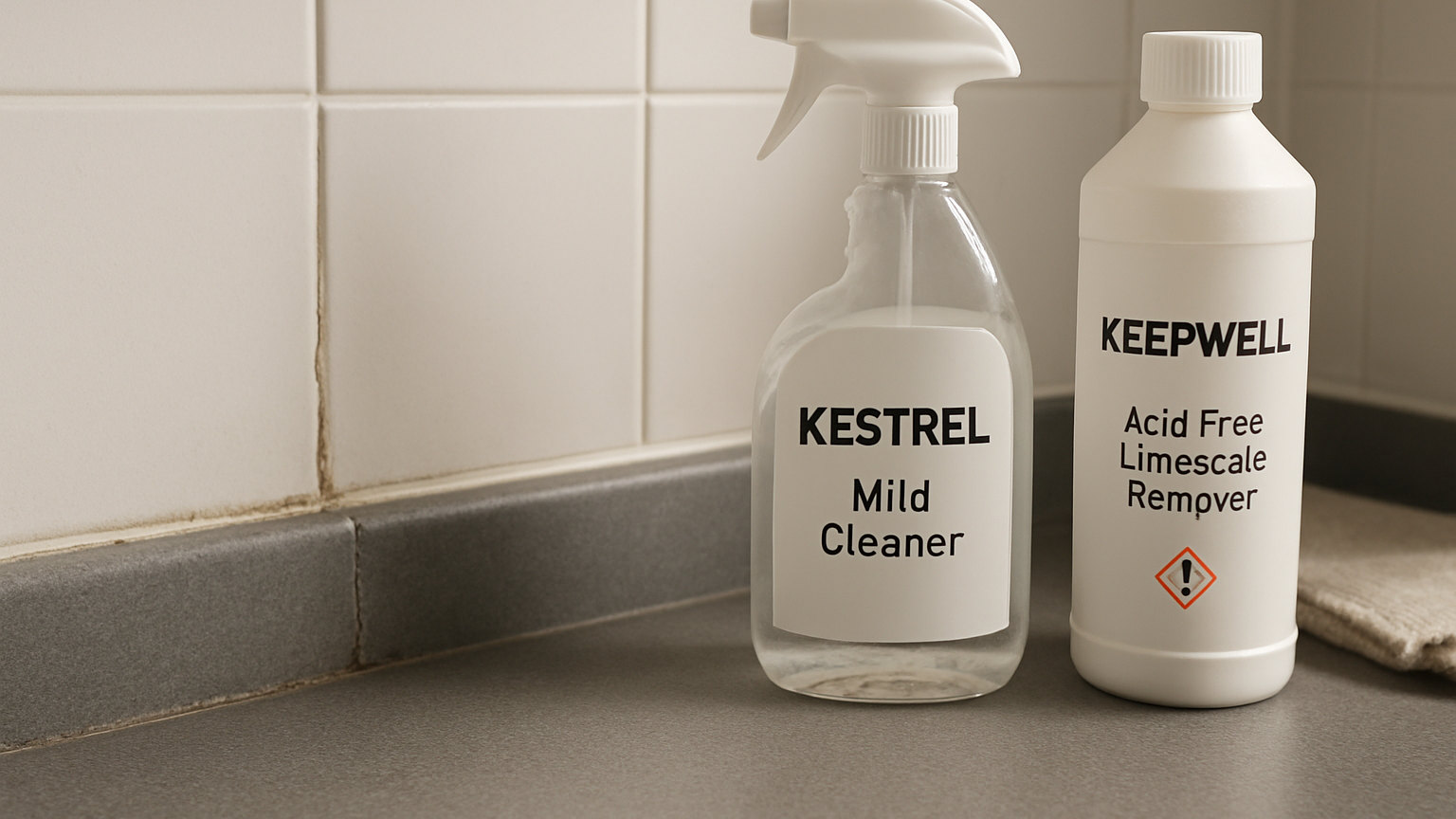
Acidic products, which includes limescale removers, descalers, toilet cleaners, white vinegar and lemon juice, are essential for scale and destructive on several materials.
- Natural stone – marble, travertine, limestone and polished concrete etch immediately, leaving a dull patch that cannot be polished out.
- Coated taps – matt black, brushed brass, gold, bronze and gunmetal finishes are coatings, and acid strips them in patches.
- Silicone sealant – prolonged contact makes it brittle and encourages it to lift at the edges.
- Chrome and nickel – tolerable briefly, but long soaks cause pitting and clouding.
- Waste fittings and plated trim – the plating is thin and comes away in flakes.
What does bleach damage?
Bleach is useful on mould and on the toilet, and hard on almost everything else. It degrades silicone sealant over time, making it yellow, brittle and prone to failing. It discolours and weakens grout with repeated use, and it bleaches coloured grout back towards white in patches. It corrodes stainless steel and chrome if left in contact, and it will mark a chrome waste within an hour. It takes the colour out of towels, bath mats and any fabric it splashes, and it damages the surface of acrylic baths and shower trays if left to sit rather than being rinsed away promptly.
Where bleach is genuinely useful – killing surface mould – use it diluted, on the affected area only, and rinse thoroughly afterwards.
What do abrasives damage?
Anything with a soft or coated surface. Acrylic baths and shower trays scratch easily, and scratches then hold soap scum permanently, which makes the surface look dirty no matter how often it is cleaned. Melamine sponges are far more abrasive than they look and will haze acrylic, gloss tiles, chrome and coated glass, and the damage only becomes obvious once the light catches it at an angle.
Scouring powders dull enamel over a few years of weekly use, and wire wool leaves steel particles that rust and stain.
Which combinations are actually dangerous?
Bleach and an acidic limescale remover or toilet cleaner produce chlorine gas, which is genuinely hazardous in a small unventilated room. This is not a theoretical risk: it happens when someone applies one product, gets no result, and reaches for another.
Bleach and ammonia, found in some glass cleaners, produce chloramine vapour with similar effects. Never mix bathroom products, never apply a second product before the first has been rinsed away, and ventilate whenever you use anything strong.
What is safe on what?
- Acrylic bath or tray – washing up liquid, cream cleaner, non-scratch pads.
- Enamel – cream cleaner, occasional gentle abrasion, no harsh powders.
- Ceramic tiles and vitreous china – almost anything, including acid and bleach, though not both.
- Chrome – soapy water for routine use, short acid contact for scale, always rinsed.
- Coated taps and matt finishes – warm soapy water and a soft cloth, nothing else.
- Natural stone – pH neutral stone cleaner only.
- Silicone sealant – detergent for routine cleaning, dilute bleach briefly for mould, rinsed off.
How do you test something new safely?
Try it somewhere hidden: the inside of a shower door frame, the underside of a bath rim, a corner of the tile behind the cistern. Leave it for the time you intend to use it, rinse, dry and look at it in good light. Five minutes of testing avoids the kind of damage that needs a replacement fitting.
What is the safest default?
Hot water and washing up liquid handles the majority of routine bathroom cleaning without risk to anything. Save the specialist products for the specific problems they exist to solve – scale on the screen, mould on sealant, the toilet pan – and use them on those surfaces alone.