Bathrooms produce more dust per square metre than almost any other room, and it is a particular kind: skin cells, hair, talc, and fibres shed by towels every time they are used. Because the room is humid, that dust clumps and sticks rather than staying loose, which is why it gathers in a predictable set of places and stays there.
Why does a bathroom generate so much of it?
Because of what happens in it. Drying with a towel releases both skin cells and cotton fibres into the air in large quantities, and brushing or drying hair adds to that. Air movement from an extractor fan then distributes the lot around the room, and humidity makes it cling to surfaces rather than settling where it can be vacuumed easily.
Where does it actually gather?
- Behind and around the base of the toilet, in the awkward gap where a mop cannot reach.
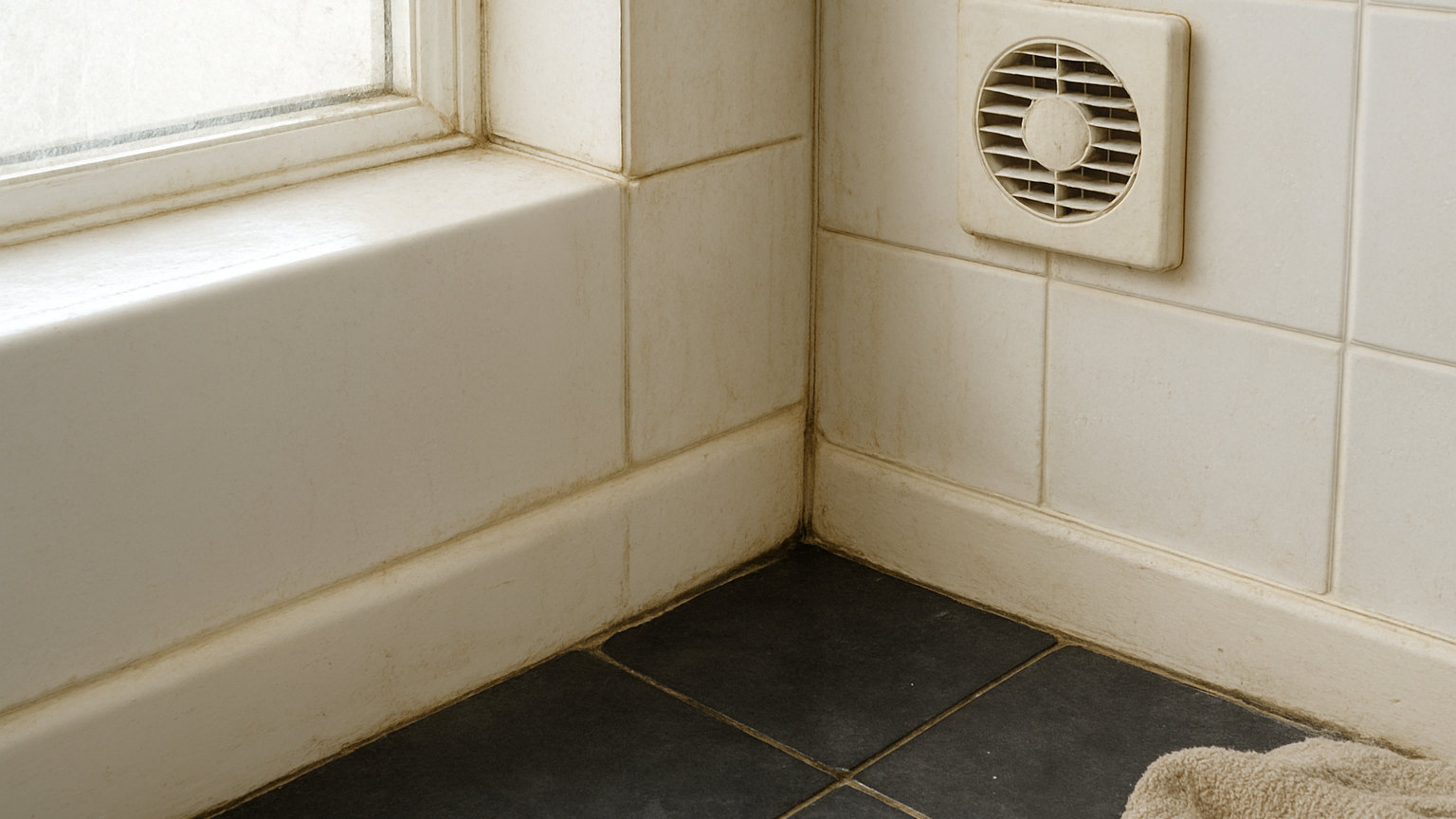
- Along the skirting boards, especially behind the door and in corners.
- On the extractor fan grille, where the airflow drives it into the slots.
- Behind and between radiator panels, where warm air currents deposit it.
- On top of the door frame and the mirror, and on the top edge of a wall cabinet.
- Under the basin pedestal and around the pipes, out of sight from standing height.
- Inside the shower tray channel and the door track, where hair binds with soap residue.
- Under the bath panel, if the panel is removable, which most are.
What is the right tool for the job?
A vacuum, before anything wet. Bathroom dust and hair turn into a smeared paste the moment a wet mop touches them, and then it has to be picked up by hand. A crevice tool along the skirting and around the toilet base, and a brush attachment on the fan grille and radiator, removes it in a fraction of the time.
A dry microfibre cloth is the next best thing for high surfaces, again used before anything wet.
Why does hair keep appearing after cleaning?
Because static and air movement move it around. Hair that was on the floor gets lifted by the door opening or by the fan, and lands somewhere else within hours. There is no way to stop it entirely, but vacuuming rather than sweeping helps a great deal, since a brush pushes as much into the air as it picks up.
Closing the toilet lid before flushing reduces the fine spray that helps dust stick, which has the useful side effect of keeping toothbrushes further from it.
Which of these places should be on a monthly list?
The extractor grille, the radiator, the top of the door frame and cabinet, the basin pedestal and pipes, and the shower door track. All are quick jobs individually, and all are invisible from the position most people clean from, which is why they can go a year without being touched.
What about under the bath panel?
Most bath panels are held by a few screws or clips and come away in a minute. Underneath is typically a collection of dust, hair, old cleaning products and sometimes evidence of a slow leak that has gone unnoticed. Vacuum the space, wipe the floor, check the pipe joints for damp, and refit. Once a year is plenty, and it is a useful early warning for plumbing problems.
Does a bath mat make things worse?
It collects most of the hair and skin that would otherwise reach the floor, which is a benefit, provided it is washed regularly. A mat washed every week or two is doing its job. A mat that has been down for two months is a damp reservoir of exactly the material you are trying to remove, and it will make the whole room smell.
Hanging it up between uses rather than leaving it flat on the floor makes a noticeable difference to both the smell and the amount of dust the room produces.