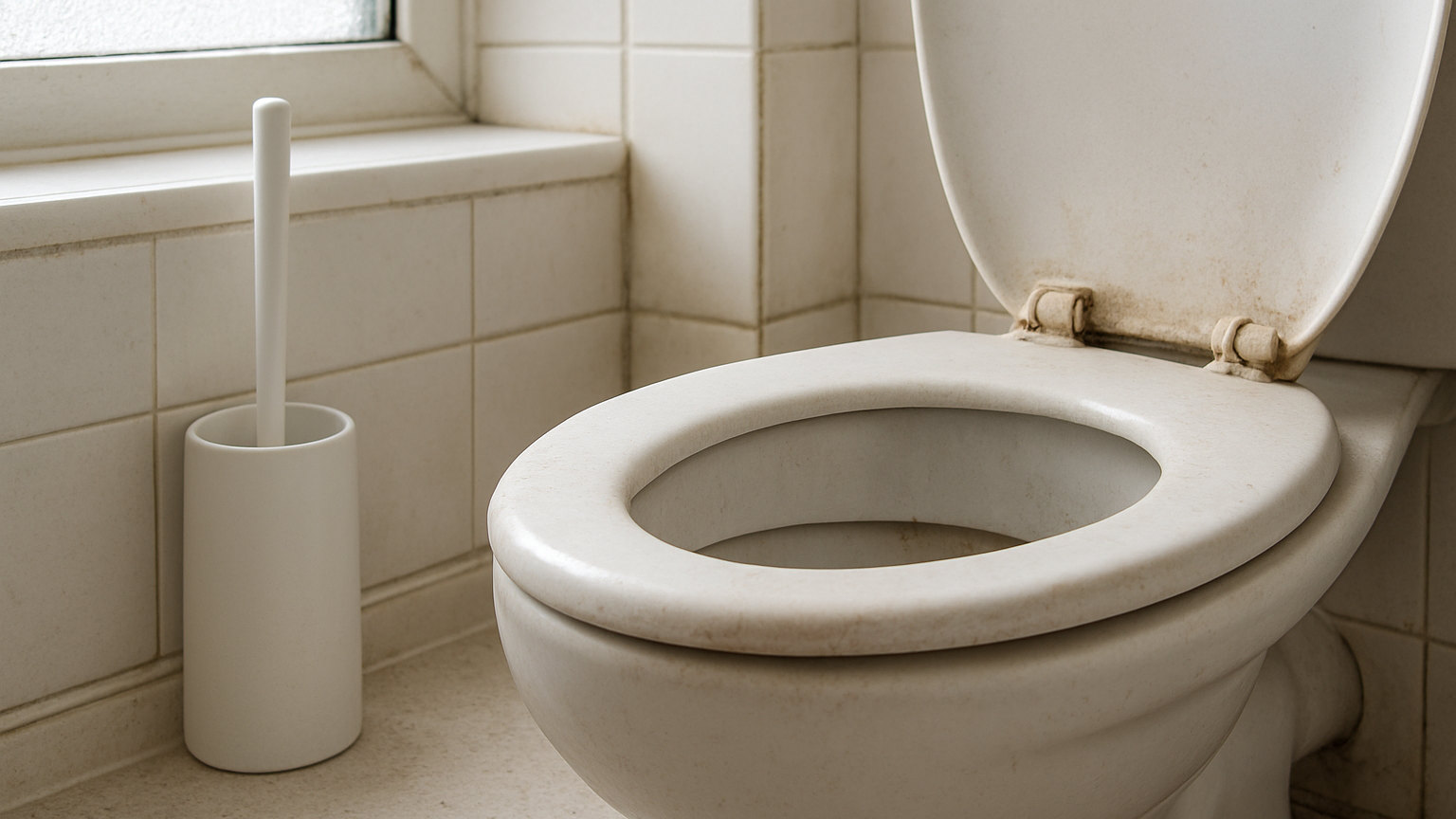
Most toilet cleaning consists of squirting something blue under the rim and brushing the pan, which is the part of the toilet that is rinsed with several litres of water many times a day. The parts that actually cause problems – the hinges under the seat, the flush control, the base of the pan and the underside of the rim – are the ones usually left alone.
What is the right sequence?
- Apply toilet cleaner all the way round under the rim and leave it. Ten minutes is the minimum for it to do anything useful.
- While it works, clean the outside from the top down: cistern, lid, handle or flush button, then the seat.
- Lift the seat and clean the top of the pan, the hinge fittings and the rim edge.
- Clean the outside of the pan, down the sides and round the back, finishing at the base where it meets the floor.
- Come back to the inside, brush the whole pan including the waterline and as far under the rim as the brush reaches, and flush.
- Rinse the brush in the clean flushing water, then leave it to drain over the pan before putting it back.
Why does the seat need taking off?
Because the recesses around the hinge bolts collect urine, dust and cleaning residue, and they are almost impossible to clean while the seat is attached. That combination is the most common source of a persistent smell in a bathroom that is otherwise clean.
Most modern seats release with a button or a catch on each hinge and lift straight off. Once a month is enough for a family bathroom. Clean both the fittings and the underside of the seat, dry them, and refit.
How do you remove the limescale ring at the waterline?
The ring is a mineral deposit and needs acid and dwell time. The complication is that it sits below the water, which dilutes anything you apply.
The effective approach is to lower the water level first. Push the water round the bend with a toilet brush or scoop some out, which exposes the ring. Then apply a limescale remover or pour in a cup of white vinegar, and leave it for several hours or overnight. A pumice stone made for toilets will remove what is left on vitreous china without scratching, used wet and with light pressure only.
Never use a pumice stone on a coated pan, on plastic, or on anything other than glazed ceramic.
What about under the rim?
Rim jets block with scale, which is why one side of the pan gets rinsed properly and the other does not. A rim brush with an angled head reaches where a standard brush cannot. For a rimless pan, the whole edge is accessible and a cloth does a better job than a brush.
If the flush pattern is visibly uneven, descaling the jets is more useful than any amount of extra cleaning, and a cheap mirror on a handle makes it possible to see what you are doing.
Which parts need disinfecting rather than cleaning?
The seat, the flush handle or button, the lid and the cistern top, because these are touched by hands. Clean them with detergent first, then apply disinfectant and leave it for the contact time on the label. Wiping a disinfectant straight off achieves very little.
The inside of the pan matters far less than people assume. It is diluted and flushed constantly, and nothing touches it.
How should the brush be looked after?
A toilet brush sitting in a holder full of stale water is the dirtiest object in the bathroom. After use, rinse it in the flush, then rest the handle under the closed seat so the head drips into the pan for a few minutes before it goes back. Wash the holder weekly with the rest of the bathroom, and replace the brush every six months or so.
What causes a smell that cleaning does not fix?
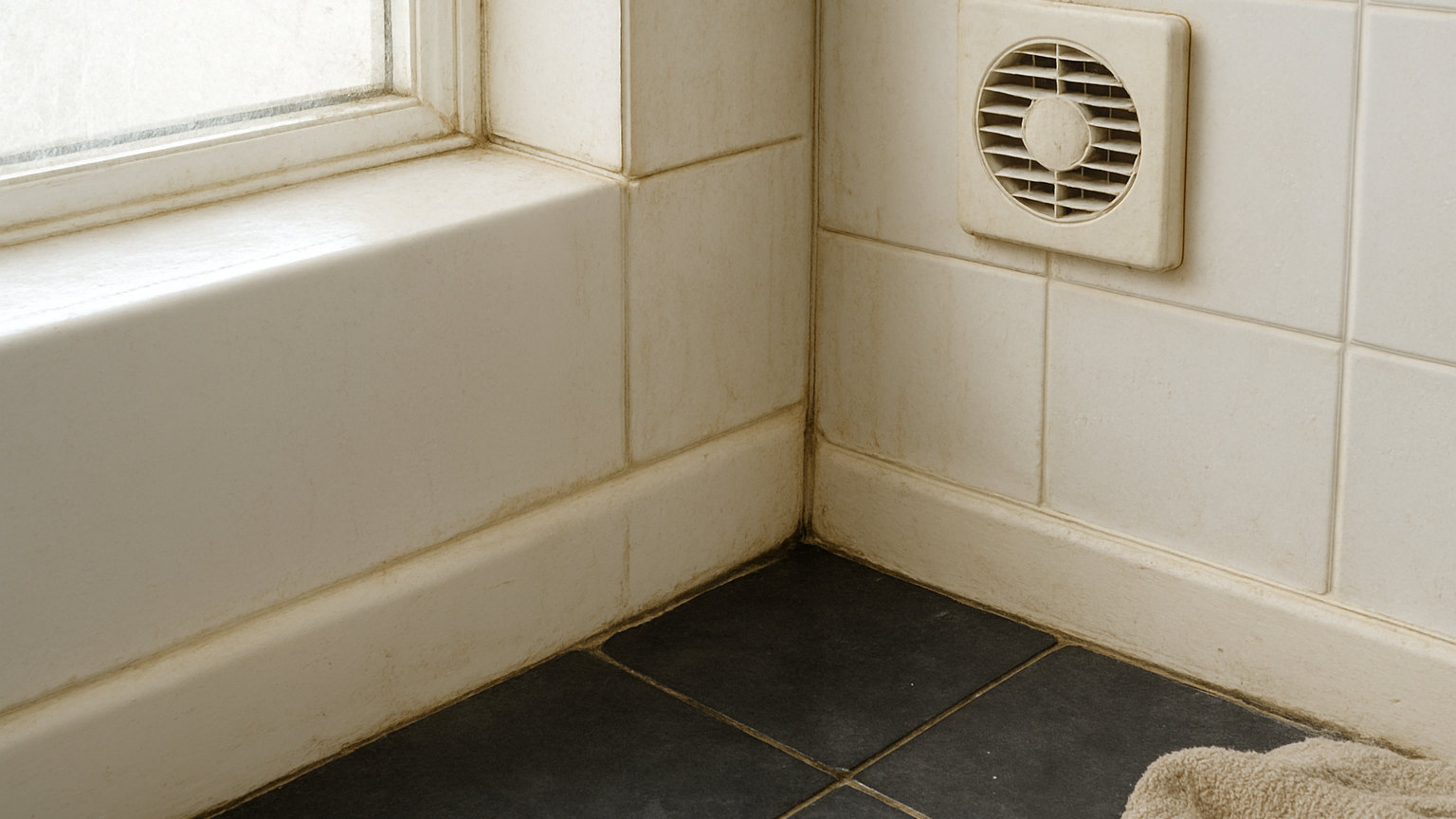
Three things, in order of likelihood: the seat hinge recesses, urine splashes on the floor and skirting around the base of the pan, and a dried out trap in a rarely used toilet or a nearby floor drain. The last is fixed by flushing. The first two need cleaning in places the usual routine skips entirely.