The grey film around the waterline of a bath is soap scum, and it is not dirt in any normal sense. It is a solid formed when the fatty acids in soap react with calcium and magnesium in hard water, and it bonds to the bath surface as a waxy layer that then traps skin cells, oils and limescale. That is why it resists rinsing and why an ordinary spray often barely marks it.
What breaks it down?
Two different approaches, depending on what the deposit is mostly made of.
- A degreasing detergent tackles the fatty part. Washing up liquid in hot water is genuinely effective on fresh scum, and a cream cleaner adds gentle abrasion.
- An acid such as white vinegar or citric acid tackles the mineral part, which dominates in hard water areas and in older build up.
A mixture works best in practice: wash with hot soapy water first to remove the greasy layer, then treat what remains with an acid if the surface still feels rough.
What is the method for a normal weekly clean?
Run the hot tap briefly to warm the surface, which softens the film considerably. Apply a cream cleaner or hot water with washing up liquid, work over the whole bath with a non-scratch pad, paying attention to the waterline and the corners, then rinse thoroughly with the shower head. Dry the surface with a cloth if you want to stop new scum forming immediately.
Warming the bath first is the step most people skip and it makes the job noticeably easier.
How do you shift a heavy build up?
Give the product time rather than pressure. Lay paper towels soaked in warm white vinegar along the waterline and leave them for half an hour, then follow with a cream cleaner and a non-scratch pad. For a really neglected bath, alternate: acid, rinse, detergent, rinse, and repeat once. Each pass removes a layer of a different type.
Which surfaces need care?
- Acrylic baths scratch easily, and scratches then hold scum permanently. Use non-scratch pads and cream cleaners only, never powders, wire wool or melamine sponges.
- Enamelled steel and cast iron are harder but the enamel dulls with repeated abrasive cleaning. Cream cleaner is fine; scouring powder used weekly will matt the finish over a few years.
- Anti-slip textured bases hold scum in the texture, and that is where a soft brush earns its place over a cloth.
- Plastic panels and trims should not meet strong acid for long, and neither should the sealant along the edge.
Why does it build up faster in some houses?
Water hardness is the main variable, and it is entirely regional. In a hard water area the same soap produces far more scum, because there are more dissolved minerals for it to react with. The second factor is what people wash with: traditional bar soap produces a great deal of scum, while most liquid shower gels and body washes are synthetic detergents that produce very little.
Switching from bar soap to a shower gel is the single most effective change if scum is a constant battle, and it costs nothing to test for a month.
What about bath oils and bath bombs?
They add to the problem substantially. Oils leave a film that holds every other deposit, and glittery or heavily coloured products can stain acrylic if left to sit. Rinse the bath immediately after use rather than leaving it until the weekly clean.
What is the simplest prevention?
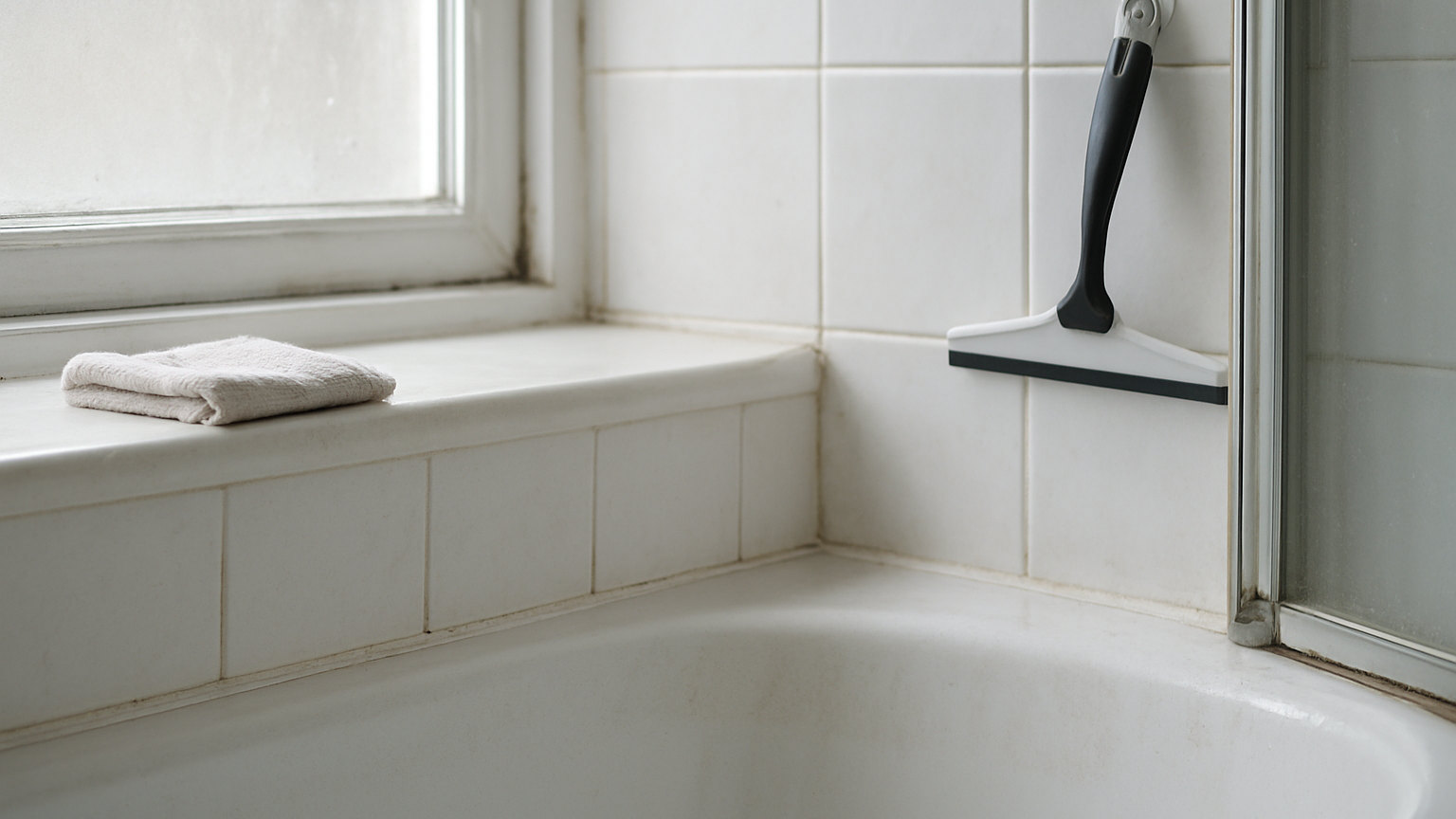
Rinse the bath with hot water after each use and give it a quick wipe. Thirty seconds on a warm, wet surface removes what would otherwise take ten minutes once it has dried and hardened. In a hard water area, drying the bath afterwards makes an obvious difference within a fortnight.
If scum keeps returning in a bath that is rinsed and dried, the likely cause is a shower or tap that drips, keeping one area permanently wet.