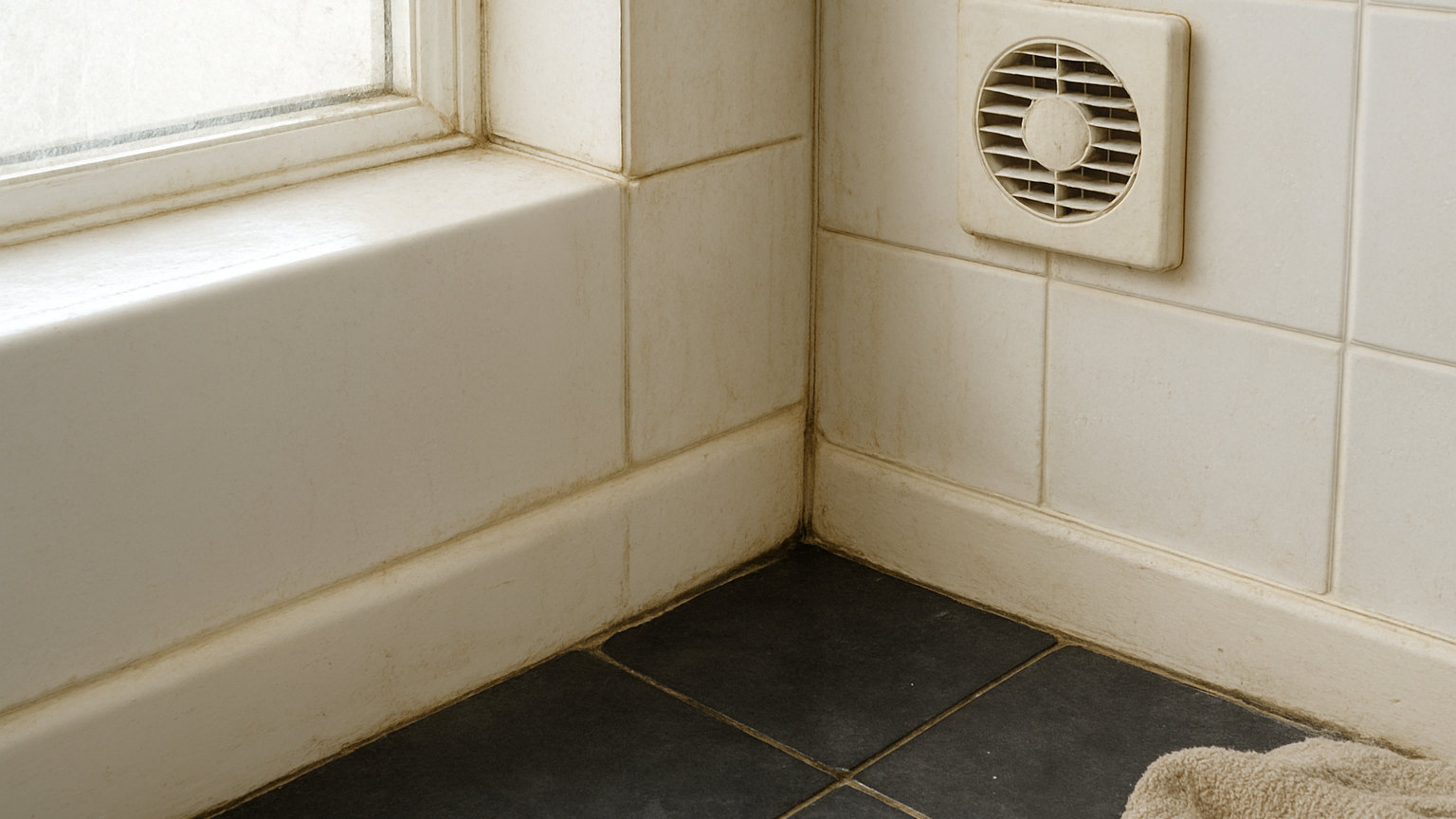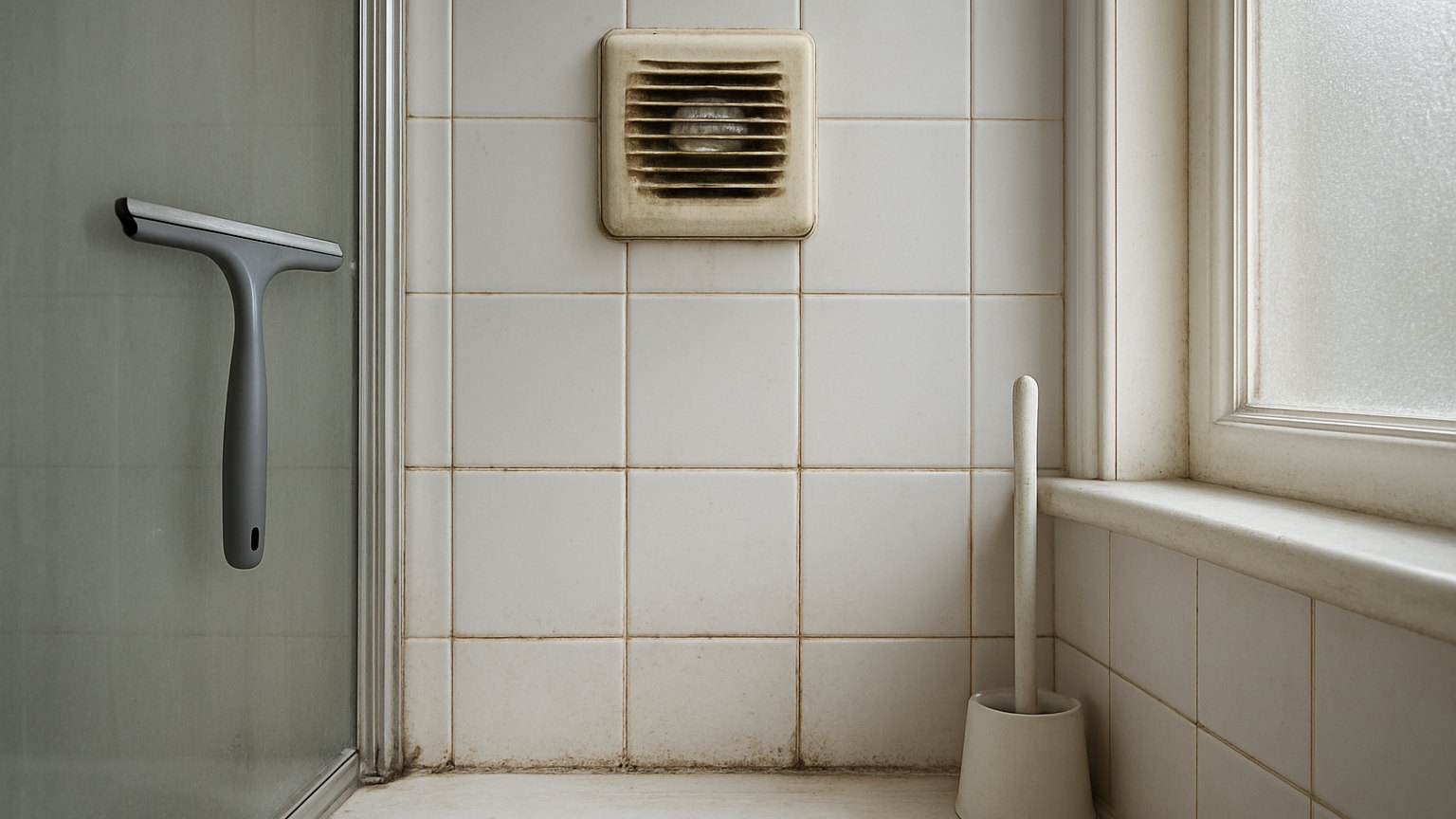
A bathroom extractor fan should be cleaned every three to six months, and almost none are. A fan clogged with the felt of dust and moisture that builds on its blades and grille moves a fraction of the air it is rated for, which is the usual explanation for mould in a bathroom that supposedly has ventilation.
How do you know if it still works?
Hold a single sheet of toilet paper against the grille with the fan running. A healthy fan holds it in place without help. If the paper falls, the fan is moving almost no air, whatever noise it is making.
The other signals are indirect. The mirror takes more than a few minutes to clear after a shower, the room still feels damp an hour later, condensation appears on the window or the coldest wall, and mould returns on the sealant within weeks of being cleaned.
What causes the loss of airflow?
Three things. Dust bonded to the blades by moisture, which unbalances the fan and reduces its efficiency. A blocked grille, where the slots fill with the same felt. And an obstructed duct or external vent, where the flap has seized shut, a bird has nested, or the flexible duct in the loft has sagged into a low point that fills with condensate.
The third is the most commonly missed. A perfectly clean fan connected to a collapsed duct will do nothing.
How do you clean it safely?
- Turn off the power at the isolator switch, or at the consumer unit if there is no local isolator. Do not rely on the light switch, since many fans have a run-on timer.
- Remove the cover. Most unclip with gentle pressure at the sides, though some have a small screw.
- Wash the cover in hot soapy water, rinse and leave it to dry completely.
- Vacuum the dust from the fan blades and the housing with a brush attachment.
- Wipe what you can reach with a barely damp cloth or a cotton bud, keeping moisture away from the motor and any wiring.
- Refit the cover only when it is fully dry, and restore the power.
If you are not comfortable isolating the supply, the cover alone is worth doing and makes a noticeable difference on its own.
What about the ducting and the outside vent?
Go outside and look at the external grille. It should be clear, and its flap should open when the fan runs. Grilles clog with cobwebs, leaves and paint from a previous decorating job, and flaps seize after years of disuse.
In a loft, check that the flexible duct runs as straight and as short as possible with no sagging loops. Water collecting in a low point blocks the airflow and eventually drips back into the fan.
How long should a fan run for?
Long enough to clear the moisture, which is fifteen to twenty minutes after a shower rather than the two minutes most run-on timers are set to. Many fans have an adjustable timer inside the housing, and extending it is usually a matter of turning a small dial. Running the fan longer costs very little, since these are low wattage units.
When is a fan beyond cleaning?
When it has been cleaned, the duct is clear and it still will not hold a sheet of paper. Fans are consumable items, and a cheap builder-grade unit fitted fifteen years ago may be rated for far less airflow than the room needs anyway. Replacement is a simple job for an electrician and usually cheaper than treating the damp damage it prevents.
Does cleaning the fan actually reduce mould?
Substantially, because mould needs sustained surface moisture. A bathroom that dries within an hour of a shower rarely grows mould at all, while one that stays damp for six hours will, no matter how often the walls are wiped. Of all the bathroom jobs on a monthly list, the fan has the best return on the time it takes.