Burnt on residue on a hob is carbonised food bonded to the surface. Attacking it dry with a scourer removes some of it and scratches whatever is underneath. The approach that works on every hob type is to soften it first, which turns twenty minutes of scrubbing into two minutes of wiping.
What is the softening method?
- Let the hob cool, apart from sugar spills which must be removed hot.
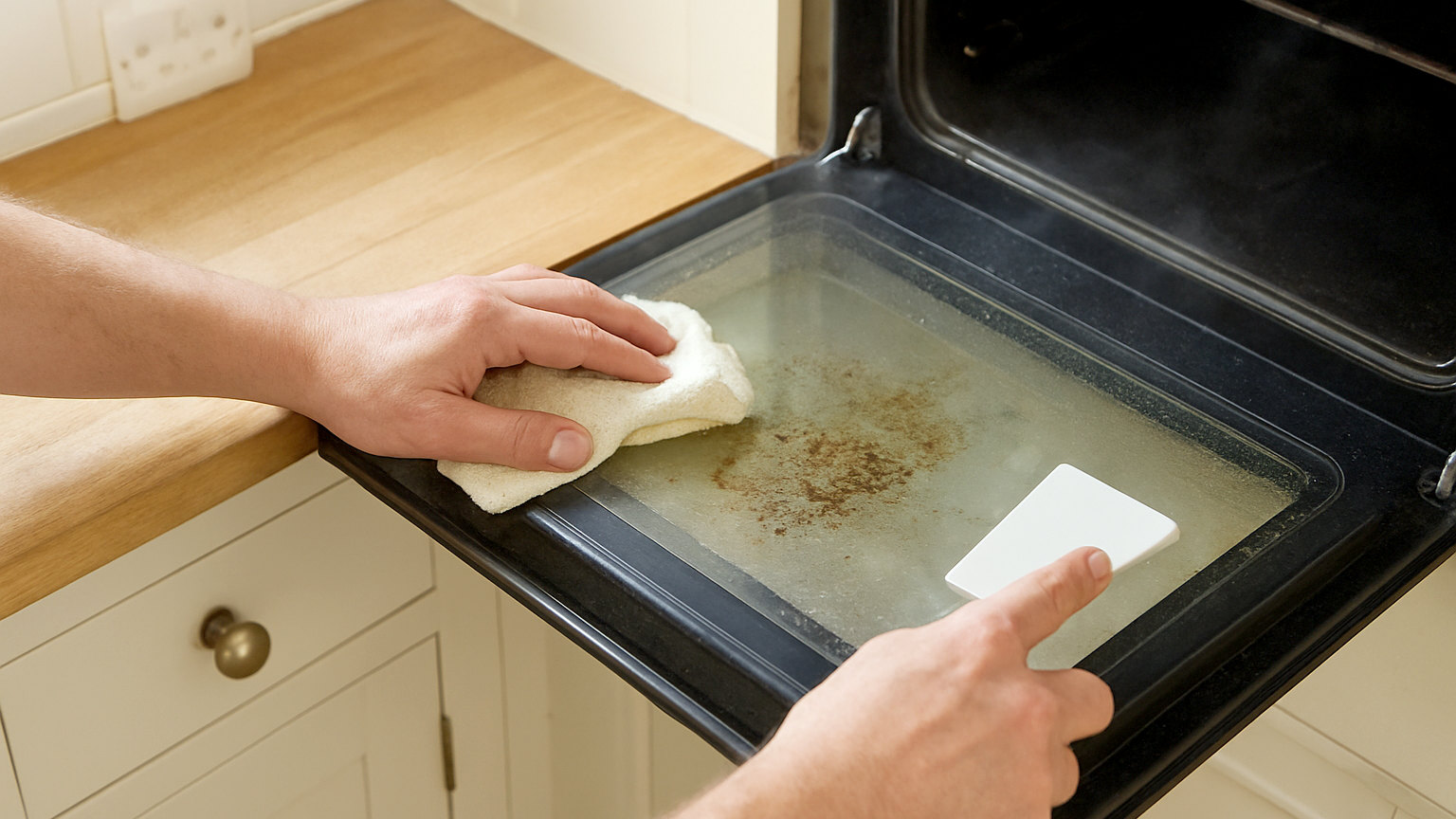
- Soak a cloth or a few sheets of kitchen paper in hot water with a little washing up liquid.
- Lay it directly over the burnt area.
- Leave it for fifteen to thirty minutes, re-wetting if it dries.
- Remove and wipe. Most of the deposit will come away.
- Deal with whatever remains using the method appropriate to the hob type.
This one step does more than any product and costs nothing except waiting.
What works on a glass ceramic or induction hob?
A hob scraper held at a shallow angle, used on a cool surface after softening. It is the correct tool and it does not scratch glass when used properly. Follow with a ceramic hob cream and a non-scratch pad, then buff dry.
Never use a scourer, wire wool, abrasive powder or a melamine sponge, all of which leave permanent fine scratches.
What works on stainless steel?
Softening, then a cream cleaner worked in the direction of the grain with a non-scratch pad. For heavy deposit, a paste of bicarbonate of soda left for half an hour before scrubbing.
Avoid wire wool, which leaves steel particles that rust and pit the surface, and avoid scrubbing across the grain, which shows.
What works on enamel?
Cream cleaner and patience. Enamel is tough and it does dull with repeated abrasive cleaning, so soften first and use the gentlest thing that works. A plastic scraper is safe; a metal one will chip the enamel, and once chipped it rusts.
What about gas burner parts?
Soak them rather than scrubbing in place. Hot water with soda crystals or a biological washing powder, overnight for heavy deposit, then a nylon brush. Cast iron pan supports respond particularly well to a long soak and barely at all to scrubbing dry.
Clear the gas ports with a pin afterwards and dry everything completely before refitting.
Does baking soda actually work?
Yes, on most surfaces, and it works by mild abrasion combined with alkalinity that helps break down fat. Make a thick paste with a little water, spread it over the deposit, leave for thirty minutes to an hour, then work it over with a damp non-scratch pad.
Use it with care on glass hobs and high gloss surfaces, where anything abrasive is a risk, and test in a corner.
What about proprietary hob cleaners?
The ceramic hob creams are genuinely good and are formulated to be safe on glass while still providing enough gentle abrasive to lift deposit. For a glass hob they are worth buying rather than improvising.
Avoid oven cleaner on any hob surface. It is formulated for enamel oven interiors and can etch glass, damage printed markings and discolour stainless steel.
What if it has been there for months?
Repeat the softening several times rather than escalating the abrasive. Three rounds of a damp cloth and a scraper over an evening removes more than one aggressive attempt, and it does so without damaging the surface.
Accept that a deposit which has been baked repeatedly may leave a shadow, particularly on enamel and stainless steel, and that a shadow is a better outcome than a scratched hob.
What about the area around the burners?
The surround takes the overflow and is frequently ignored while the burners themselves are cleaned. On a gas hob, the trim around each burner well collects the worst of it and needs a soak with a hot damp cloth rather than scrubbing. Check the edge where the hob meets the worktop as well, since spillage collects along that seal and will eventually work underneath.