Turning and rotating are two different jobs, and the advice has changed because mattresses have changed. Most mattresses sold today are single sided and must never be flipped, but almost all of them still benefit from being rotated end to end. Confusing the two is why some people wreck a mattress by turning it over and others let one develop a permanent dip.
What is the difference?
Rotating means turning the mattress through 180 degrees in the horizontal plane, so the head end becomes the foot end. The same face stays upwards. Turning, or flipping, means putting the mattress over so the underside becomes the sleeping surface.
Rotating is almost always safe and almost always beneficial. Flipping depends entirely on how the mattress is built.
How do you tell if yours can be flipped?
Look at the underside. A double sided mattress has the same quilted, padded surface on both faces and usually the same handles and labelling. A single sided mattress has a plain, often mesh-like base layer that is clearly not intended to be slept on.
Memory foam, latex, pillow top and most hybrid mattresses are single sided by design, with comfort layers built only on the top. Flipping one means sleeping on the support layer, which is uncomfortable and damages the comfort layers by compressing them from the wrong direction. Traditional open coil and some pocket sprung mattresses are double sided, and the label will normally say so.
How often should you rotate?
Every month for the first three to six months of a new mattress, while the fillings are settling and compressing unevenly. After that, every three months is enough for most, and every six months for a guest room bed.
Double sided mattresses should be flipped as well as rotated, alternating between the two so each face and each end gets used. A simple pattern is to rotate at the start of one season and flip at the start of the next.
Why does it matter?
Because body weight is not distributed evenly along a mattress. The hips and shoulders bear down on the same two zones every night, and the fillings compress there first. Rotating moves those zones to a part of the mattress that has been carrying less load, which lets the compressed area recover and evens out the wear.
The result is a mattress that keeps its support for longer and does not develop the pronounced dip that eventually makes it uncomfortable. It will not prevent wear altogether, but it can add meaningfully to the useful life of the mattress.
What is the practical way to do it?
- Strip the bed first, which makes it lighter and easier to grip.
- Move bedside tables out of the way, because a rotating mattress needs more space than you expect.
- Use the handles if there are any, and remember they are for positioning rather than for carrying the full weight.
- Stand the mattress on its long edge, walk it round, and lower it back down. This is far easier than trying to swivel it flat.
- Get a second person for anything larger than a double, and for any memory foam mattress, which is heavy and floppy.
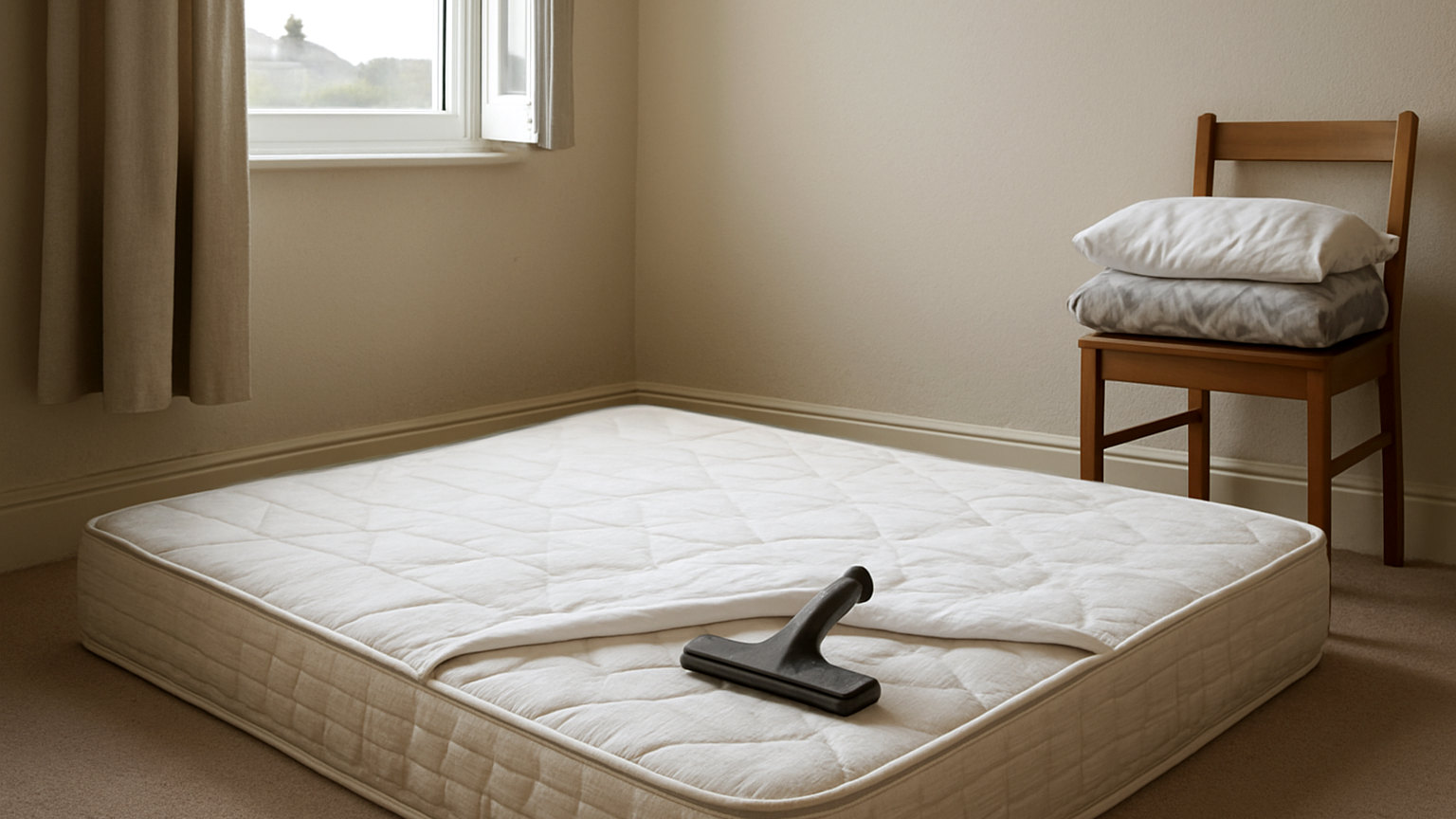
It is a good moment to vacuum the mattress and the base while the bed is stripped, and to check the slats or the divan top.
What if the mattress already has a dip?
Rotating will help slightly but will not reverse an established dip, because the fillings in that zone have permanently compressed. A dip deeper than a few centimetres in a mattress under its warranty period is worth photographing and raising with the retailer, since most warranties cover excessive sagging.
Does the base matter?
A great deal. A sagging divan, a broken slat or a bed frame with slats spaced too far apart will produce a dip in the mattress that has nothing to do with the mattress itself. Check the base whenever you rotate, and replace a broken slat rather than sleeping on it, since the mattress will take the shape of whatever it rests on.