A mattress cannot be washed, cannot be soaked and cannot easily be dried, which shapes everything about how it should be cleaned. The whole method comes down to three things: vacuum thoroughly, use as little moisture as possible on any mark, and make sure it dries completely afterwards.
How often does it need doing?
A vacuum once a month, and a fuller clean two or three times a year, ideally when the bedding is being changed anyway. Spills and marks should be dealt with immediately, because almost every mattress stain is far easier in the first ten minutes than at any point afterwards.
What is the basic method?
- Strip the bed completely and put everything in the wash.
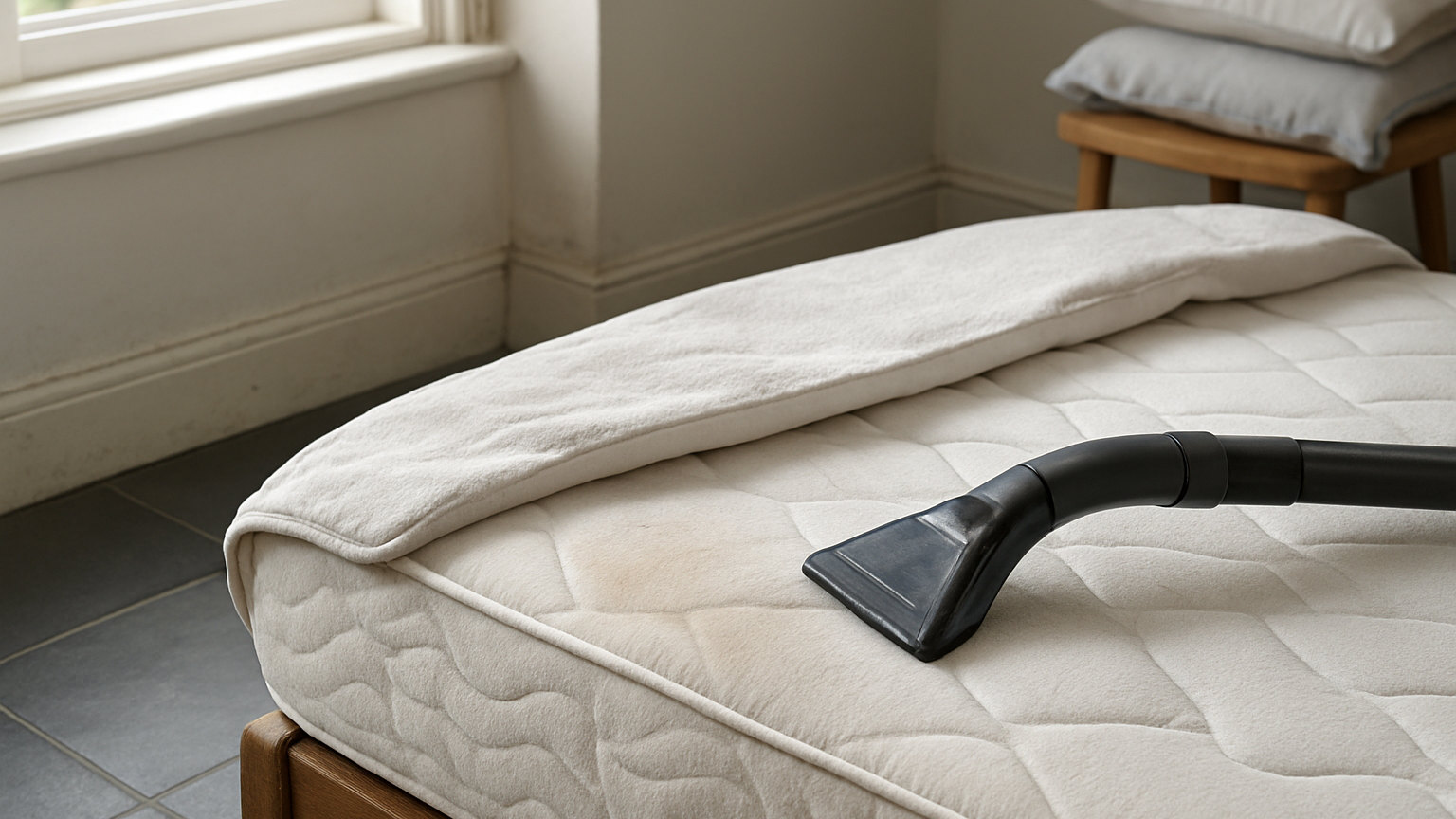
- Vacuum the whole surface with an upholstery attachment, working in overlapping strips. Pay attention to the seams, the piping and the buttoned dimples, where debris collects.
- Vacuum the sides and, if the mattress can be lifted, the underside and the top of the base.
- Sprinkle bicarbonate of soda evenly over the surface and leave it for at least an hour, or several hours if you can.
- Vacuum it off thoroughly, going over the whole surface twice.
- Air the mattress with the window open before remaking the bed.
The bicarbonate step absorbs moisture and odour. It is not dramatic, but it is genuinely effective and there is no risk of damage.
How do you treat a stain without soaking it?
Blot rather than rub, and use the smallest amount of liquid that will work. Apply the cleaning solution to a cloth rather than to the mattress, work from the outside of the mark inwards to stop it spreading, and follow with a cloth dampened in plain water to lift the residue.
Press a dry towel down hard afterwards to draw as much moisture back out as possible. The aim is a damp patch that dries within an hour or two, not a wet mattress that stays damp overnight and grows mould inside the foam.
What works on the common marks?
- Blood – cold water only, never hot, which sets it permanently. A paste of bicarbonate of soda and cold water left for half an hour then blotted away works on dried marks.
- Urine – an enzyme cleaner, which breaks down the compounds that cause the smell. Ordinary detergent removes the visible mark and leaves the odour.
- Sweat and yellowing – a mixture of washing up liquid and a small amount of hydrogen peroxide, tested first in a hidden area, or bicarbonate paste for a gentler approach.
- Vomit – scrape off the solids, then enzyme cleaner, then bicarbonate once dry.
Avoid bleach on any mattress, which damages the fibres and the foam and may lighten the ticking unevenly.
How do you dry it properly?
Open the window, and if possible direct a fan across the surface. A hairdryer on a cool setting works for a small area. Do not remake the bed until the spot is completely dry to the touch, and check again an hour later, since foam holds moisture below the surface.
Sunlight through an open window helps, though direct strong sunlight for hours can yellow some covers.
Should you use a steam cleaner on a mattress?
It is a common suggestion and a poor idea for most mattresses. Steam introduces a great deal of moisture into something that cannot be wrung out or dried quickly, and memory foam in particular does not tolerate it. The risk of mould inside the mattress outweighs the benefit.
What prevents most of this work?
A washable mattress protector, which is the single most useful item in a bedroom. It takes the sweat, the spills and most of the skin cells, it goes in the machine at 60 degrees, and it means the mattress underneath stays essentially clean for its whole life. Fitting one to a new mattress on day one is the cheapest form of mattress care there is.