Cleaning inside a wardrobe is really two jobs with different characters. The sorting takes an hour or two and is the part people put off. The actual cleaning takes about ten minutes once the wardrobe is empty. Doing them together, once or twice a year, is the sensible pattern.
What is the method?
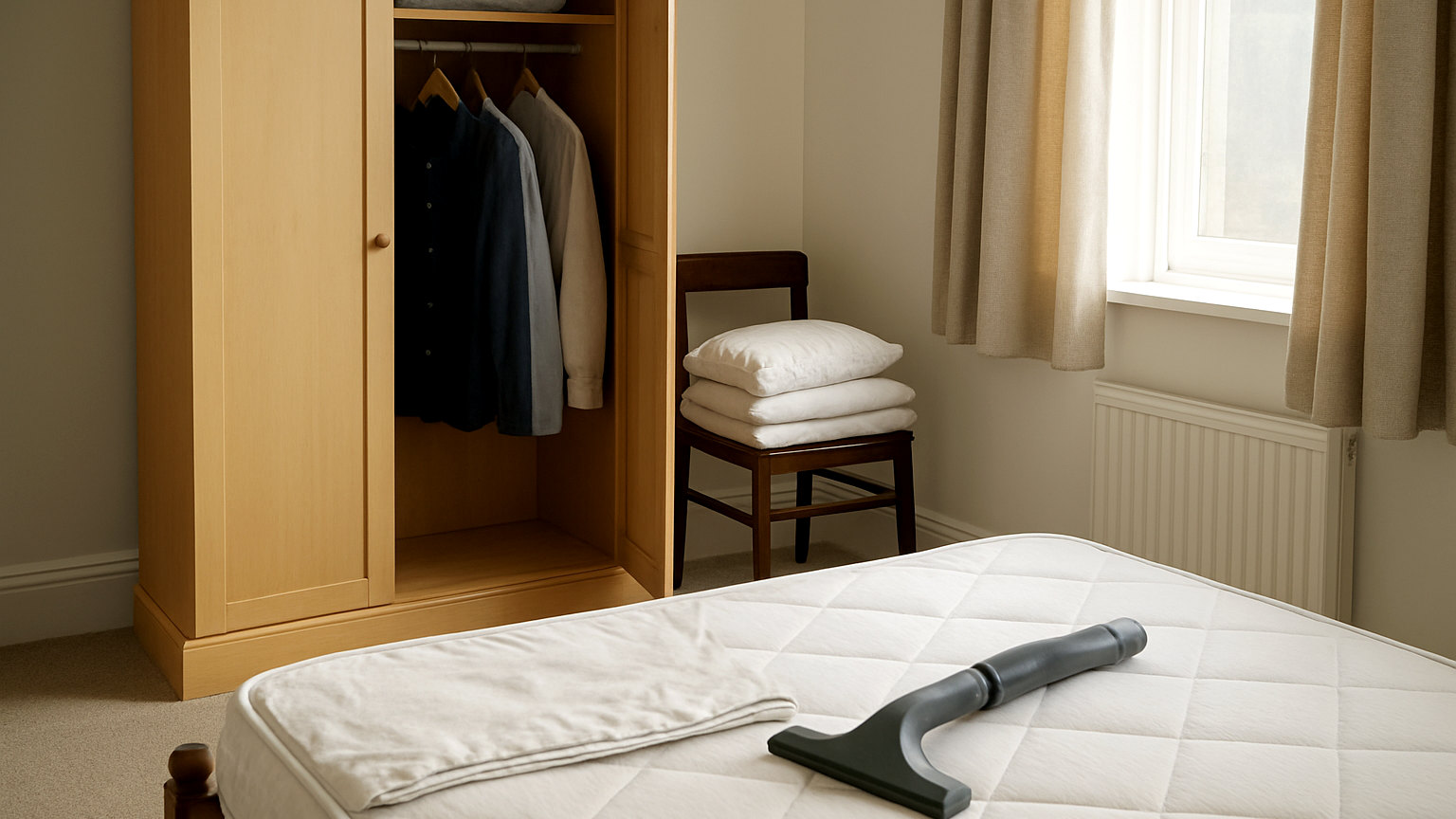
- Take everything out and put it on the bed, which forces the job to be finished before you can sleep.
- Vacuum the interior with a crevice tool, including the corners, the rail supports and the floor of the wardrobe.
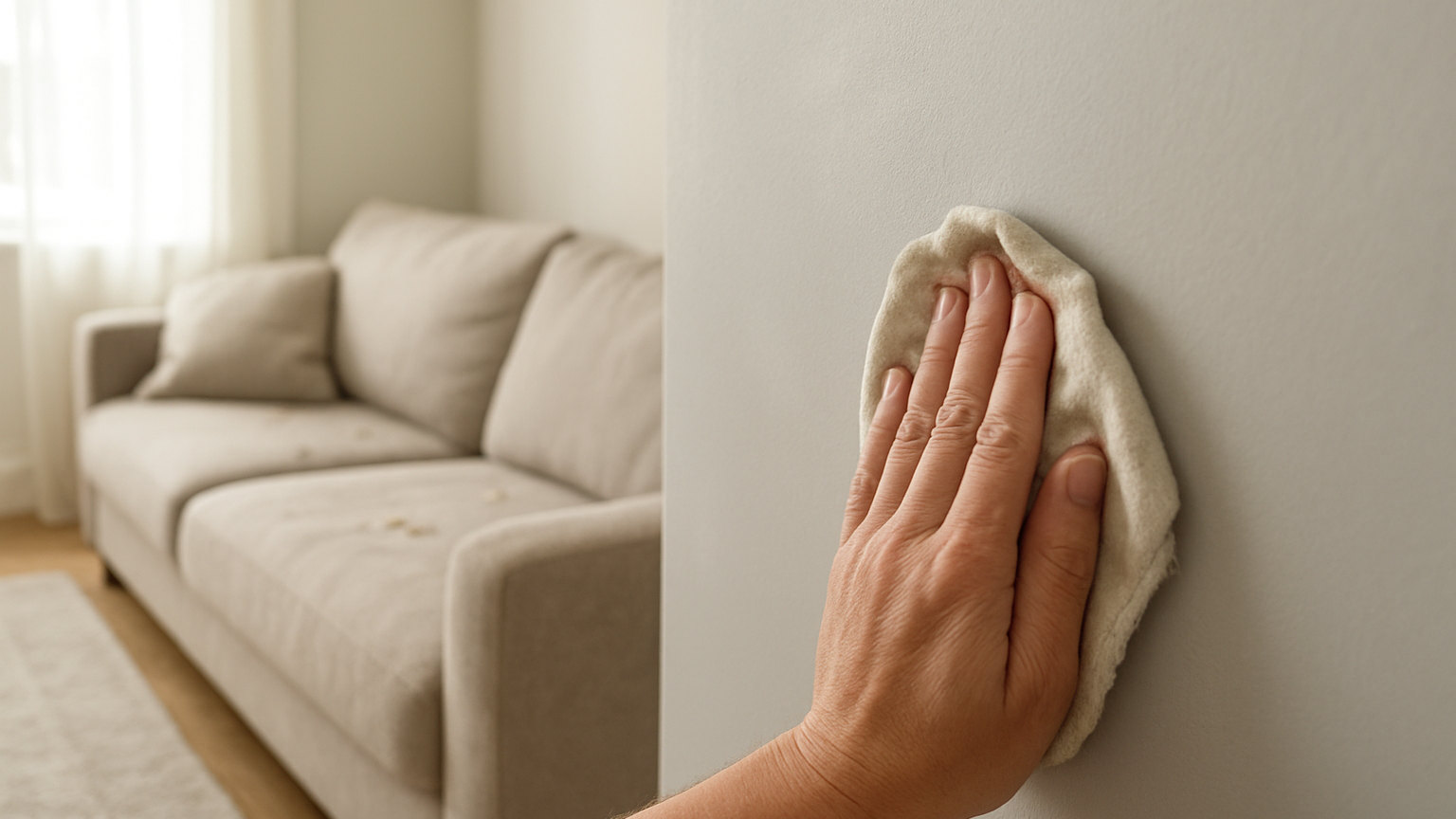
- Wipe the shelves, the base, the rail and the inside of the doors with a well wrung cloth and warm soapy water.
- Dry thoroughly and leave the doors open while you sort.
- Sort the contents into keep, wash, repair and donate, and be honest about the last category.
- Put back only clean, dry clothes, with the things you wear most at the most accessible height.
Why does the cloth need to be well wrung?
Because most wardrobe interiors are melamine faced chipboard, and water reaching the board through a chip or an unsealed edge causes swelling that cannot be repaired. Damp cloth, immediate drying, and never any standing water on a shelf.
Why does a wardrobe smell musty?
Because it is a closed box with no airflow, often against an external wall, filled with fabric that absorbs whatever moisture is present. Common causes are clothes put away slightly damp, an external wall that is cold enough for condensation, a wardrobe pushed hard against the wall so no air can move behind it, and shoes stored at the bottom.
The fix is air and dryness. Leave the doors open for a few hours after cleaning, pull the wardrobe a few centimetres off the wall if it sits against an external one, and put a moisture absorber or a tub of silica gel inside if the problem recurs. Never store anything in there that is not completely dry.
How do you protect clothes from moths?
Clothes moths are attracted to natural fibres carrying traces of sweat, skin and food, which is why they damage items that were put away unwashed. The measures that work are practical rather than chemical.
- Wash or dry clean everything before storing it, particularly wool, cashmere and silk.
- Vacuum the wardrobe regularly, including the corners and any carpet underneath, since eggs and larvae sit in the dust.
- Store knitwear in sealed boxes or zipped bags for the off season.
- Use cedar or lavender as a deterrent, remembering that cedar needs sanding lightly every few months to keep releasing oil.
- Check for damage in spring, when adults emerge, and act quickly if you find holes or fine webbing.
If you find an active infestation, wash affected items at 60 degrees or freeze them for 72 hours, and clean the wardrobe thoroughly before anything goes back.
What should you check while it is empty?
The back panel and the wall behind it for damp or mould, particularly on an external wall. The rail fixings, which work loose under weight. The hinges and the soft close mechanism on modern doors. And the floor underneath, if the wardrobe is freestanding, which will not have been vacuumed since it was put there.
Is it worth lining the shelves?
A simple wipe clean liner on the base and on any shelf that takes shoes or bags is worth the small effort, because those are the surfaces that pick up marks. Avoid adhesive liners on melamine, since removing them later can pull the surface away.
How should clothes go back in?
With space between them. A tightly packed rail traps moisture, creases everything and makes it impossible to see what you own, which is how clothes end up unworn for years. Leaving a little room on the rail improves airflow and, in practice, means the wardrobe stays tidy for longer.
Keep the bottom of the wardrobe as clear as you can. A clear base is what makes it possible to vacuum in thirty seconds each month rather than emptying the whole thing again.