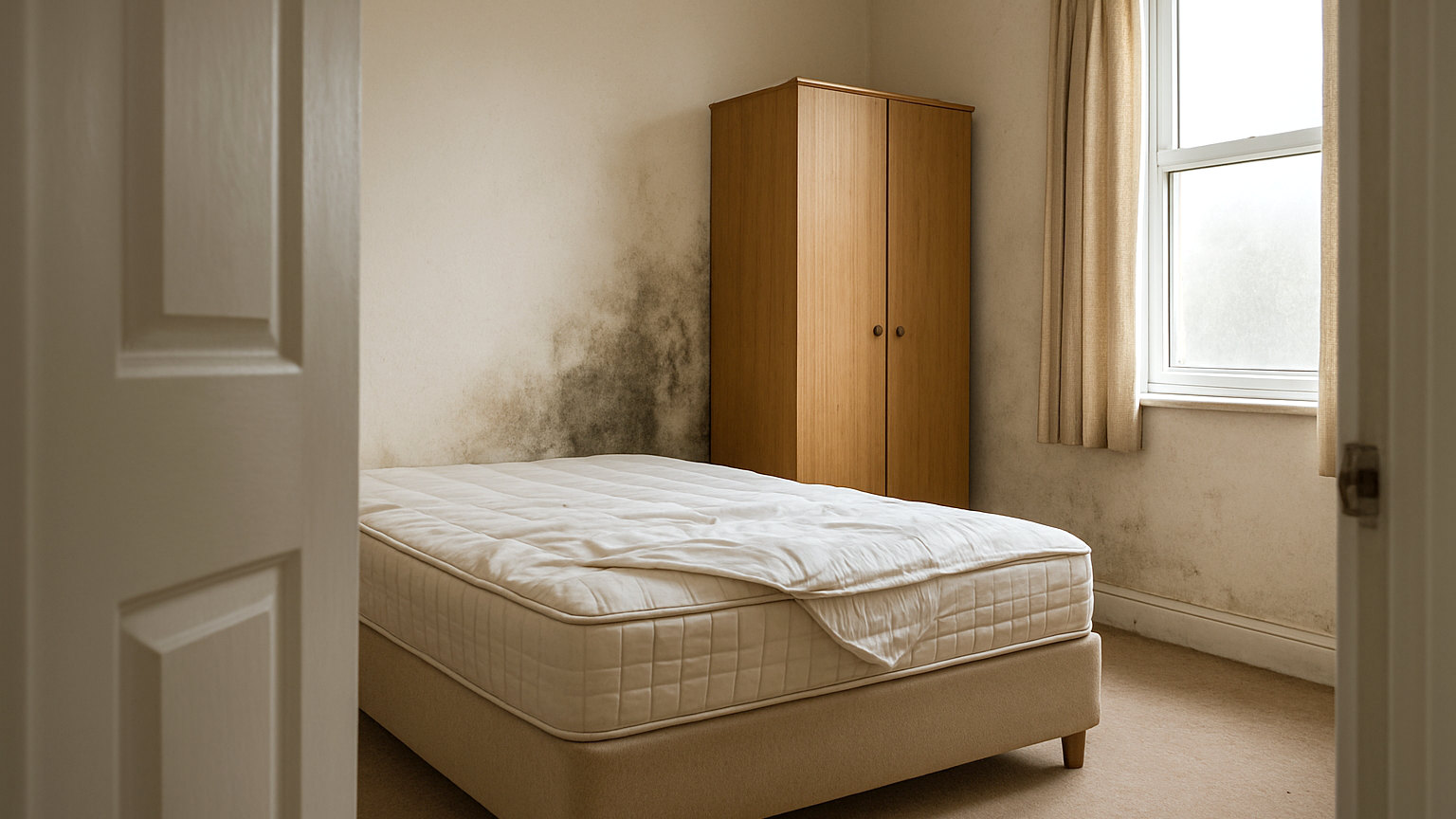
Black mould on the wall behind a wardrobe, a bed or a chest of drawers is one of the most common damp problems in a house, and it is almost always condensation rather than a leak. Three conditions come together in that spot: the wall is cold, the air cannot circulate, and the room has moisture in it. Remove any one of them and the mould stops growing.
Why that particular spot?
Because furniture pushed against an external wall insulates it from the warm air in the room. The wall behind the wardrobe stays several degrees colder than the rest of the room, and cold surfaces are where water vapour condenses first. With a wardrobe sealing the gap, the moist air that reaches the wall has no way of drying out again.
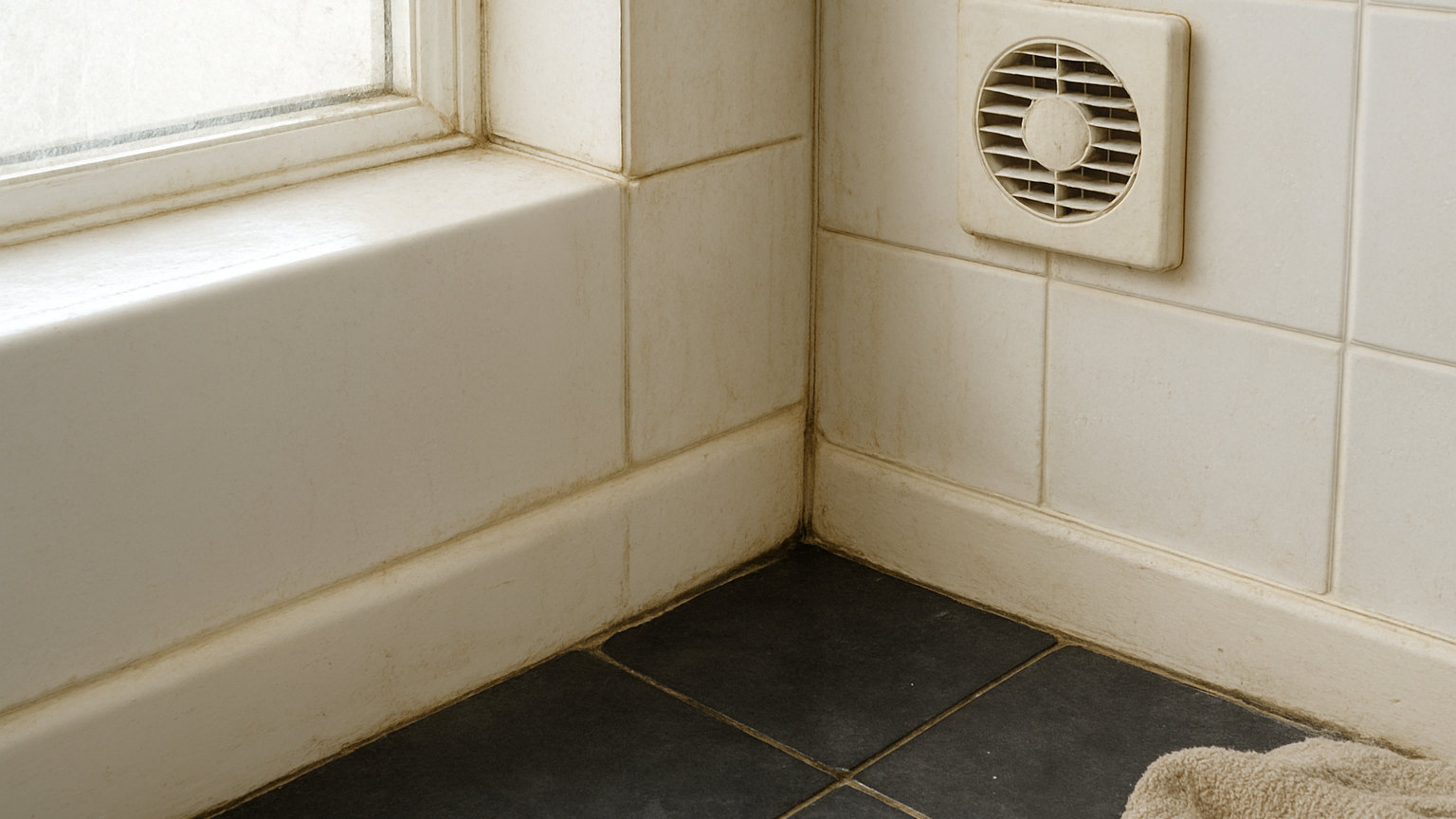
Corners are worse still, because two external walls meet and heat is lost in two directions. Mould in an external corner behind furniture is the classic case.
Is it definitely condensation and not something else?
Condensation mould has a characteristic look: black or dark green speckling in a diffuse patch, worst in corners and at the top or bottom of the wall, with the wallpaper or paint intact underneath. It appears in autumn and winter and improves in summer.
A leak or rising damp looks different. Expect a defined tide mark, staining, blown plaster, salts on the surface, or a patch that is wet to the touch rather than just mouldy. Damp that is present all year round, or that is worse after rain, needs investigating as a building fault rather than treating as condensation.
How do you remove what is already there?
- Move the furniture out and open the window before you start.
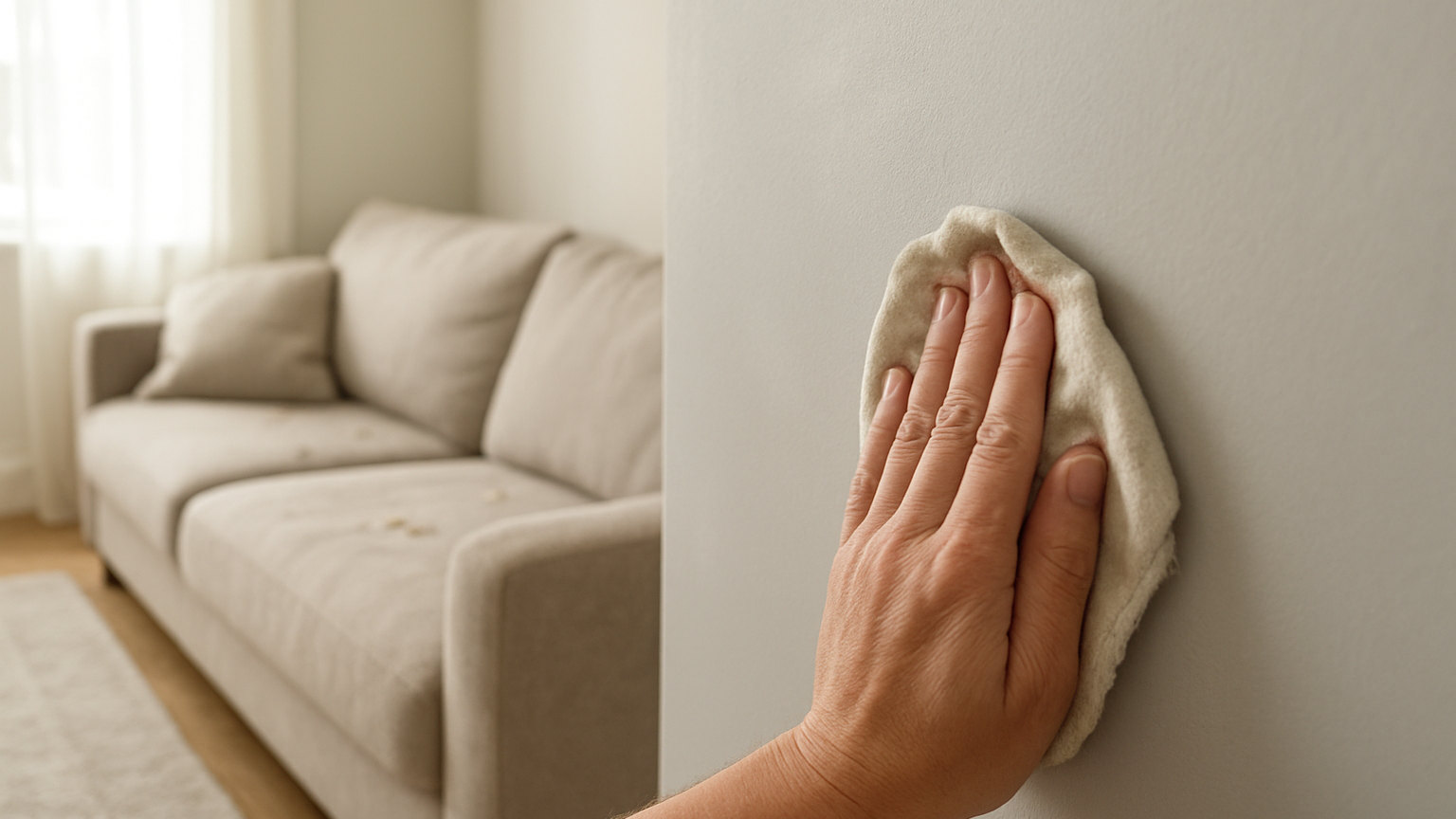
- Wipe the mould off with a cloth dampened in a fungicidal wash or a dilute bleach solution, working gently rather than scrubbing.
- Do not brush or vacuum dry mould, which sends spores into the air.
- Bin the cloth afterwards rather than rinsing it out in a sink.
- Let the wall dry completely, which may take a day or two with a fan or a dehumidifier running.
- Repaint with an anti-mould emulsion if the surface is marked, once it is fully dry.
Ventilate the room throughout and wear gloves. Anyone with asthma or a respiratory condition should get someone else to do it.
What actually stops it coming back?
- Pull the furniture five to ten centimetres off the wall so air can move behind it. This alone solves a large proportion of cases.
- Heat the room to a steady low background temperature rather than in short bursts, which keeps the wall surface above the dew point.
- Ventilate every morning, with the window wide open for ten to fifteen minutes and the bedding pulled back.
- Stop drying laundry in the bedroom, which is a major moisture source.
- Run a dehumidifier in a room that stays damp, aiming to keep relative humidity below about 60 per cent.
- Leave internal doors open during the day so air moves through the house.
Does insulation help?
It addresses the root cause, because a warmer wall surface does not reach the dew point. Internal insulated plasterboard, external wall insulation or cavity insulation where the construction allows all reduce condensation substantially. It is a larger job than moving a wardrobe, but it is the permanent answer in a house with cold solid walls.
Why does it affect bedrooms most?
Because bedrooms are heated least, occupied overnight by people releasing moisture, and usually closed up for eight hours. That combination produces the highest humidity and the coldest surfaces in the house at the same time of day, which is precisely the recipe for condensation.
When should you get someone in?
If the damp is present year round, if it is worse after heavy rain, if plaster is blown or crumbling, or if mould returns quickly after treatment despite better ventilation and heating. Those point to a building defect such as a failed gutter, a cracked render or a bridged cavity, and no amount of wiping the wall will resolve it.