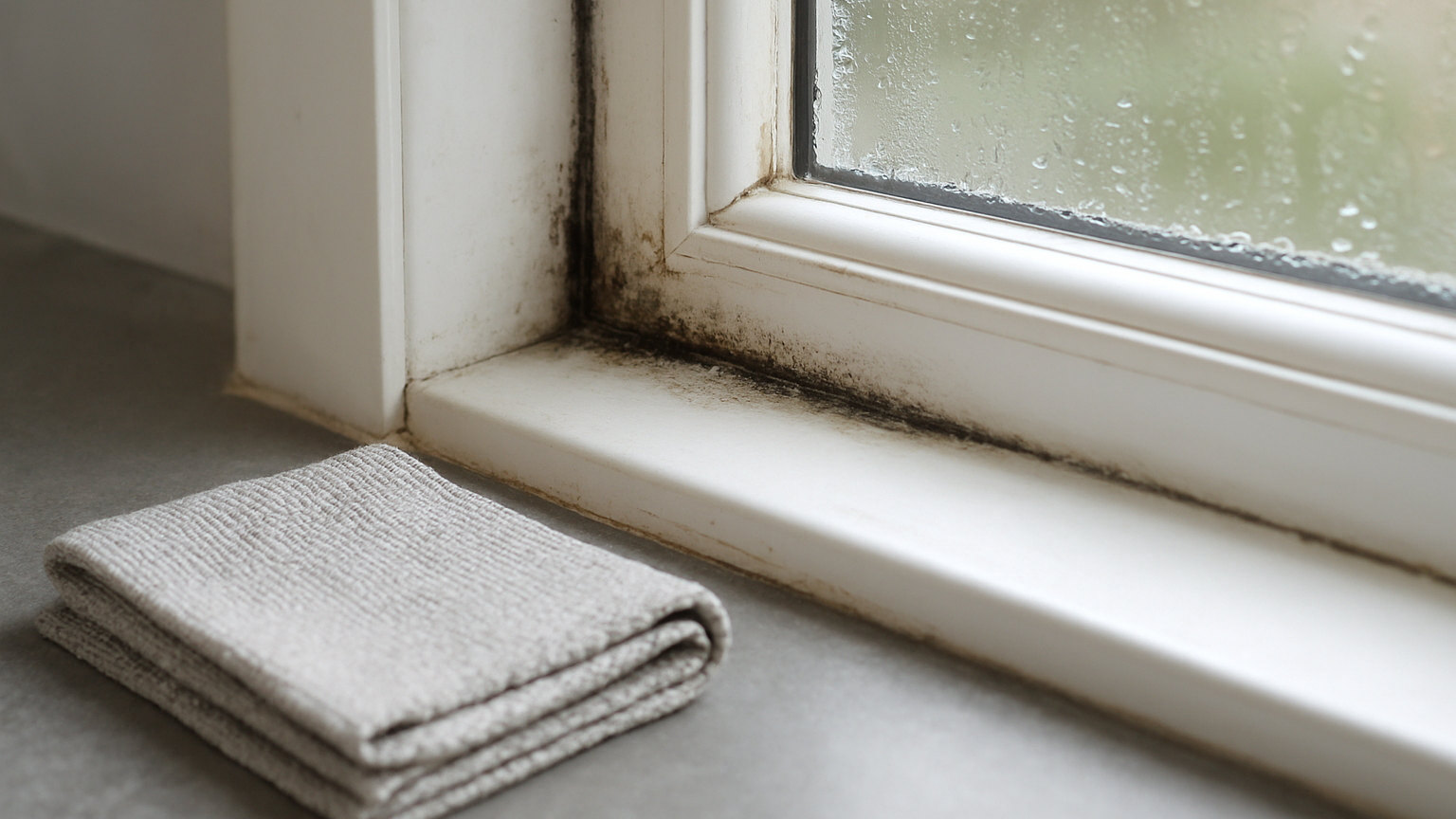
Black spotting on the rubber gasket or on the silicone around a window is mould, and it is growing there because that particular surface stays wet for hours at a time. Cleaning it off is straightforward enough. Keeping it away is a ventilation problem rather than a cleaning one, and without addressing that it will return within a few weeks every single time.
What should you clean it with?
A dilute bleach solution or a proprietary fungicidal wash. Both work by killing the growth rather than simply wiping away the discolouration, which matters because mould left alive regrows from what remains.
Apply it to a cloth or with a small brush, work it along the seal, leave it for a few minutes and then wipe away and rinse with clean water. Ventilate the room while you work, wear gloves, and never mix a bleach product with any acidic cleaner.
For a gentler option, white vinegar has some antifungal effect and works reasonably on light growth, though it is slower and less thorough than a fungicidal product.
What is the method for stubborn spotting?
- Wipe away any loose growth first with a damp cloth, and bin the cloth rather than rinsing it in a sink.
- Soak a strip of kitchen paper in the bleach solution or fungicidal wash.
- Lay the strip along the affected seal and press it into contact.
- Leave it for an hour, or several hours for heavy staining.
- Remove, wipe, rinse with clean water and dry thoroughly.
The extended contact time is what makes the difference. Wiping a product on and off immediately achieves very little on an established stain.
Why does it come back so quickly?
Because the mould is a symptom. Condensation runs down the glass, collects in the bottom corner of the frame and sits on the seal, and that surface then stays damp for hours every day. Mould needs nothing more than moisture and a small amount of organic material, both of which are present.
Wipe the glass and the sill each morning during condensation season, open the trickle vents, ventilate properly and heat the room steadily. Those changes do more than any cleaning product.
When does cleaning stop working?
When the mould has grown into the silicone rather than sitting on the surface. Silicone is slightly porous once it has aged, and growth within it cannot be reached by anything applied on top. The visible sign is staining that lightens with bleach but never disappears, and that darkens again within days.
At that point the only permanent answer is to cut the old sealant out and replace it. It is a straightforward job: cut along both edges with a sharp blade, remove the old bead completely, clean and dry the gap thoroughly, and apply a new mould resistant sanitary silicone.
What about the rubber gaskets?
The rubber gasket that seals the sash against the frame is a different component from the silicone that seals the frame to the wall. Gaskets clean well with a fungicidal wash and a cloth, and they should also be checked for hardening, splits and shrinkage at the corners.
A gasket that has gone hard no longer compresses properly, which lets in draughts and encourages more condensation. Replacement gasket is available by the metre for most window systems and is pushed into the channel by hand.
Is window mould a health concern?
Small amounts of surface mould in a domestic setting are generally a nuisance rather than a hazard, though mould spores can aggravate asthma and respiratory conditions. Extensive or recurring growth across walls and reveals is worth taking more seriously, and anyone with a respiratory condition should not be the person cleaning it.
Persistent damp that keeps returning despite good ventilation and steady heating is worth having looked at properly, since it may point to a building fault such as a cold bridge, failed pointing or a leak rather than to ordinary household humidity.