Laminate flooring is a printed decorative layer bonded to a core of compressed fibreboard, protected by a wear layer on top. The surface is tough and resists scratching well. The core is not waterproof, and once water reaches it through a joint or an edge it swells permanently. Everything about cleaning laminate follows from that.
What does routine cleaning involve?
Vacuuming or sweeping, two or three times a week, using a soft brush attachment or a hard floor setting rather than a rotating brush bar, which can scuff the wear layer. Removing grit is the main job, because grit under shoes is what eventually dulls the surface.
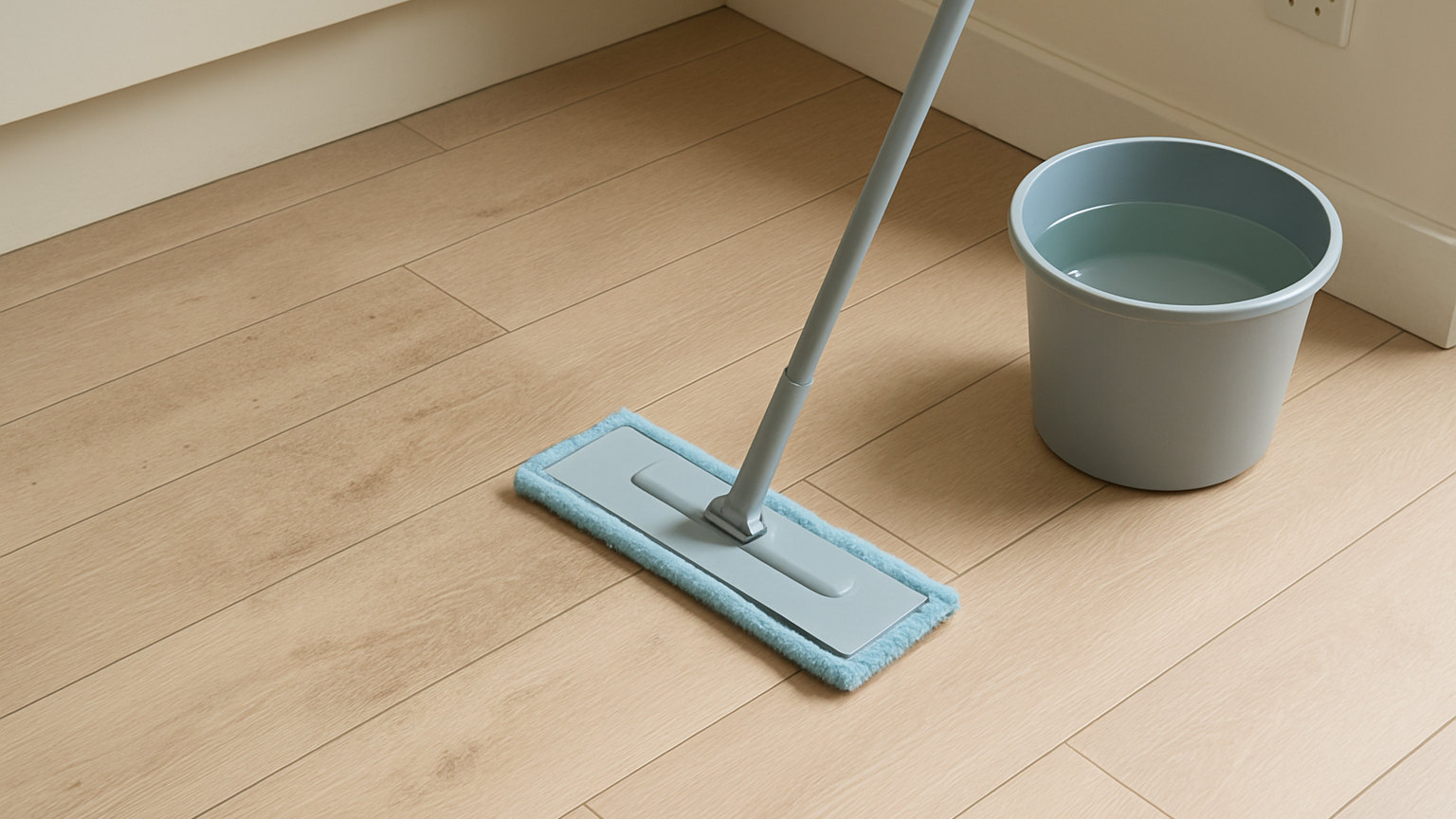
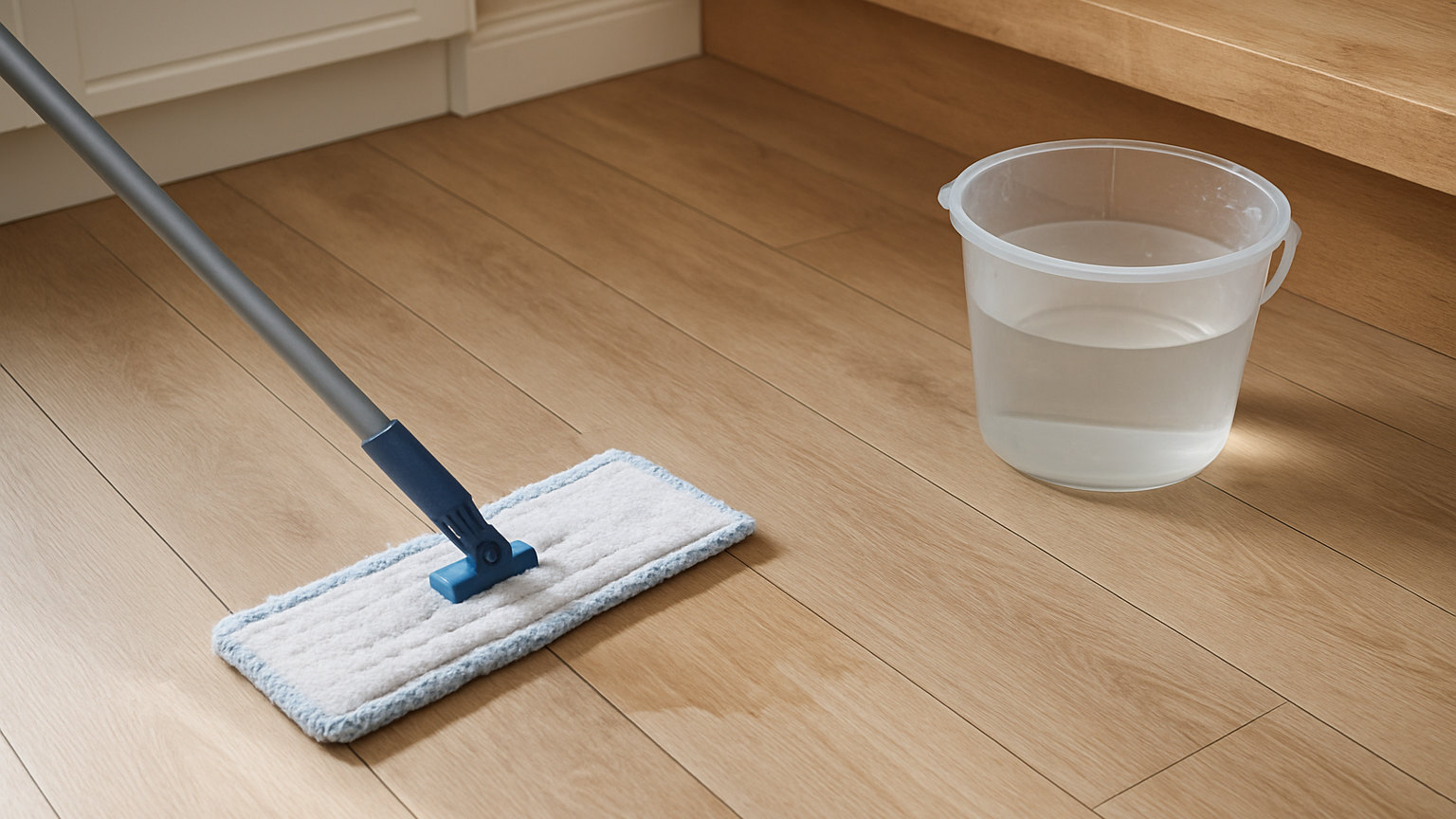
Damp mop every one to two weeks, or as often as the marks require. That is genuinely all a laminate floor needs.
How damp is damp enough?
The mop should leave a barely visible film that disappears within a minute or two. If you can see standing water, or if footprints show on the surface as you work, there is too much. A spray mop is ideal here, because it puts a measured mist on the floor rather than a bucketful.
Never flood a laminate floor, never leave a spill to sit, and never let water pool along the edge of a board or against a skirting.
Why is a steam mop a bad idea?
Because steam is water under pressure and heat, and it goes into the joints. The pressure drives moisture past the click joint and into the fibreboard core, where it causes swelling that shows as raised edges along the board joins. Heat can also soften the adhesive bonding the layers together, producing cloudy patches or delamination.
Many laminate manufacturers specifically exclude steam cleaning from their warranties. If a steam mop has already been used without visible damage, that is luck rather than evidence it is safe.
What should you clean it with?
A laminate floor cleaner at the stated dilution, or plain warm water, which is adequate for most cleaning. Avoid anything oily, waxy or described as a polish, since laminate has no porous surface to absorb it and the product simply sits on top as a slippery film.
Also avoid abrasive creams, scouring pads, bleach and strong alkaline cleaners, all of which damage the wear layer. A tiny amount of white vinegar in the water is acceptable occasionally for cutting residue, but not as a routine cleaner.
How do you deal with marks and spills?
Wipe spills immediately, which matters more on laminate than on almost any other floor. For sticky marks, lay a damp cloth over the spot for a minute to soften it rather than scrubbing. Scuff marks from shoes often come off with a clean pencil eraser or a dry melamine sponge used lightly.
For greasy marks in a kitchen, a drop of washing up liquid in warm water on a well wrung cloth works, followed by a plain water wipe and drying.
Can scratches be repaired?
Superficial scuffs in the wear layer can often be improved with a laminate repair pen or a wax filler stick matched to the colour, worked in and buffed level. Deep scratches that have gone through the printed layer expose the core and cannot be properly repaired, only disguised.
Prevention is far more effective: felt pads under every piece of furniture, no dragging, a doormat at every entrance, and castors on chairs that are rated for hard floors.
What about swollen joints?
Swelling is permanent. The fibreboard expands and does not go back, so the raised edge stays even after the floor is dry. The only remedy is replacing the affected boards, which is possible on a click system if there is spare stock and if the damage is near an edge of the room.
This is why the habit of wiping spills within seconds matters so much on laminate, and why a persistent slow leak from a dishwasher, a washing machine or a radiator valve is worth chasing down immediately rather than when convenient.