Natural stone is the one flooring material where using the wrong cleaner causes instant and permanent damage. Marble, limestone and travertine are calcium based, which means any acid reacts with them chemically, dissolving the polished surface and leaving a dull mark. That reaction happens in seconds and cannot be cleaned out afterwards.
Which stones are vulnerable?
- Marble, limestone and travertine – calcium carbonate, highly acid sensitive.
- Slate – more resistant, though it can flake and often needs sealing.
- Granite – the most durable, resistant to most acids, but the sealant on it may not be.
- Sandstone – porous and prone to staining rather than etching.
- Polished concrete and terrazzo – contain cement or stone chips and behave like calcium based stone.
If you are not sure which stone you have, treat it as the most sensitive of the group.
What counts as an acid?
More products than people expect. Vinegar, lemon juice, limescale remover, descaler, toilet cleaner, many bathroom sprays, some general purpose cleaners, and cola and wine if they are spilled and left. A single splash of limescale remover on a marble threshold will leave a permanent white patch.
Strong alkalis such as bleach and caustic cleaners are also damaging over time, particularly to sealants.
What should you clean stone with?
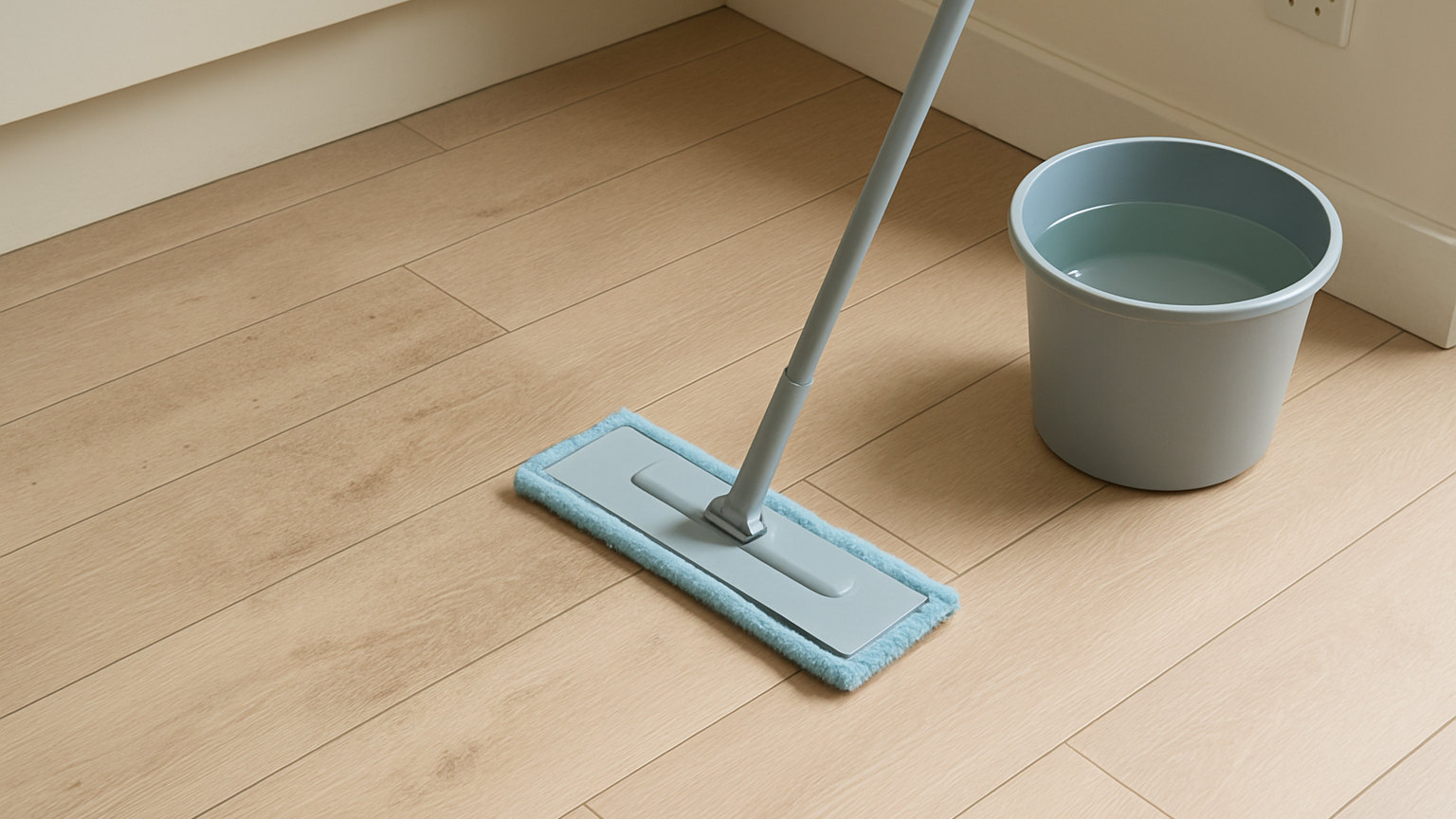
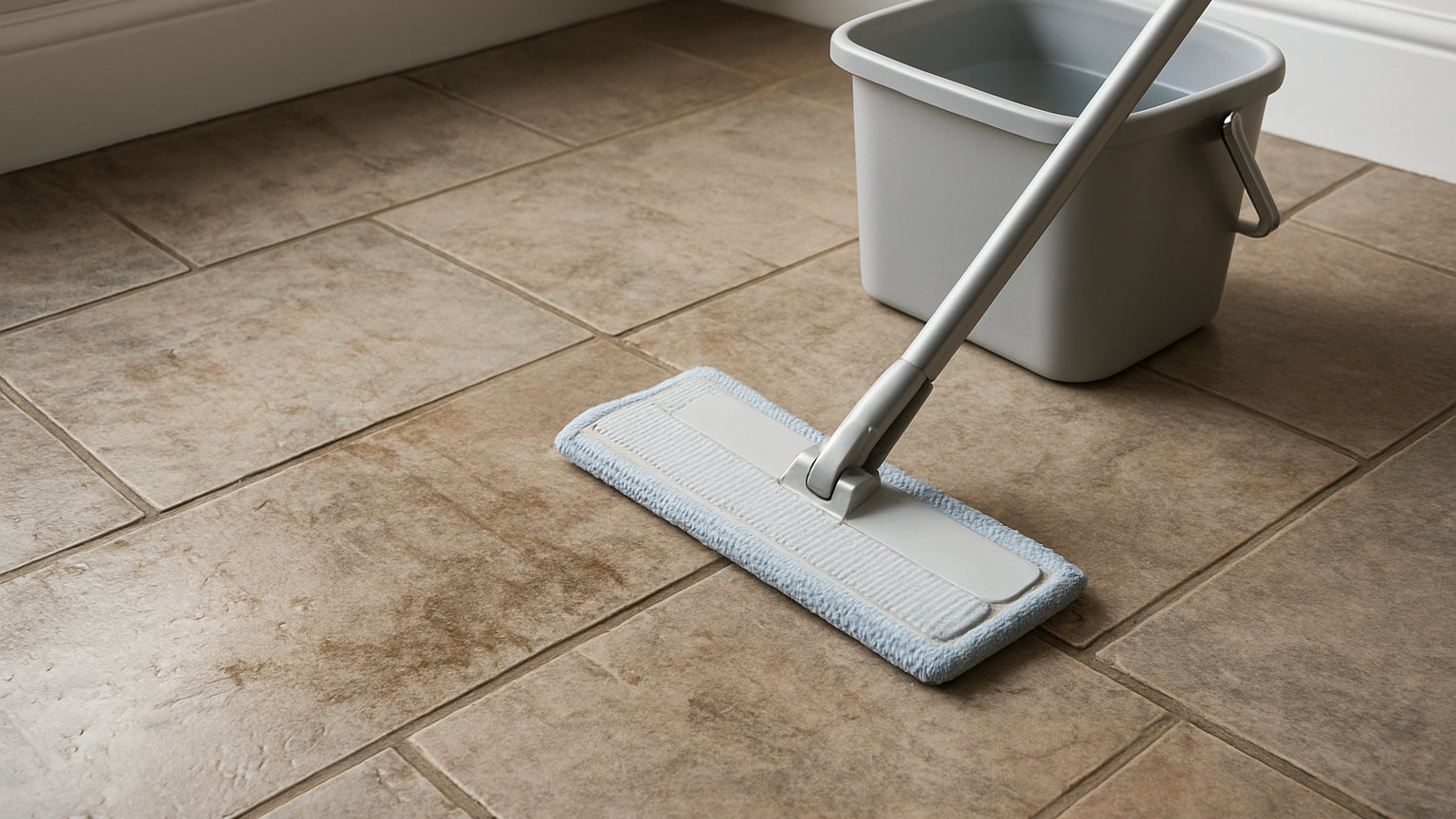
A pH neutral stone cleaner at the stated dilution, or plain warm water for routine cleaning. Neutral means roughly pH 7, and stone specific products state it clearly. Use a flat microfibre mop, wrung out well, and rinse with plain water afterwards so no residue is left to dull the surface.
Vacuum or dust mop first, every time. Grit on a polished stone floor is what causes the fine scratching that gradually turns a polish into a satin finish.
How do you deal with a spill?
Immediately, and by blotting rather than wiping. Stone is porous, so a spill spreads outwards and downwards, and wiping enlarges the affected area. Acidic and oily spills are the two that matter: acid etches, oil stains.
For an oil mark that has soaked in, a poultice is the standard remedy: a paste of an absorbent powder and an appropriate solvent, applied over the stain, covered and left for a day to draw the oil back out. Several applications are often needed.
What does etching look like, and can it be fixed?
A dull, slightly rough patch where the polish has gone, often lighter than the surrounding stone and most visible at an angle. It is physical damage rather than a stain, so cleaning does nothing.
Light etching on marble can sometimes be improved with a marble polishing powder. Anything more than superficial needs a stone restoration specialist, who will hone and repolish the area. That is a skilled job and worth doing properly on a floor of any value.
Does stone need sealing?
Most does, and the seal is what provides the stain resistance. Test it by putting a few drops of water on the floor and leaving them for a few minutes. If the stone darkens where the water sat, the seal has worn and needs renewing.
Resealing intervals vary from one to five years depending on the stone, the sealant and the traffic. It is a straightforward job on a clean, completely dry floor, and worth doing before a problem appears rather than after.
What about grout between stone tiles?
Grout is cement based and also vulnerable to acid, so the same restrictions apply. Clean it with a soft brush and a neutral cleaner rather than the acidic grout products sold for ceramic tiles, which will damage the stone either side of the joint.
Why does stone need different mats and rugs?
Because the risk is trapped moisture rather than scratching. A rubber backed mat left on a sealed stone floor holds damp underneath it and can cause a patch that darkens or discolours over months. Use a breathable underlay, lift mats when you clean, and move them occasionally so no area stays permanently covered.