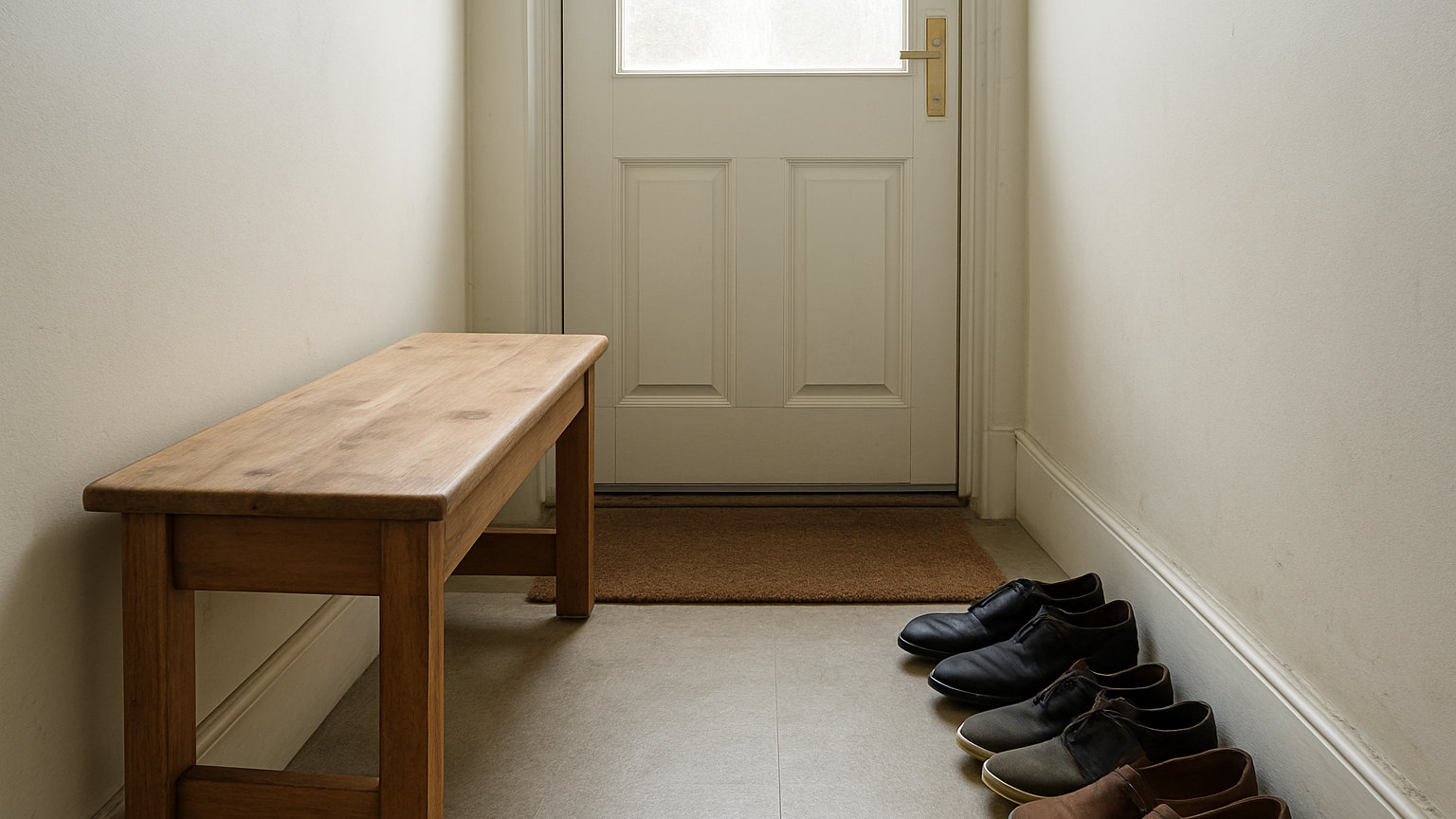
A front door has two faces with entirely different problems. The outside collects traffic film, rain marks, cobwebs, pollen and whatever the weather has thrown at it. The inside collects fingermarks around the handle and the edge, plus scuffs at bag and pushchair height. They need different products and different frequencies.
How often does it need doing?
The outside two to four times a year, and more on a road with heavy traffic or a house exposed to the weather. The inside monthly, focusing on the handle area and the leading edge. Door furniture, seals and hinges once or twice a year.
How do you clean a uPVC door?
Warm water with washing up liquid and a soft cloth, working from the top down. Rinse with clean water and dry with a cloth to avoid streaks. For the grey film that builds in the textured grain of a uPVC frame, a soft brush works into it better than a cloth.
Do not use abrasive creams, scouring pads or solvent based cleaners on uPVC. They scratch the surface, and once scratched it holds dirt permanently and cannot be polished back. Specialist uPVC restorer creams exist for badly weathered frames and should be tested on a hidden section first.
What about composite and painted wooden doors?
Composite doors have a coloured skin and clean the same way as uPVC: mild detergent, soft cloth, no abrasives. Some manufacturers recommend an occasional application of a protective wax on darker colours, which are more prone to fading.
Painted wooden doors take warm soapy water on a well wrung cloth, dried immediately. Water sitting on a painted timber door, particularly along the bottom rail and in the joints, is what leads to flaking paint and rot. Check the bottom edge, which is often unpainted and is where most doors begin to fail.
What is the method for the glass?
Wash with warm soapy water first to remove the film, then rinse, then dry with a squeegee or a clean microfibre cloth. For leaded or bevelled glass, dry with a cloth rather than a squeegee and take care around the lead, which marks easily.
Do a final buff on a dull day rather than in direct sun, since sunlight dries the glass before you can finish and leaves streaks.
Which parts get forgotten?
- The top edge of the door, which is rarely painted and collects a thick line of dust.
- The threshold and the bottom rail, where grit, leaves and moisture collect.
- The rebate in the frame that the door closes into.
- The letterbox, inside and out, including the flap seals.
- The door seals, which need wiping and benefit from a little silicone lubricant once a year.
- The hinges and the multipoint lock mechanism, which should be cleaned and lightly oiled annually.
Why do the seals and hinges matter?
Because a front door is a moving mechanical assembly carrying significant weight. Dirty or dry seals compress badly and let draughts and rain through. Hinges that have never been oiled drop over time, which is what causes a door to catch on the frame and eventually to stop locking smoothly.
Ten minutes once a year on the hinges, the lock keeps and the seals prevents most of the problems that otherwise need a locksmith.
How do you clean door furniture?
It depends on the finish. Chrome and stainless steel take soapy water and a dry buff. Brass may be lacquered, in which case polish will strip the lacquer and cause patchy tarnishing, so soapy water only unless you know it is unlacquered. Black ironmongery is usually powder coated and should never meet an abrasive.
Antique or period fittings are worth leaving alone beyond a dusting, since the patina is part of their value and aggressive polishing removes it permanently. If a knocker or a handle is genuinely old, a dry brush and a wipe is the whole of the appropriate maintenance.