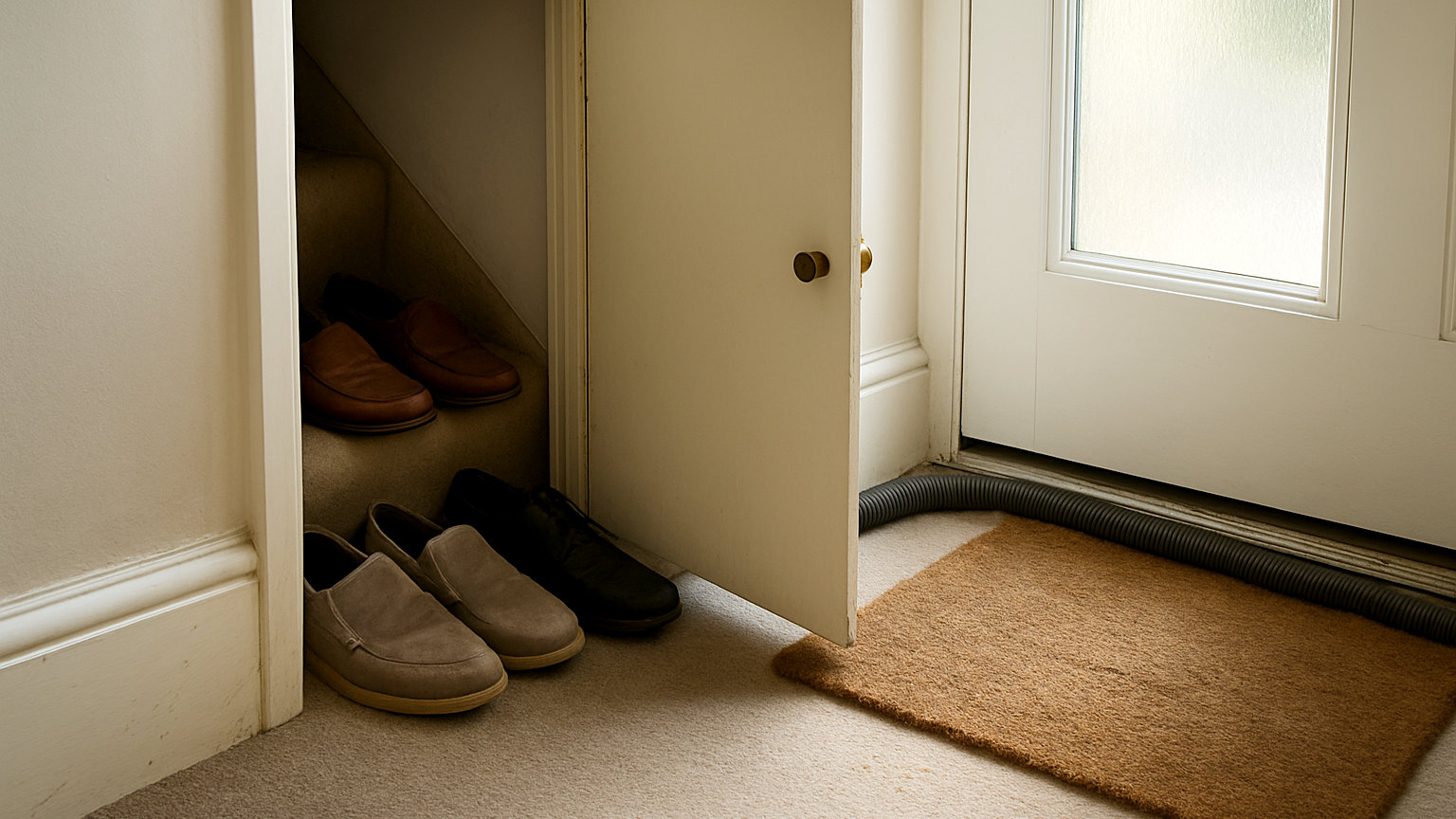
An understairs cupboard has a sloping ceiling, no natural light, an awkward door position and usually a meter or a consumer unit somewhere inside it. Those constraints are why the contents tend to end up as a single heap that gets pushed further back each time something is added.
Where do you start?
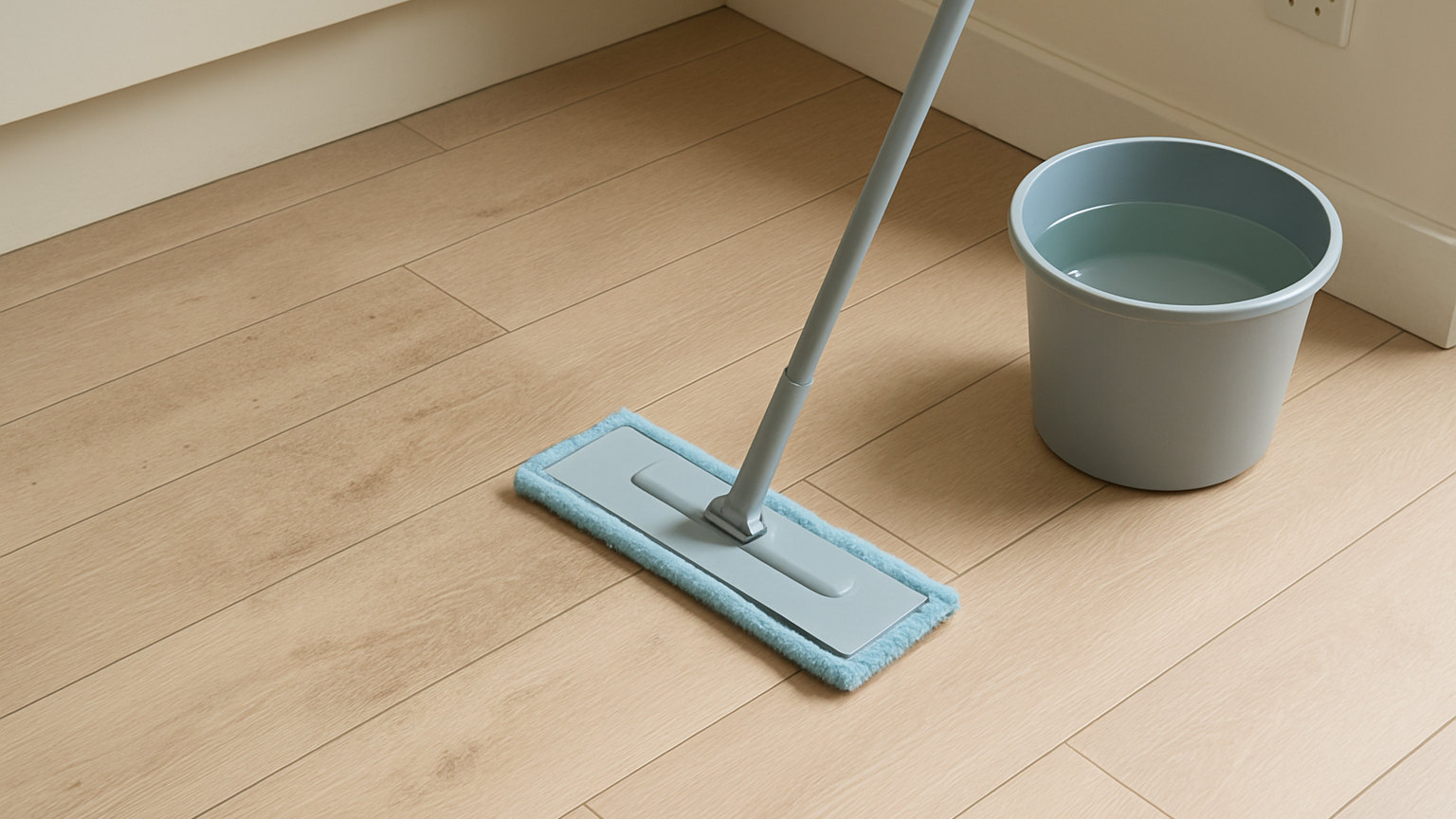
By emptying it completely. It is the only way to see the actual shape of the space, and the shape is what dictates the solution rather than any general advice. Lay everything out along the hall, sort it ruthlessly into keep, relocate and discard, and vacuum and wipe the interior thoroughly before anything goes back in.
This is usually the point at which several forgotten items and a quantity of rubbish leave the house permanently.
How do you use the sloping section?
The tall end near the door is the valuable part and should hold the things you use most. The low end is only useful for things that are stored rather than accessed: suitcases, seasonal decorations, camping equipment.
Storage that matches the slope makes an enormous difference. Options include graduated boxes or crates, a set of low drawers on castors that can be pulled out into the hall, a shelf at mid height where the ceiling allows, and a hanging rail on the tall wall for coats.
What should never be stored in there?
- Anything blocking a meter, stopcock or consumer unit. These must stay reachable without moving things.
- Flammable liquids and gas canisters, which should not be stored in an internal cupboard under an escape route.
- Anything damp, since the cupboard has no ventilation.
- Paper and cardboard against an external wall, which will absorb moisture and encourage silverfish.
- Food, unless the cupboard is dry and cool, which most are not.
An understairs cupboard also sits on an escape route in most houses, which is a reasonable argument for keeping it tidy rather than packed to the door.
Why does it smell musty?
Because it is a sealed box with no airflow, often backing onto an external wall and sometimes containing damp coats, wet umbrellas or a vacuum cleaner that has been put away wet. Moisture goes in and does not come out.
The remedies are straightforward: never put anything damp inside, leave the door ajar occasionally, fit a small vent in the door if the problem is persistent, and keep a moisture absorber or a tub of silica on the floor. Storing items in breathable containers rather than sealed plastic bags also helps, since sealed bags trap whatever moisture was present when they were closed.
How do you light it?
Badly lit is why things get lost. A battery powered motion sensor light stuck to the underside of the stairs costs very little and transforms how usable the cupboard is. A wired light is better still if the wiring is being done anyway, and a light means the cupboard can actually be cleaned rather than reached into blindly.
What works well in there?
The most useful arrangements are the ones that suit a hallway. Coats and shoes for everyday use near the door. The vacuum cleaner and its attachments, ideally with a socket inside for charging a cordless machine. Cleaning products on a shelf out of reach of children. A toolbox. Sports equipment in a single crate rather than loose.
Labelled boxes are worth the effort here more than anywhere else, because visibility is poor and the boxes at the back are effectively invisible.
How often should it be sorted?
Once a year is enough, ideally at the same time as the seasonal change when winter coats and boots are swapped over, since the cupboard has to be opened properly anyway. A cupboard that is emptied and reset annually stays usable indefinitely. One that is never emptied fills to the door within about three years, regardless of how well it was organised to begin with, because storage expands to fill whatever space it is given.