A kitchen floor that feels tacky underfoot shortly after being mopped is almost never dirty in the way it looks. It is coated in residue: cleaning product that was never rinsed off, or dirt that was spread around in water that had stopped being clean. Both are easy to fix, and the fix mostly involves using less rather than more.
What causes the stickiness?
Four things, in rough order of how often they are responsible.
- Too much floor cleaner. Doubling the dose does not clean twice as well; it leaves a film that dries tacky and then attracts dirt, which is why a floor gets stickier each time it is mopped.
- Never rinsing. Most floor cleaners are designed to be left, but they only work as intended at the correct dilution. Any overdose has to be rinsed off.
- Dirty mop water. After a few square metres the water is a dilute soup of grease and detergent, and mopping with it applies a thin layer of that soup to everything else.
- Airborne cooking grease. In kitchens with poor extraction, the floor collects the same greasy film as the cupboard doors, and detergent alone does not always shift it.
How do you strip the residue off?
Mop the whole floor with clean hot water and nothing else, changing the water as soon as it looks cloudy, which will be sooner than you expect. Two or three passes will lift most built up residue. For a heavy build up on vinyl, laminate or tile, a small splash of white vinegar in the rinse water helps cut it, though it should not be used on natural stone or on unsealed wood.
Once the floor is stripped, dry it with a towel or leave the window open. A floor that dries slowly picks up footprints and starts the cycle again.
What does a good mopping routine look like?
- Vacuum or sweep first, thoroughly. Mopping over grit turns it into a paste and scratches the floor.
- Use the smallest dose of cleaner on the label rather than a generous glug.
- Wring the mop out properly. It should be damp, not wet; standing water damages laminate and wood and takes ages to dry on anything.
- Work in sections, and change the water when it is no longer clear.
- Finish with a clean water pass in a kitchen, since that is where grease is worst.
- Work backwards towards the door so nothing is walked on while wet.
Does the type of mop matter?
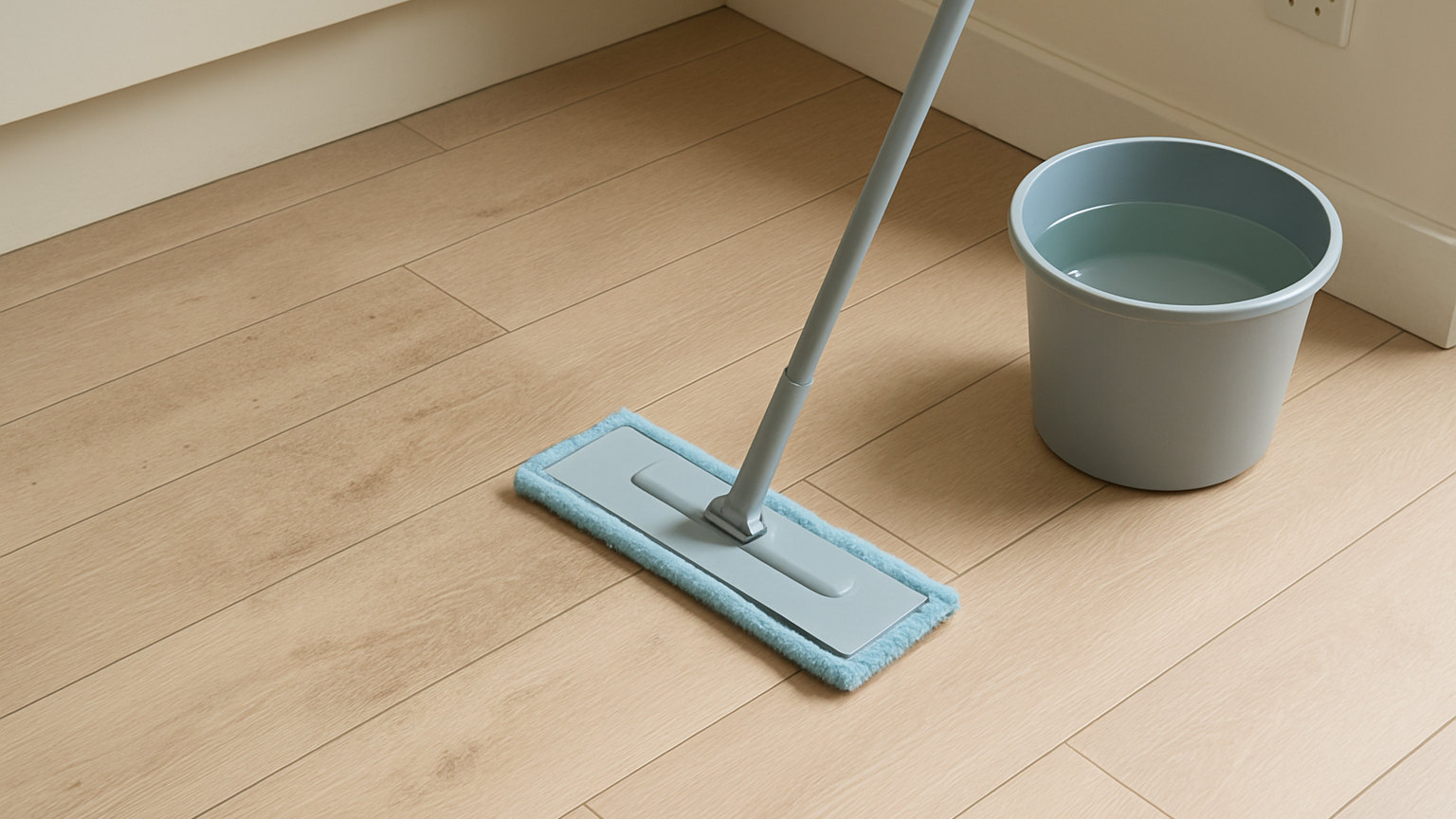
Considerably. A flat mop with a washable microfibre pad applies far less water and picks up more than a traditional string mop, and the pad can be changed halfway through a large floor. A string mop in a bucket of increasingly dirty water is the classic route to a sticky floor. Whichever you use, wash the head after every use and let it dry properly, because a mop head that smells will leave that smell on the floor.
Which floors need special care?
Laminate and engineered wood hate standing water, and the damage – swollen joints and lifted edges – is permanent. Use a barely damp mop and dry any spills immediately. Solid wood needs a dedicated wood floor cleaner rather than a general one. Natural stone, including travertine and marble, must never meet vinegar or any acidic cleaner. Vinyl and sealed tile are the most forgiving, and even they will go tacky with too much product.
Why do some patches stay sticky?
Because of what is above them. The area in front of the hob collects fat, the strip in front of the sink collects splashes of detergent, and the space beside the bin collects drips. These spots need washing rather than mopping: hot soapy water, a cloth, and a rinse. Treating them separately once a week keeps the general mop honest.
How often should a kitchen floor be washed?
Weekly for most households, with a quick vacuum or sweep every day or two and immediate attention to spills. Mopping more often than that with too much product is a common cause of the problem it is meant to solve, and a floor that is vacuumed regularly needs mopping far less than one that is not.