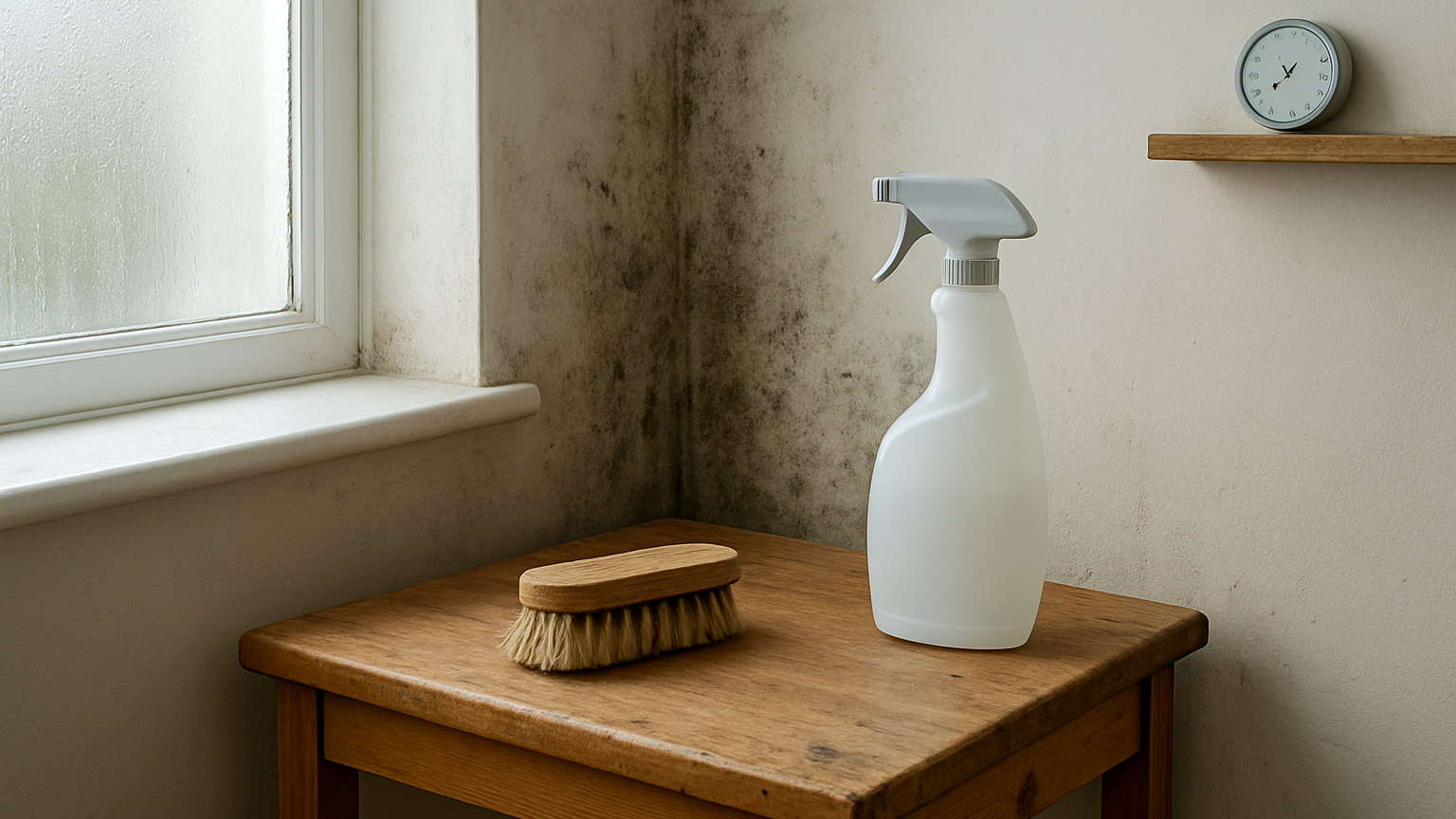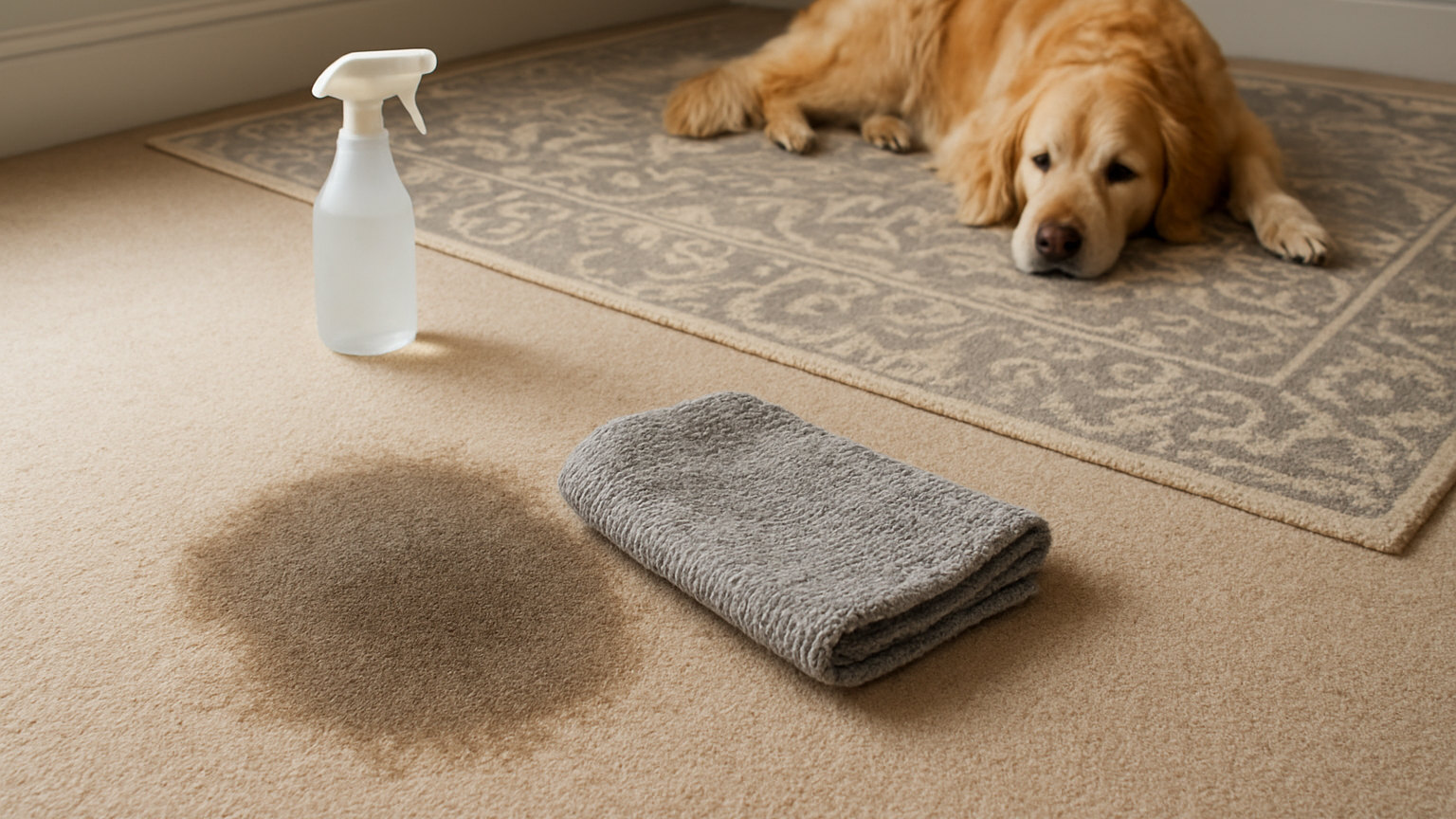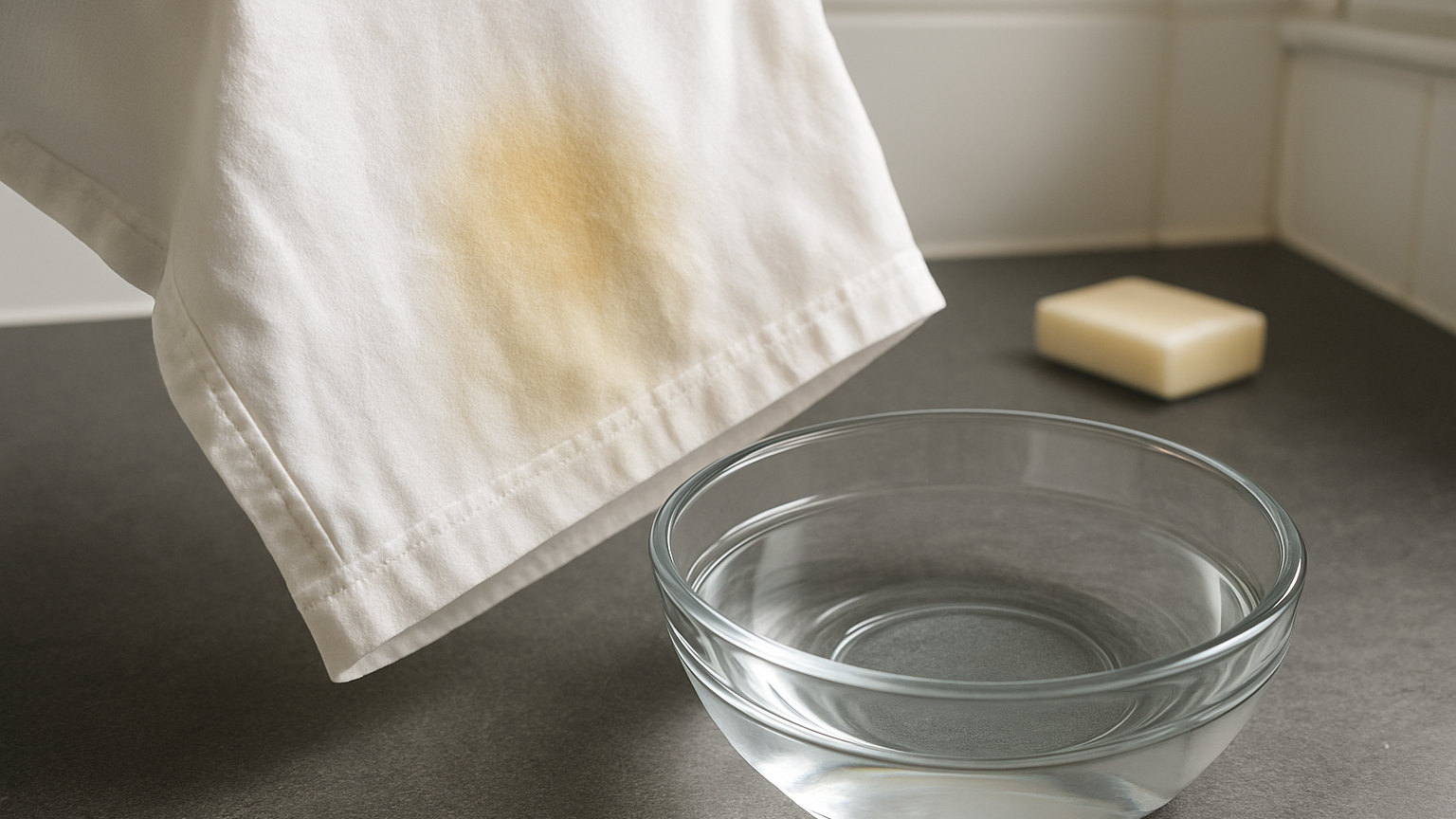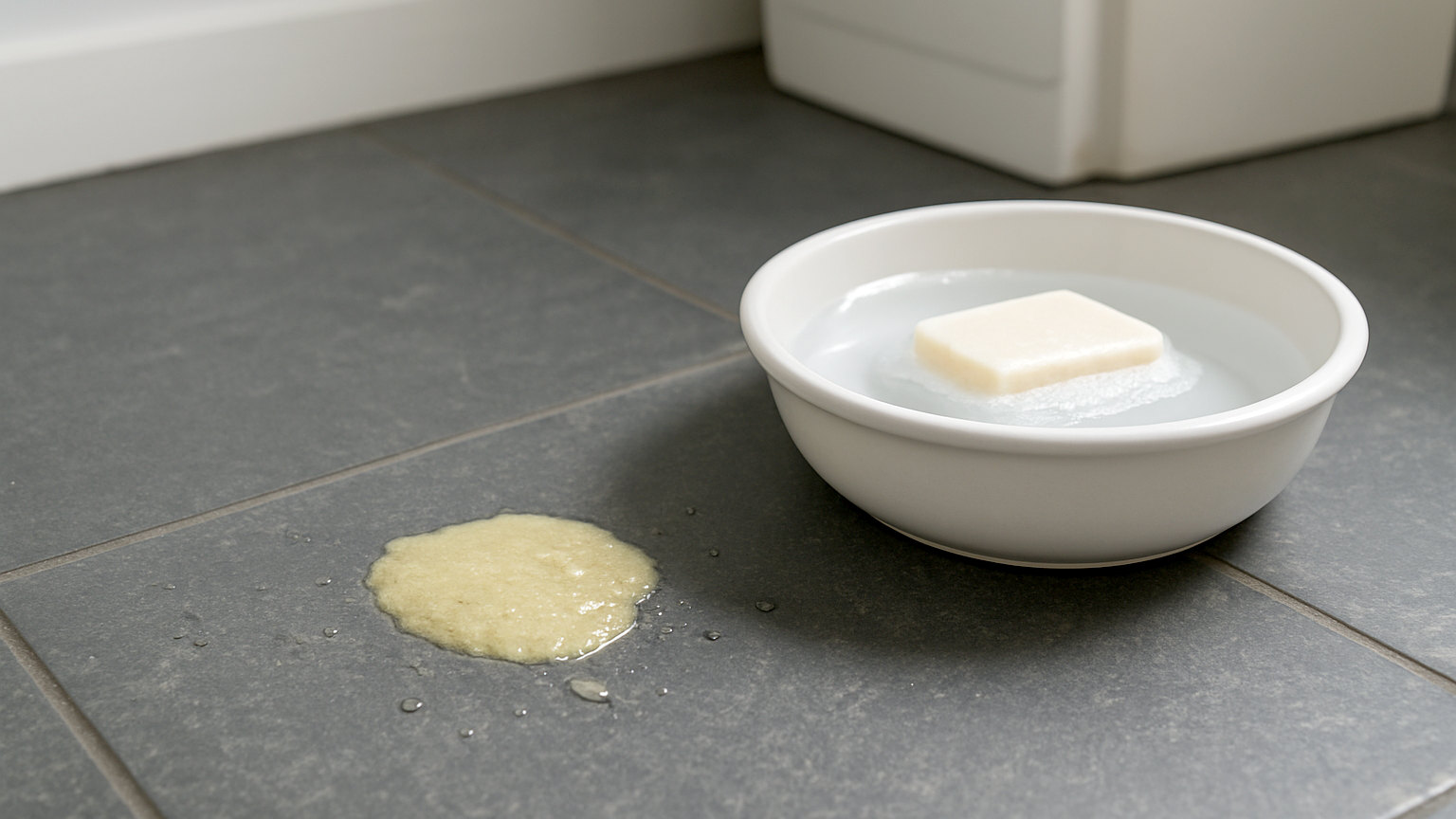
Cleaning up vomit involves two separate jobs: removing the stain and dealing with the hygiene risk. The second matters more, particularly where a stomach illness is involved, since the viruses responsible spread readily and survive on surfaces for days. Doing the hygiene part properly also happens to give the best stain result.
What is the order of work?
- Put on disposable gloves, and open a window.
- Remove the solid material with paper towels or a disposable scraper, working from the outside inwards.
- Put everything straight into a bag rather than a bin, and tie it.
- Blot the remaining liquid with paper towels, pressing rather than wiping.
- Treat the area with cold water, blotting repeatedly.
- Apply an enzyme cleaner generously and leave it for the time on the label.
- Blot again and extract the moisture with a dry towel under weight.
- Disinfect the area and everything nearby once the stain has been dealt with.
- Wash hands thoroughly with soap and water.
Why cold water?
Because vomit contains protein, which sets in heat, and because the acid content can be driven into the fibre by warmth. Cold water at every stage until the enzyme cleaner has done its work.
The acidity also matters for a different reason: stomach acid can damage carpet dye and bleach the fibre, so rinsing it out promptly limits the permanent colour loss.
Why an enzyme cleaner rather than detergent?
Because the residue that causes the lingering smell is deeper than the surface. An enzyme cleaner continues breaking the protein down wherever the liquid reached, including in carpet backing and underlay, which detergent cannot do.
Apply it generously enough to cover the whole area the liquid reached, which is wider than the visible mark.
What should be disinfected?
More than people expect during a stomach illness. The floor or carpet, the surrounding area within a couple of metres, the toilet including the flush and the seat, door handles, light switches, taps, and anything touched on the way.
Use a bleach based product on hard surfaces where the material allows, following the contact time on the label. Alcohol gels are less effective against the viruses that cause winter vomiting, so soap and water for hands is the better choice.
What about bedding and clothing?
Handle it carefully rather than shaking it out, which sends particles into the air. Remove any solids, rinse in cold water, then wash separately at 60 degrees with a biological detergent and a full dose.
Wash it as a load of its own, and run the machine empty on a hot cycle afterwards. Do not overload, since proper rinsing matters here.
What about hard floors?
Considerably easier. Remove solids, clean with hot water and detergent, then disinfect. Avoid acidic cleaners on natural stone, and avoid steam cleaning until the area has been cleaned, since heat sets protein.
How do you deal with the smell?
It means residue remains. Reapply the enzyme cleaner, giving it more time and covering a wider area, then dry the area quickly with a fan. Bicarbonate of soda sprinkled on dry carpet overnight and vacuumed off absorbs what is left.
Air freshener adds a second smell and changes nothing. Ventilation and enzymes are what work.
What should you do afterwards?
Bag and dispose of the gloves, cloths and paper towels. Wash your hands with soap and warm water for at least twenty seconds. Clean the cleaning equipment itself, since a mop or bucket used for this should not be used elsewhere until it has been disinfected.
If several people in a household become unwell, keep the affected person to one bathroom where possible and disinfect shared surfaces daily until forty eight hours after symptoms stop.
What about the stain that remains?
Deal with it only after the hygiene work is finished. Stomach acid can bleach carpet dye, so some colour loss may be permanent regardless of treatment. For what remains, an oxygen bleach solution works on colourfast synthetic carpet and should be tested first, and sunlight helps on washable items. A pale patch caused by acid is damage rather than a stain and will not respond to further cleaning.