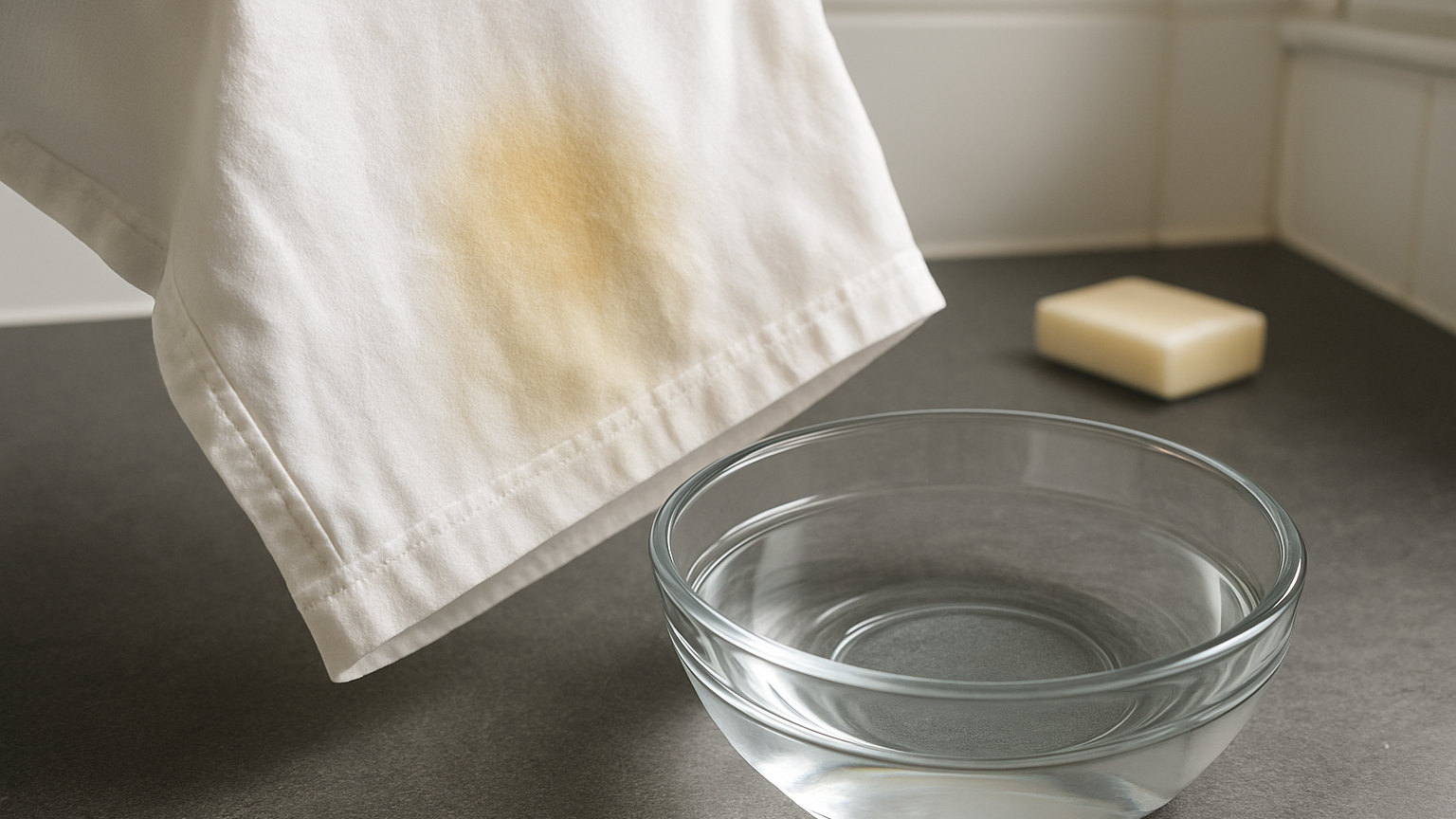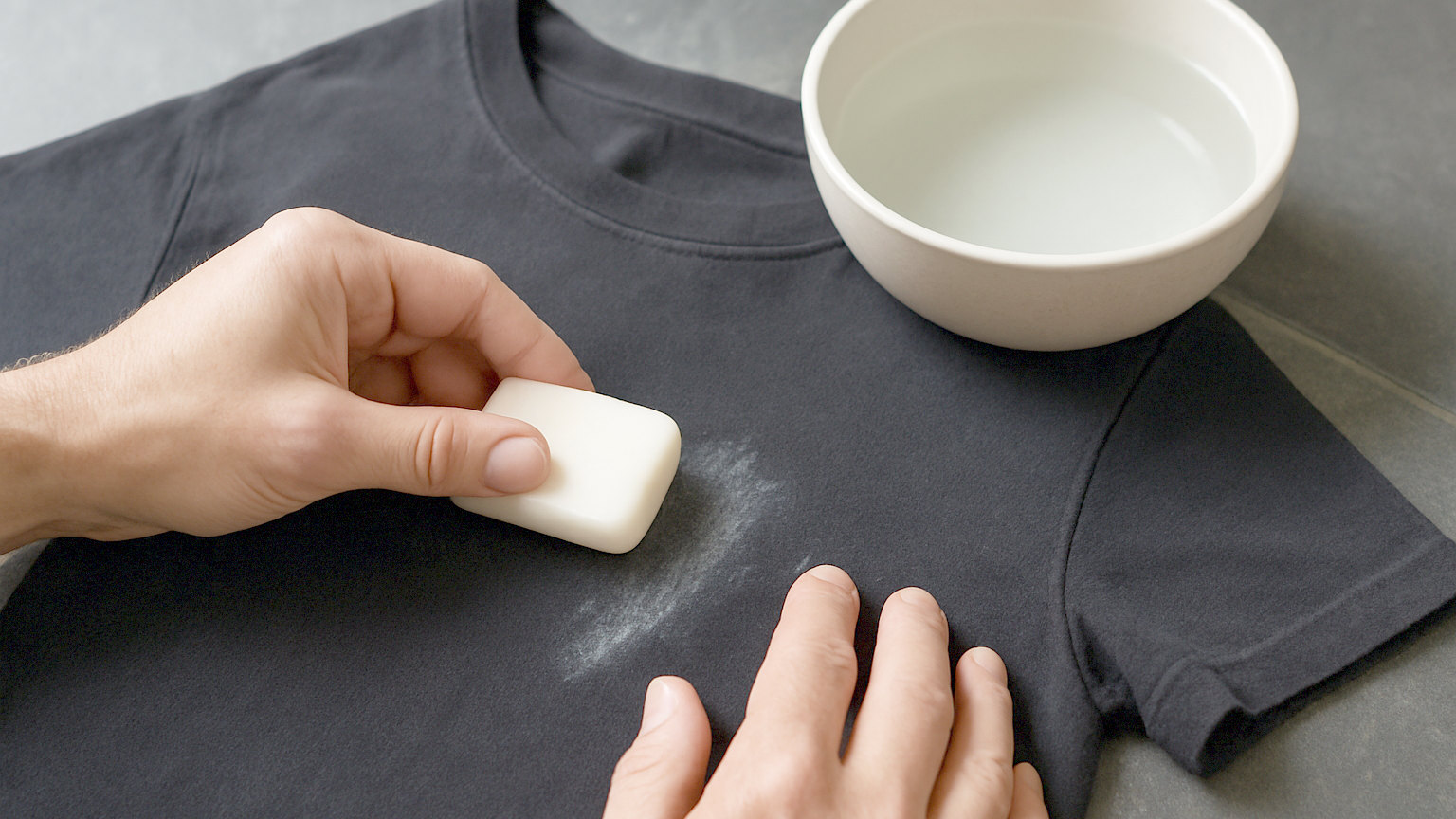
There are two separate deodorant problems and they need different answers. A white streak on a dark top is surface residue that has just transferred, and it lifts off dry in seconds. A stiff, discoloured build up in the underarm has bonded into the fibre over many wears and needs washing out.
How do you remove a fresh white streak?
Rub it off with something dry and slightly textured. Several things work well.
- A pair of clean nylon tights or a sock rubbed briskly over the mark, which is the classic and most effective method.
- A dry makeup sponge or a foam blending sponge.
- The garment itself, rubbing fabric against fabric from inside the top.
- A dedicated deodorant removal sponge, sold for exactly this.
- A dryer sheet, if you have one.
All of them work by friction. Do not use water, which turns a dry powder into a paste and makes a small streak into a wide grey patch.
Why does water make it worse?
Because the residue is mostly solid particles sitting on the surface. Dry, they brush away. Wet, they dissolve into a suspension that spreads across a larger area and soaks into the fibre, where it dries as a dull mark that then needs washing out properly.
Dry first, always. Water is the last resort rather than the first.
What if the mark will not come off dry?
Dampen a cloth very slightly with cold water and dab rather than rub, working from the outside inwards. Follow immediately with a dry cloth. If the mark persists, treat the garment as a wash job rather than continuing at it.
How do you clear the build up underneath?
- Rub a little washing up liquid into the underarm area to deal with the oils.
- Make a paste of bicarbonate of soda and water and work it into the area.
- Leave it for an hour.
- Wash at the warmest temperature the garment allows with a biological detergent.
- Add an extra rinse.
- Air dry and check before any heat is applied.
White vinegar is an alternative to the bicarbonate, applied and left for thirty minutes. Use one or the other rather than both in the same step.
Why do some products mark more than others?
Solid and stick antiperspirants leave the most visible white residue, because they deposit a waxy solid. Roll-ons are wetter and mark less visibly while still leaving aluminium residue in the fabric. Sprays leave the least on clothing and the most on the bathroom floor.
Clear gel and invisible formulations are designed to reduce the white marking specifically, and they largely succeed.
How do you avoid it?
Let the product dry completely before dressing, which for a solid stick takes a couple of minutes and for a roll-on rather longer. Apply a thin layer rather than several passes. Dress carefully, holding the fabric away from the underarm as a top goes over the head.
Most white streaks happen in the two seconds it takes to pull a t-shirt on over a damp underarm.
What about marks on dark wool and silk?
Use the dry method with a soft sponge rather than nylon, which can catch on fine fibres. Avoid water entirely on silk, which will water mark. For a persistent mark on a wool jumper, a soft brush after the garment has dried usually lifts it.
Does it damage the fabric?
The white streak does not. The underlying aluminium and protein build up does, over time, weakening cotton at the underarm and causing the stiffness and yellowing that eventually ends a shirt. Treating the build up rather than only the visible streak is what extends the life of the garment.
What about marks on the outside of a top?
These are almost always transfer from dressing rather than anything that came through the fabric. The dry rubbing methods work just as well on the outside, and a nylon sock is the most effective. Check the front of a dark top after dressing, since a mark on the chest from pulling a jumper over the head is easy to miss and obvious to everyone else.