Ballpoint ink is a thick paste of pigment suspended in an oil or glycol base, designed specifically not to run. That is excellent in a pen and unhelpful on a shirt pocket, because water cannot touch it. What dissolves the base is a solvent, and the technique is to apply it from the back of the fabric and push the ink out onto something absorbent.
What is the method?
- Act quickly. Fresh ink comes out far more readily than ink that has dried and set.
- Lay the fabric face down on a thick pad of clean white kitchen paper.
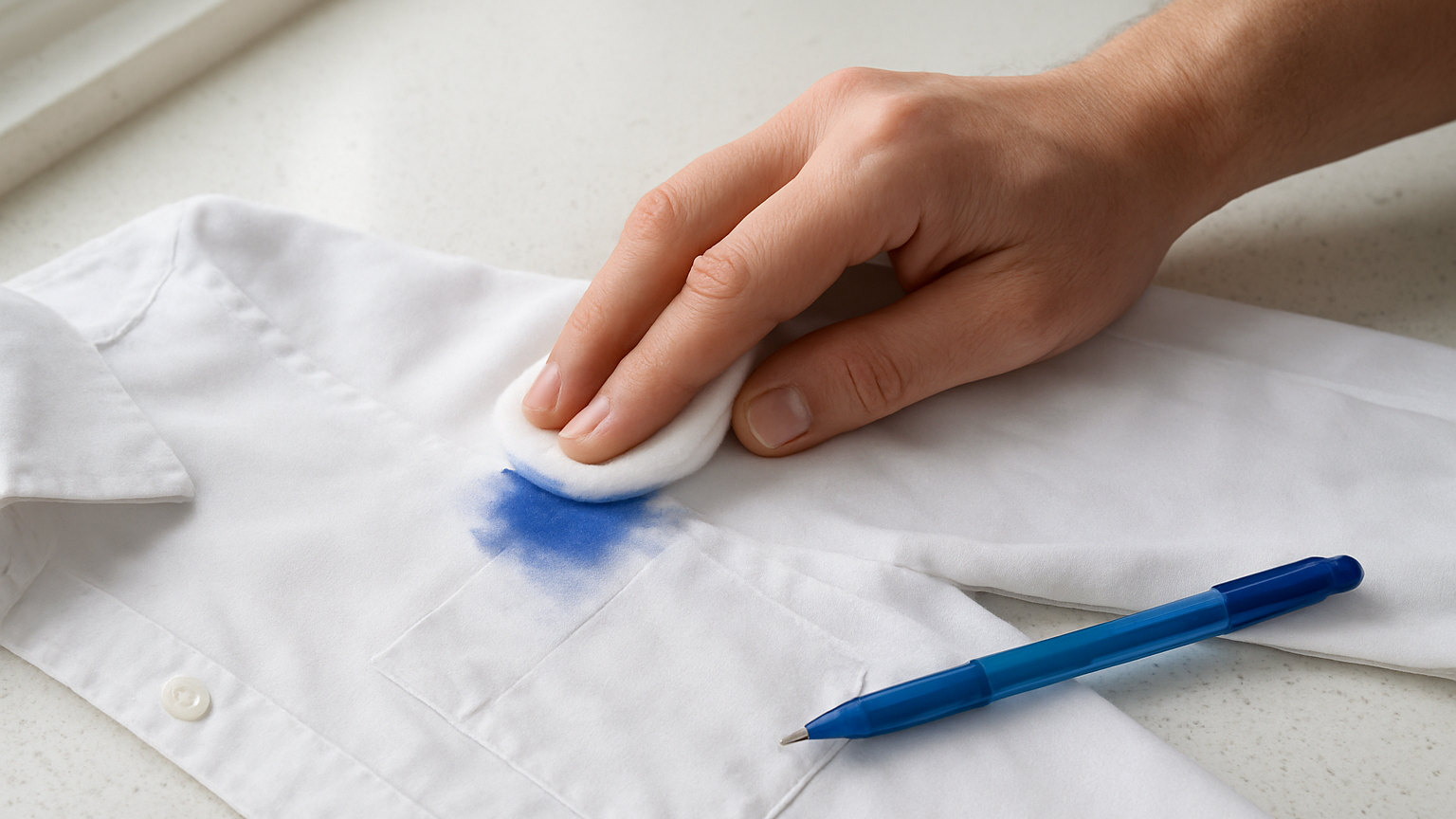
- Apply surgical spirit to a cotton wool pad or a clean cloth.
- Dab the reverse of the stain, pushing the ink out into the paper beneath.
- Move to a clean section of paper frequently as it takes up colour.
- Keep dabbing rather than rubbing, working from the outside of the mark inwards.
- When no more transfers, apply washing up liquid, leave ten minutes and rinse in warm water.
- Wash normally, checking before drying.
Why does working from the back matter so much?
Because the aim is to move the ink out the way it came in. Treating from the front pushes the dissolved pigment further through the weave and spreads it across a wider area. The absorbent paper underneath gives it somewhere to go.
Changing the paper frequently is just as important. A saturated pad simply returns the ink to the fabric.
Which solvents work?
- Surgical spirit – the most reliable and widely available option.
- Hand sanitiser gel – essentially alcohol, and effective on fresh ink.
- Hairspray – works only if it contains a high proportion of alcohol, which many modern formulas do not.
- Milk – an old remedy with some effect on fresh ballpoint, and slow.
- A proprietary ink remover – formulated for the purpose and worth having if this happens often.
Avoid nail varnish remover containing acetone, which dissolves acetate and some synthetics along with the ink.
What should you test first?
Every solvent, on a hidden seam or the inside of a hem, left for the time you intend to use it. Alcohol will lift some dyes, and on a dark garment a lightened patch is considerably more visible than the original ink mark.
Wait for the test area to dry fully before judging it, since solvent looks darker while wet.
What about dried ink?
It is harder and often still recoverable. Soften it first with a little glycerine worked into the mark and left for an hour, then proceed with the solvent method. Expect three or four rounds, and expect to change the paper many times.
Ink that has been through a hot wash and a tumble dryer is usually permanent, since heat sets the pigment into the fibre.
Does hairspray still work?
Less reliably than it once did. The remedy originated when hairsprays were largely alcohol, and many current formulations contain far less along with polymers and oils that leave their own residue. If it is what you have, it is worth trying; if you are buying something, buy surgical spirit.
What about ink on a shirt pocket?
The most common location and usually the worst, because a leaking pen deposits a continuous supply rather than a single mark. Remove the pen, treat the area from the back over paper, and expect several rounds.
Check inside the pocket as well, since ink usually goes through to the shirt front behind it and both layers need treating.
What should you avoid?
Rubbing, which spreads ink dramatically. Water as a first response, which does nothing and can set some inks. Hot water, which sets the pigment. And putting the garment in a tumble dryer before you are certain the mark has gone entirely.
Does the fabric make a difference?
A considerable one. Cotton releases ink reasonably well and tolerates repeated solvent treatment. Polyester holds pigment more tightly and often keeps a shadow. Silk and wool cannot take much solvent at all before the dye moves. On a synthetic shirt, expect an improvement rather than a complete removal, and judge whether the garment is worth several rounds of treatment before starting.