Permanent marker contains a pigment, a solvent carrier and a resin that bonds the pigment to the surface as the solvent evaporates. That resin is the difficulty. It is designed to resist water, light and abrasion, so removal always depends on dissolving the resin, and what will do that safely depends entirely on the surface.
What works on fabric?
- Lay the fabric face down on a thick pad of clean white kitchen paper.
- Apply surgical spirit to a cloth and dab the reverse of the mark.
- Change the paper underneath as soon as it takes up colour.
- Keep dabbing, never rubbing, working from the outside in.
- Follow with washing up liquid and a warm rinse.
- Wash normally and check before drying.
- Repeat, since marker rarely comes out in one attempt.
Expect an improvement rather than complete removal on coloured fabric. On white cotton, an oxygen bleach soak after the solvent stage often clears the remainder.
What works on hard plastic?
Surgical spirit on a cloth usually lifts it straight off. Where it does not, the whiteboard trick works remarkably well: draw over the permanent marker with a dry wipe marker and wipe both off immediately. The solvent in the dry wipe pen redissolves the permanent ink.
Hand sanitiser gel also works on plastic, as does a little sun cream rubbed in and wiped off, which sounds unlikely and is genuinely effective.
What works on walls and painted surfaces?
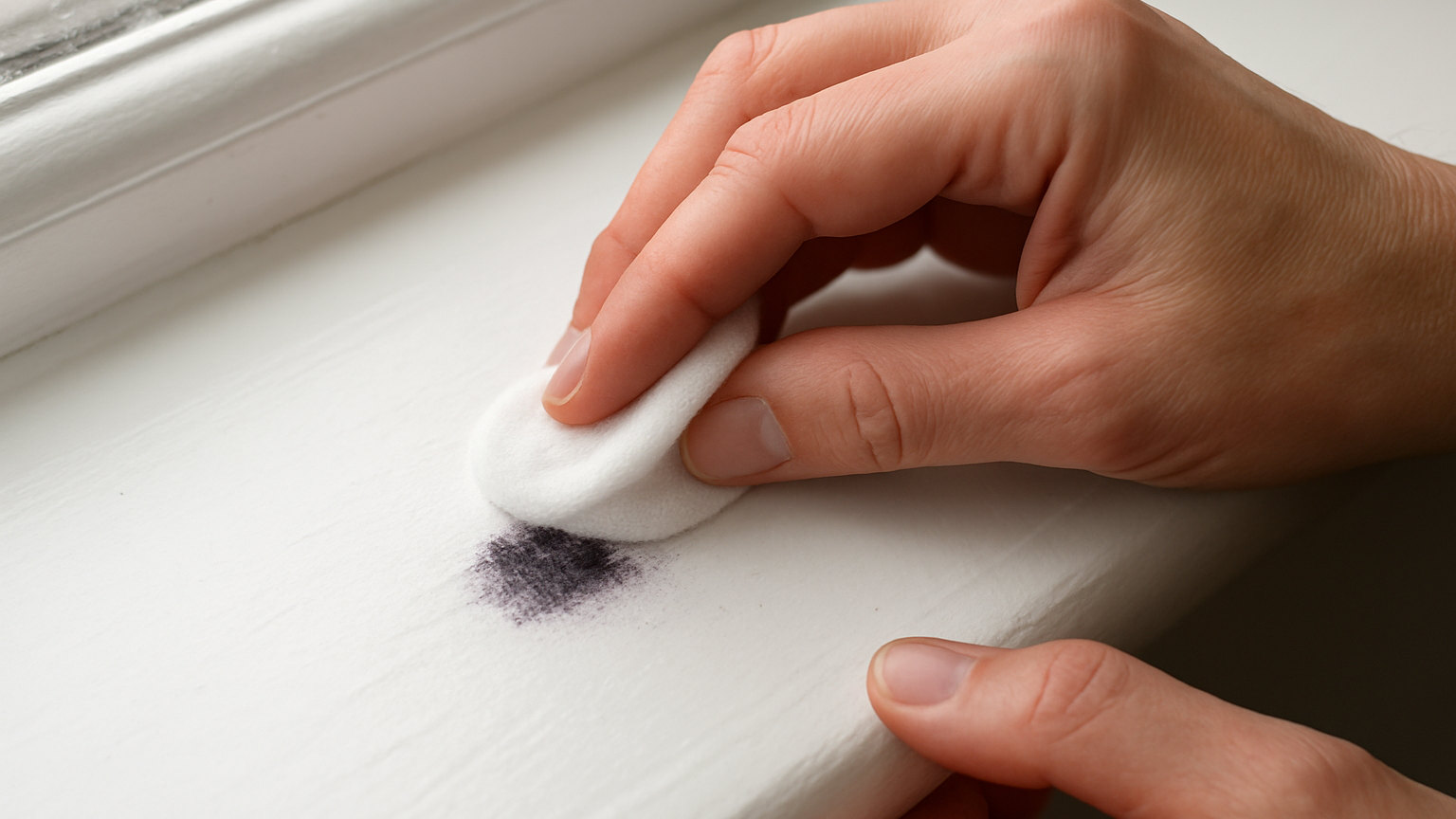
This is the difficult one, because anything that dissolves the marker may also dissolve the paint. Start with the gentlest option: a damp cloth and a little washing up liquid. Then try surgical spirit on a cotton bud, applied lightly and tested in a hidden spot first.
A melamine sponge often works and abrades the paint surface, leaving a dull patch on matt emulsion. On a wall, touching up with matching paint is frequently quicker and better looking than any removal attempt.
What about wood and laminate?
On sealed wood and laminate, surgical spirit on a cloth usually works without damaging the finish, tested first. On unsealed or waxed wood the marker soaks into the grain and is often permanent, though light sanding and refinishing will remove it on a surface where that is practical.
What about skin?
It wears off within a day or two on its own. To speed it up, use an oil based product such as baby oil, olive oil or a cleansing balm, rubbed in and wiped away. Hand sanitiser works, and repeated use is drying. Avoid solvents such as white spirit on skin.
What about carpet and upholstery?
Dab with surgical spirit applied to a cloth, working from the outside inwards, and blot with a clean white cloth underneath or beside the mark to catch what lifts. Never pour solvent onto carpet, which can dissolve the latex backing.
Check the upholstery cleaning code first. On a W coded fabric, follow the solvent with a gentle detergent foam to remove the residue.
Which solvents should be avoided?
Acetone and nail varnish remover on anything plastic, acetate or painted, since they dissolve the surface as readily as the ink. White spirit on synthetics. Any solvent in an unventilated room, and never two solvents mixed together.
Open a window, and test everything on a hidden area first.
When is it genuinely permanent?
On porous surfaces that cannot be abraded: unsealed wood, untreated stone, grout and some fabrics after heat setting. On those the realistic options are covering, sanding or accepting it. The name is a fair description of what the product is designed to do.
Does it fade on its own?
Slowly, and mostly in sunlight. Permanent marker is more lightfast than most inks and it does degrade under prolonged ultraviolet exposure, which is why a mark on a garment dried outdoors repeatedly will lighten over months. On an item you cannot treat, that is worth knowing: a summer of line drying does more than another round of solvent.