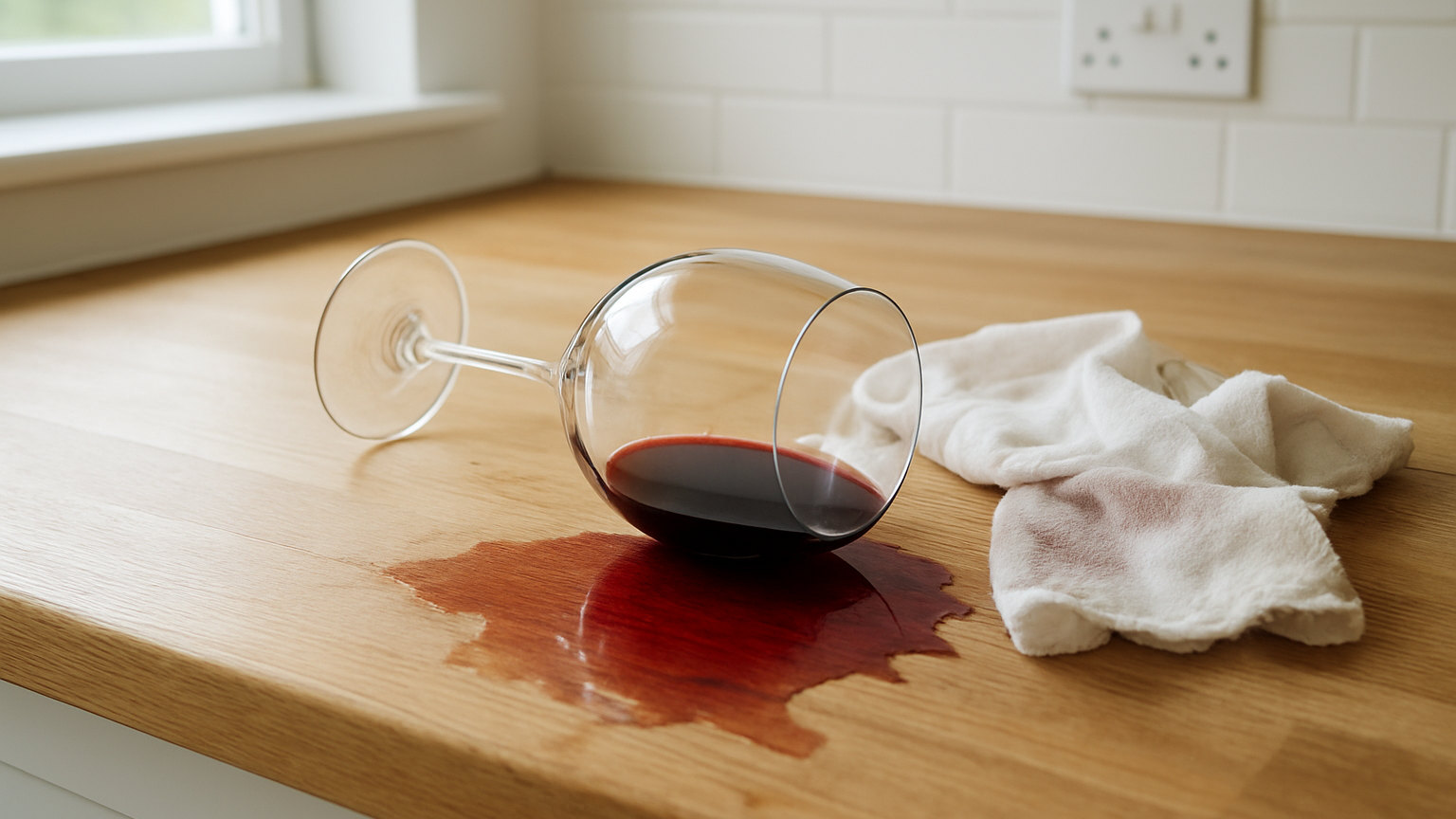
Tipping salt onto a red wine spill is the most widely repeated piece of stain advice there is, and it is close to useless. Salt absorbs a small amount of liquid, which is all it does. It has no effect on the pigment, it does not draw the stain out of the fibre, and it leaves a gritty residue that then has to be removed.
What does salt actually do?
It is hygroscopic, meaning it attracts water, so a heap of salt on a wet spill will soak up some of the liquid sitting on the surface. A dry cloth does the same thing faster and more thoroughly.
What it cannot do is anything chemical. The colour in red wine comes from anthocyanin pigments and tannins, and salt does not react with either. It does not lift, bleach or break them down.
Why does it seem to work?
Because the salt turns pink as it absorbs wine, which looks like evidence. What you are seeing is the surface liquid being soaked up, and that liquid would have come out on a cloth anyway. The pigment that has already reached the fibre stays exactly where it is.
People also tend to use salt on fresh spills, which are the ones most likely to come out regardless of what is done to them.
What is the real cost of using it?
Time. The first two or three minutes are when a wine stain is most removable, and going to a kitchen to find salt uses them. By the time the salt is on, the wine has soaked into the backing of a carpet or through the weave of a shirt.
On carpet there is a second cost. Salt that is not fully vacuumed out attracts moisture from the air and keeps that patch of carpet slightly damp, which can leave a mark of its own.
What should you do instead?
- Blot immediately with a clean white cloth, pressing straight down and lifting.
- Keep moving to a dry section of the cloth.
- Work from the outside of the spill inwards.
- On clothing, get it off and flush the back of the fabric with cold water.
- On carpet, follow with a cloth dampened in cold water and a drop of washing up liquid.
- Extract the moisture by pressing a dry towel down under weight.
All of this can be done with things already in the room.
Are there absorbent powders that do work?
For greasy stains, yes. Cornflour, talc and fuller earth genuinely draw oil out of fabric, because oil moves into a fine powder readily. That is a different mechanism from what salt is being asked to do with wine.
For wine, an absorbent powder is only useful for surface liquid, and a cloth does that job better.
What about the other table remedies?
White wine on red wine dilutes the stain and adds sugar, which then has to be removed as well. Soda water is no better than tap water, since the carbonation is irrelevant. Bicarbonate of soda made into a paste has a small abrasive effect and no bleaching action on wine.
None of them is harmful, and none is better than cold water and a cloth used immediately.
Where did the salt idea come from?
Probably from its genuine usefulness on other things. Salt is effective at drawing moisture out of a spill on an unsealed surface, and it was a standard household absorbent long before proprietary cleaners existed. The advice survived the arrival of better options.
What is the honest summary?
Salt is a distraction. If it is already on the table and you can reach it faster than a napkin, it will absorb a little wine and do no harm. Otherwise, blot with a cloth, deal with the garment or carpet properly within the first few minutes, and use an oxygen bleach soak afterwards on anything that can take it.