Black coffee is a tannin stain, much like tea and red wine, and it responds well to cold water and an oxidising treatment. What complicates it is what people put in it. Milk adds protein that sets with heat, and sugar adds residue that caramelises in a dryer. A flat white needs a different sequence from an espresso.
What is the immediate response?
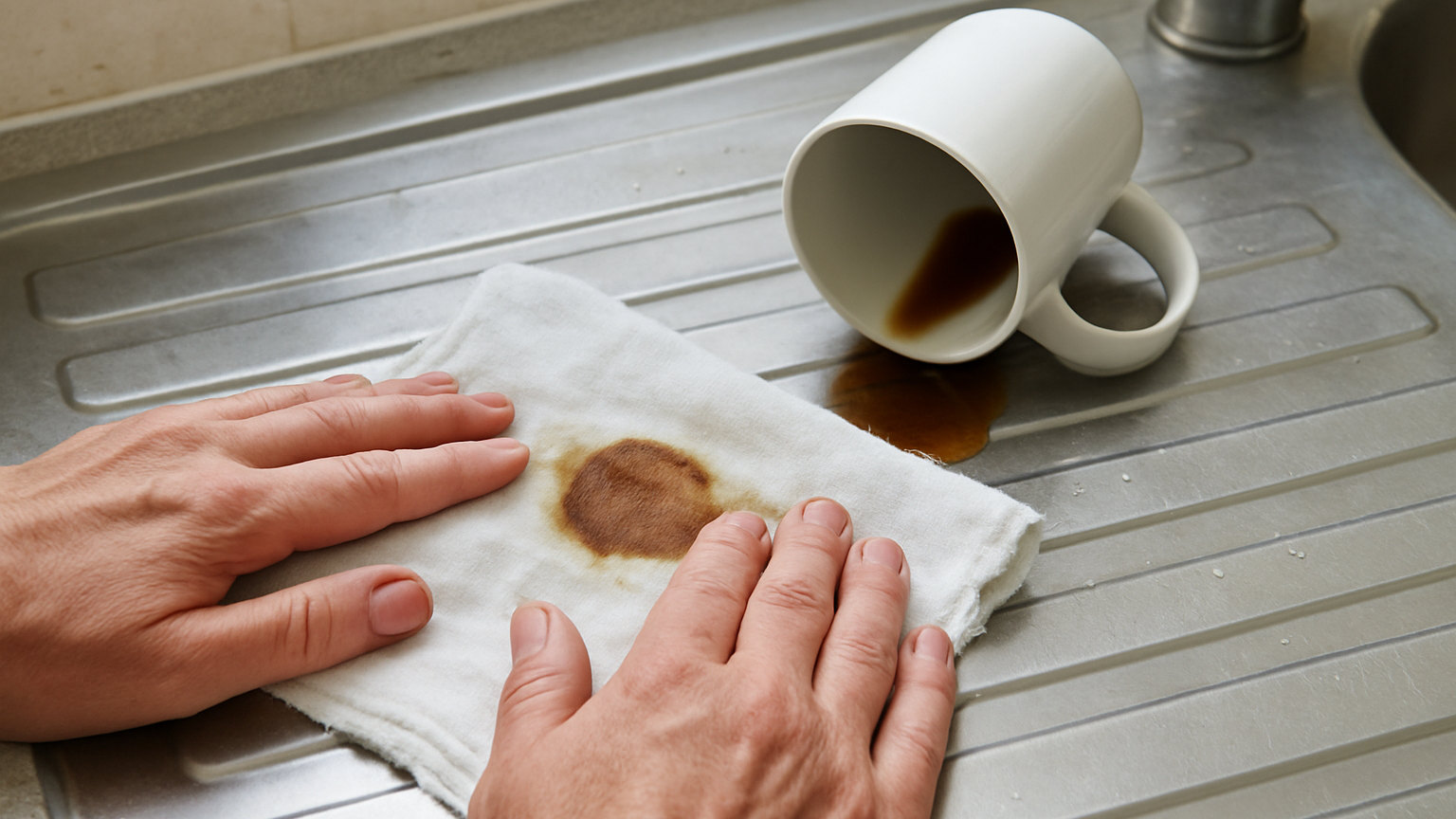
- Blot up the liquid with a clean cloth, pressing rather than rubbing.
- Get the garment off and turn it inside out.
- Flush cold water through the back of the stain until the water runs clear.
- Rub a little washing up liquid into the mark.
- Soak in cold water for thirty minutes.
- Wash at the warmest temperature the fabric allows and check before drying.
Cold water first is important if there is milk in the coffee, since heat sets the protein and locks the tannin in with it.
Why does milk change things?
Because it introduces a protein element. A black coffee stain can be treated with warm water from the start; a white coffee stain cannot, because warm water coagulates the milk protein into the fibre and makes both parts of the stain permanent.
Treat any coffee containing milk as a protein stain first: cold water, then a biological detergent soak, and only then warmth.
What about the sugar?
Sugar is easy while wet and difficult once heated. It dissolves in warm water without effort, but if a sweetened coffee stain goes through a tumble dryer the residue caramelises into a brown mark that is harder to remove than the coffee was.
The practical implication is the same as for everything else: check the garment while damp and do not dry it until the mark has gone.
What clears the brown tannin mark?
An oxygen bleach soak. Dissolve a generous dose in water as warm as the fabric allows, submerge the item and leave it for several hours or overnight. Oxygen bleach oxidises the tannins into colourless compounds and is safe on most colours.
Follow with a normal wash and dry in sunlight, which continues the process and is particularly effective on coffee.
What works on white cotton specifically?
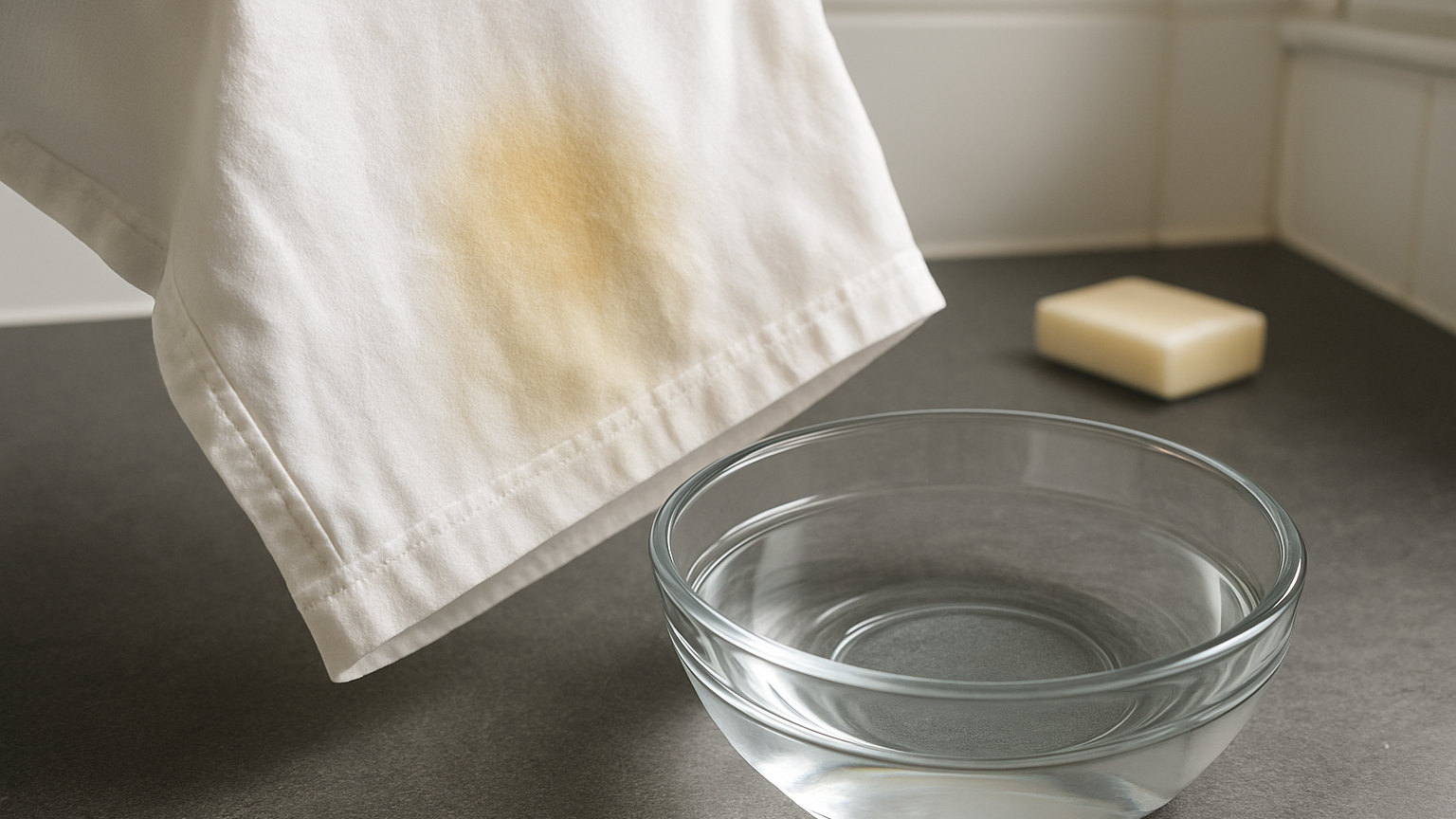
A mixture of one part hydrogen peroxide to two parts washing up liquid, dabbed on and left for twenty minutes, clears most coffee marks on white cotton. Follow with an oxygen soak and a wash at 60 degrees.
White shirts are the easiest case and the one where people most often give up too early, usually because they washed the shirt hot without soaking it first.
What about dried coffee?
Soak it in cold water for half an hour to rehydrate, then follow the normal sequence with a longer oxygen bleach soak. Dried coffee frequently comes out completely, since the tannins can still be oxidised even after they have bonded.
Expect two rounds for a mark that has been through a wash and a dryer.
What about wool, silk and delicates?
These cannot take oxygen bleach or hot soaking. Flush with cold water immediately, blot, and use a detergent suitable for the fibre. A weak solution of white vinegar in cold water helps on tannin stains and is gentler than any bleaching agent.
For a valuable item, a professional cleaner is a better option than repeated home attempts.
Does the type of coffee matter?
Somewhat. Espresso and filter coffee are concentrated and stain more heavily than instant. Coffee with syrup or flavouring adds sugar and sometimes colouring. Iced coffee is diluted and easier. Coffee with cream behaves like a dairy stain and needs the enzyme stage.
What should you avoid?
Hot water on milky coffee, which sets the protein. Rubbing, which spreads the mark and damages the surface. Tumble drying before the stain has gone. And bar soap, which can react with tannins on some fabrics and leave a mark of its own.
What about coffee on a work shirt during the day?
Keep it wet until you can treat it. Blot with a napkin, then dab with cold water from a tap and leave the area damp rather than drying it under a hand dryer, since heat is the thing to avoid. A stain kept wet for a few hours is far more recoverable than one allowed to dry into the fibre.