Tea is almost pure tannin, which makes it one of the more predictable stains to deal with. It responds reliably to oxidising treatment and it darkens with heat, which is why the instinctive response of rinsing a tea splash under a hot tap makes the mark harder to remove than it needed to be.
What is the immediate treatment?
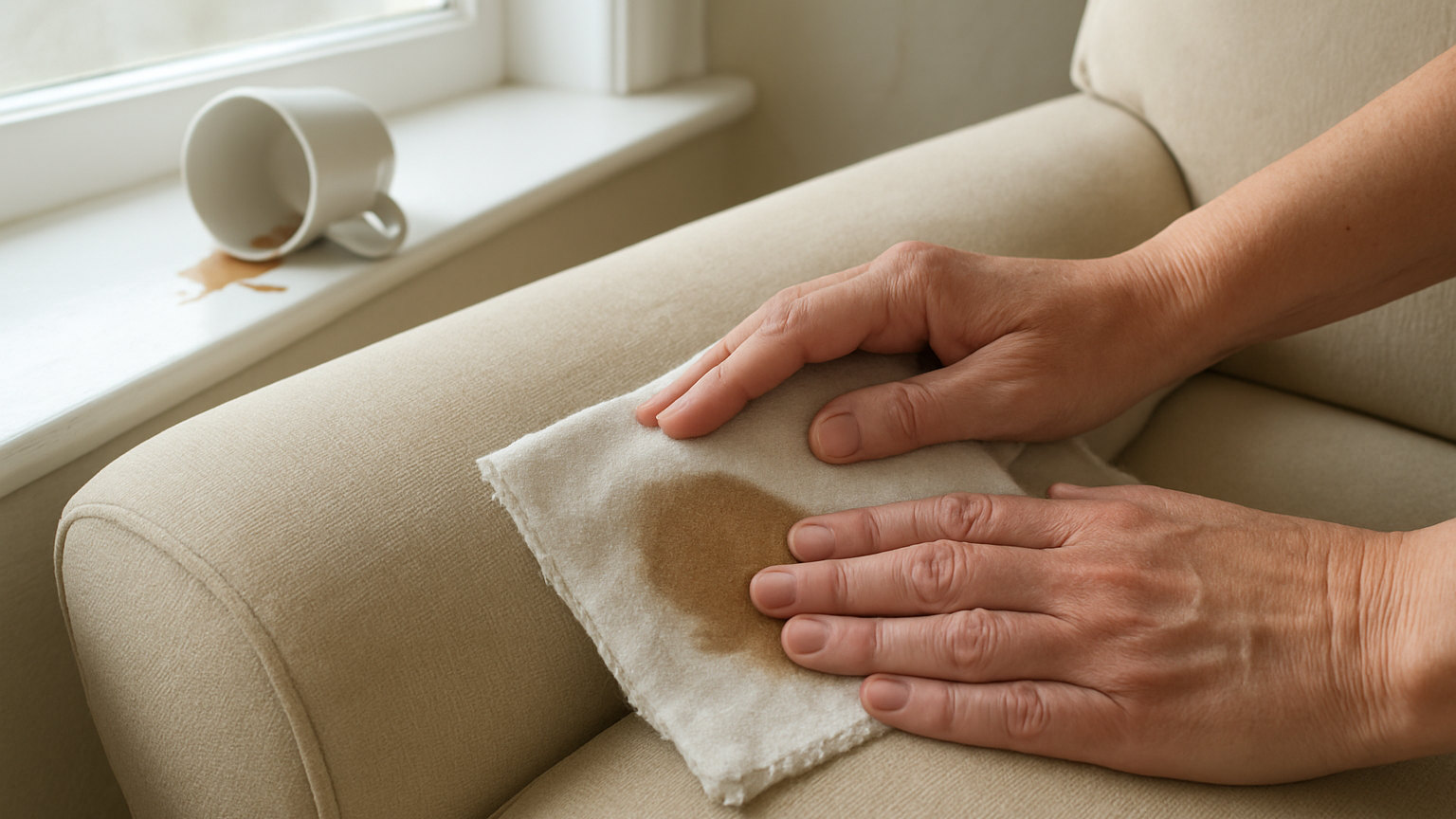
- Blot up the liquid with a clean cloth, pressing rather than rubbing.
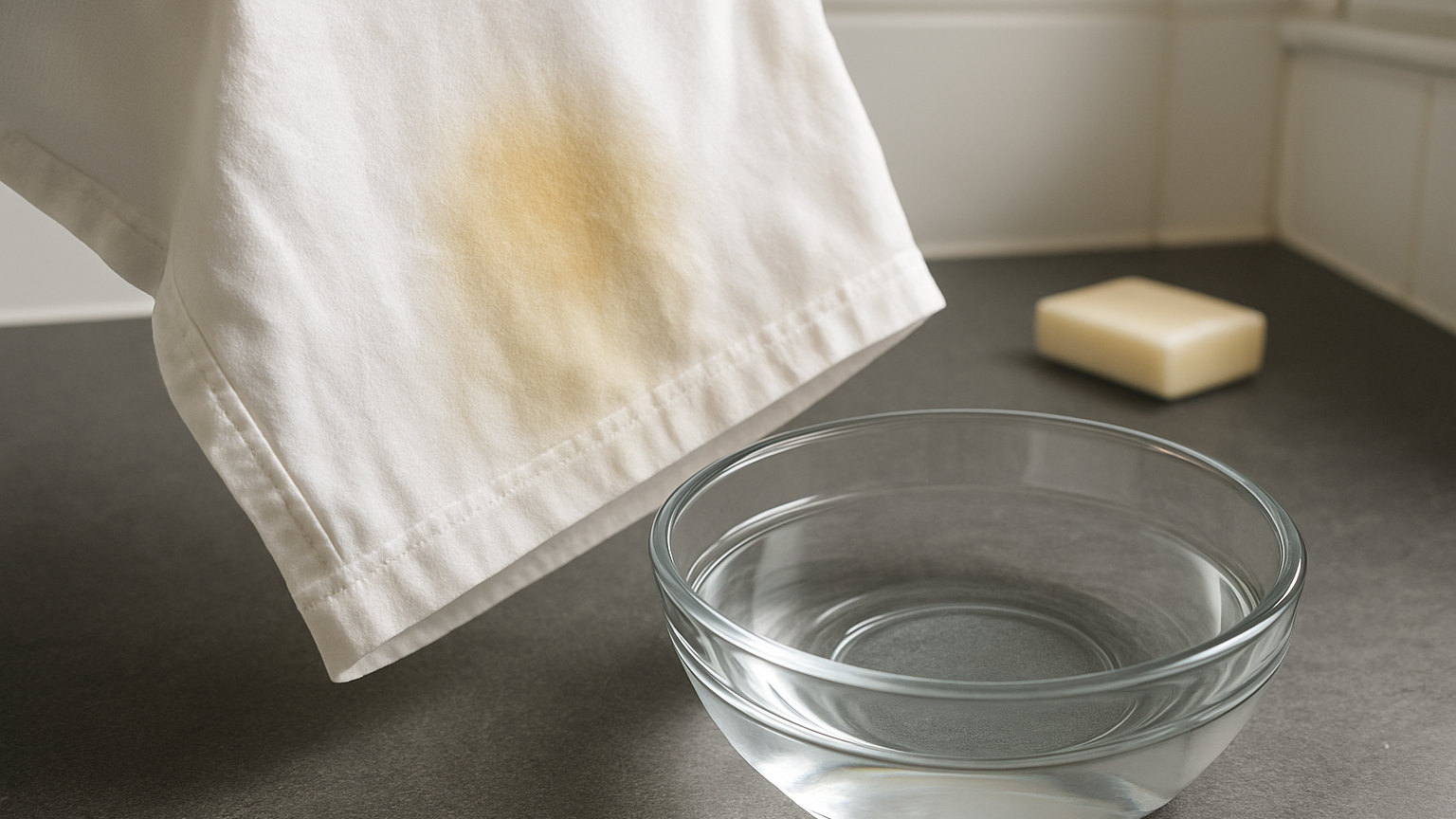
- Turn the garment inside out and flush cold water through the back of the stain.
- Keep flushing until the water runs clear.
- Rub a little washing up liquid into what remains.
- Soak in cold water for thirty minutes.
- Wash at the warmest temperature the fabric allows, checking before drying.
Why does heat make tannins worse?
Because tannins oxidise more readily when warm, and the oxidised compounds are darker and bind more tightly to the fibre. A fresh tea stain flushed with cold water usually disappears. The same stain rinsed under a hot tap turns a deeper brown and needs a soak afterwards.
Tea is not a protein stain, so heat will not set it in the way it sets egg or blood, but the practical effect is similar enough to make cold water the right default.
How does milk change the approach?
It adds a protein element that genuinely does set with heat. Milky tea therefore needs the cold water stage without exception, followed by a soak in a biological detergent to break down the milk protein before any warmth is applied.
Once the protein has been dealt with, treat the remaining brown mark as an ordinary tannin stain.
What clears the brown mark?
An oxygen bleach soak, in water as warm as the fabric allows, for several hours or overnight. Oxygen bleach oxidises the tannins into colourless compounds, and tea responds to it particularly well.
Follow with a normal wash and dry the item in sunlight while still damp, which continues the process for free and is remarkably effective on tea.
What about white cotton?
The easiest case. A mixture of one part hydrogen peroxide to two parts washing up liquid, dabbed on and left for twenty minutes, clears most tea marks. Follow with an oxygen soak and a wash at 60 degrees with a powder detergent.
Old tea stains on white tablecloths and tea towels frequently come out completely with an overnight soak, even when they have been there for years.
What about tea towels specifically?
They accumulate tea staining gradually rather than in single spills, and they tend to go a general dingy brown rather than developing a mark. The fix is a soak of the whole batch rather than spot treating.
Soak them overnight in warm water with oxygen bleach, wash at 60 with a powder detergent, and dry outside. They come back noticeably whiter, and doing it every few months keeps them presentable.
What about wool and silk?
Neither can take oxygen bleach or a hot soak. Flush with cold water immediately, blot, and use a detergent appropriate to the fibre. A weak solution of white vinegar in cool water helps on tannins and is gentle enough for most protein fibres, tested first.
Does lemon juice work?
On white cotton in sunlight, modestly. The citric acid has a mild bleaching effect, and combined with daylight it lifts light tea staining. It is slower and weaker than oxygen bleach and it should be kept off coloured fabric, since it will lighten dyes unevenly.
It is a reasonable option when nothing else is to hand and not a first choice.
What about herbal and fruit teas?
These behave differently. Fruit and hibiscus infusions are pigment stains rather than tannin ones, and they stain more brightly and more stubbornly than black tea. Treat them as fruit stains: cold water, detergent, then an oxygen soak and sunlight. Green tea stains lightly and usually comes out with a cold rinse.